

Thursday, October 22, 2026
Science
No Result
View All Result
  • Login
  • HOME
  • SCIENCE NEWS
  • CONTACT US
  • HOME
  • SCIENCE NEWS
  • CONTACT US
No Result
View All Result
Scienmag
No Result
View All Result
Home Science News Medicine

African infectious-disease AI review finds 43 studies, uneven coverage and barriers

October 22, 2026
in Medicine
Blake Davidson
By Blake Davidson Scienmag Editorial Profile - Data Science
Reading Time: 2 mins read
0
African infectious-disease AI review finds 43 studies, uneven coverage and barriers

African infectious-disease AI review finds 43 studies, uneven coverage and barriers

65
SHARES
587
VIEWS
Share on FacebookShare on Twitter
ADVERTISEMENT

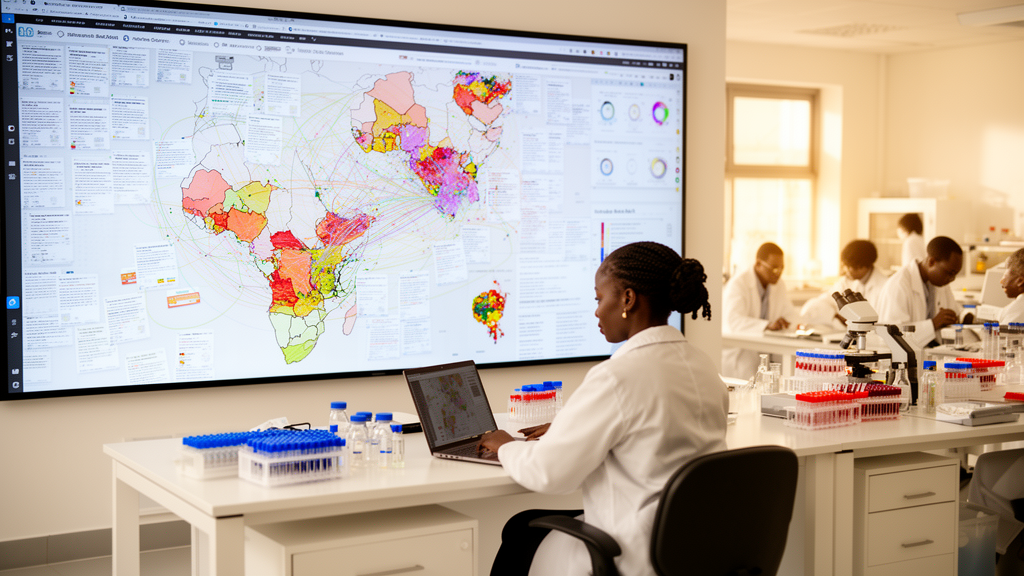
A systematic review found 43 eligible studies that applied artificial intelligence to infectious-disease prediction, management, surveillance or outbreak prediction in Africa between 2015 and 2025. The studies addressed diseases including HIV, malaria, COVID-19 and tuberculosis. South Africa had the largest number of included studies, followed by Nigeria, Uganda, Ethiopia and Tanzania, showing uneven geographic coverage of the research base.

The review, published in BMC Infectious Diseases , aimed to characterize how artificial intelligence has been used in infectious-disease work across Africa and to examine the opportunities and constraints surrounding that use. It included original, peer-reviewed studies in which machine learning or deep learning was used for management, prediction, surveillance or outbreak prediction. Investigators followed PRISMA 2020 guidelines and registered the review on PROSPERO as CRD420251243329.

They searched PubMed, the African Journals Online platform, Scopus, Google Scholar and ScienceDirect. The searches retrieved 5,050 records: 2,551 from PubMed, 2,000 from ScienceDirect, 102 from African Journals Online, 233 from Scopus and 164 from Google Scholar. Of the 5,006 records screened, 43 met the predefined eligibility criteria.

The researchers systematically extracted information on study characteristics, key findings and the performance metrics reported for the artificial-intelligence models. The geographic breakdown showed 10 included studies from South Africa, eight from Nigeria, six from Uganda, five from Ethiopia and four from Tanzania. These counts place the largest share of the eligible evidence in the five most represented countries.

The review therefore documents activity in several parts of Africa, but it does not establish that AI-based infectious-disease research was evenly distributed across the continent or that the included countries represented every national research setting. Random forest was among the most commonly used machine-learning models, alongside support vector machine, artificial neural network and logistic regression. Among the deep-learning approaches, long short-term memory was the most common.

These measures were tied to the models and outcomes reported in each study. The review does not report from the supplied evidence that any one model produced uniformly superior results across infectious-disease prediction, management, surveillance and outbreak forecasting. The authors nevertheless concluded that artificial intelligence is increasingly used for infectious diseases in Africa while remaining underutilized.

They identified constraints involving policy frameworks, health-data quality, digital infrastructure, funding for health systems and research, and governance. In calling for investment and commitments to address these barriers, the review framed artificial intelligence as a developing capability whose wider use depends on structural conditions in data, infrastructure, financing and oversight. Overall, the review identifies 43 studies and 5,050 database records as the basis for its assessment of AI applications in African infectious-disease research.

Subject of Research: Systematic review of artificial-intelligence applications for infectious-disease prediction, management and surveillance in Africa

Article Title: Utilization of artificial intelligence for infectious disease in Africa: a systematic review

Article References: Anulaobi, C. C., Ogaba, A. K., Udoh, I. O., David, P. W., Ozugha, E. P., Nwadike, P. I., Maduka, Y. O., Miller, O. C., Nnana, M. E., & Ajayi, A. O. (2026). Utilization of artificial intelligence for infectious disease in Africa: a systematic review. BMC Infectious Diseases. https://doi.org/10.1186/s12879-026-14276-5

Image Credits: AI Generated

DOI: 10.1186/s12879-026-14276-5

Keywords: artificial intelligence, infectious diseases, Africa, systematic review, machine learning, deep learning, public health surveillance, HIV, malaria, COVID-19, tuberculosis, Utilization

Cite Scienmag News

Blake Davidson. (October 22, 2026). African infectious-disease AI review finds 43 studies, uneven coverage and barriers. Scienmag. https://scienmag.com/african-infectious-disease-ai-review-finds-43-studies-uneven-coverage-and-barriers/


Blake Davidson. "African infectious-disease AI review finds 43 studies, uneven coverage and barriers." Scienmag, 22 October 2026, https://scienmag.com/african-infectious-disease-ai-review-finds-43-studies-uneven-coverage-and-barriers/. Accessed 22 October 2026.

Blake Davidson. "African infectious-disease AI review finds 43 studies, uneven coverage and barriers." Scienmag. October 22, 2026. https://scienmag.com/african-infectious-disease-ai-review-finds-43-studies-uneven-coverage-and-barriers/

Tags: AfricaAI in infectious disease AfricaAI models for HIVArtificial Intelligencebarriers to AI implementation in African healthchallenges and gaps in AI infectious disease research AfricaCOVID-19deep learningdeep learning in African infectious disease managementgeographic distribution of AI studies AfricaHIVinfectious disease prediction AI Africainfectious diseasesMachine learningmachine learning for infectious disease surveillance Africamalariaopportunities for AI in African disease controlpublic health surveillancesystematic reviewsystematic review of AI in African healthtuberculosistuberculosis Africautilization
Share26Tweet16
Previous Post

Study links online flipped learning to higher nursing knowledge scores

Next Post

Research report: PIK3CA silencing restores anoikis sensitivity in endothelial cells

Related Posts

Documentary policy brief finds revised health-financing measures expose hidden hardship in India
Medicine

Documentary policy brief finds revised health-financing measures expose hidden hardship in India

October 22, 2026
Clinical symptoms linked to lower quality of life among Bamako HIV care patients
Medicine

Clinical symptoms linked to lower quality of life among Bamako HIV care patients

October 22, 2026
Case report links piperacillin-tazobactam re-exposure to severe liver injury
Medicine

Case report links piperacillin-tazobactam re-exposure to severe liver injury

October 22, 2026
Nurse Educators Frame Professionalism as Collective, Relational Responsibility
Medicine

Nurse Educators Frame Professionalism as Collective, Relational Responsibility

October 22, 2026
MD Anderson Names 2026 Oncology Nursing Award Winners
Medicine

MD Anderson Names 2026 Oncology Nursing Award Winners

October 22, 2026
Research report: PF chemotherapy combined with a PD-1/CTLA-4 bispecific antibody as first-line treatment in patients with recurrent/metastatic head and neck squamous cell carcinoma: a prospective, single-arm, phase II clinical study
Medicine

Research report: PF chemotherapy combined with a PD-1/CTLA-4 bispecific antibody as first-line treatment in patients with recurrent/metastatic head and neck squamous cell carcinoma: a prospective, single-arm, phase II clinical study

October 22, 2026
Next Post
Research report: PIK3CA silencing restores anoikis sensitivity in endothelial cells

Research report: PIK3CA silencing restores anoikis sensitivity in endothelial cells

  • Mothers who receive childcare support from maternal grandparents show more optimized

    Mothers who receive childcare support from maternal grandparents show more parental warmth, finds NTU Singapore study

    27656 shares
    Share 11059 Tweet 6912
  • University of Seville Breaks 120-Year-Old Mystery, Revises a Key Einstein Concept

    1061 shares
    Share 424 Tweet 265
  • Bee body mass, pathogens and local climate influence heat tolerance

    682 shares
    Share 273 Tweet 171
  • Researchers record first-ever images and data of a shark experiencing a boat strike

    546 shares
    Share 218 Tweet 137
  • Groundbreaking Clinical Trial Reveals Lubiprostone Enhances Kidney Function

    531 shares
    Share 212 Tweet 133
Science

Embark on a thrilling journey of discovery with Scienmag.com—your ultimate source for cutting-edge breakthroughs. Immerse yourself in a world where curiosity knows no limits and tomorrow’s possibilities become today’s reality!

RECENT NEWS

  • Research report: PIK3CA silencing restores anoikis sensitivity in endothelial cells
  • African infectious-disease AI review finds 43 studies, uneven coverage and barriers
  • Study links online flipped learning to higher nursing knowledge scores
  • PSMA-PRED protocol plans biomarker search for lutetium-PSMA treatment response

Categories

  • Agriculture
  • Anthropology
  • Archaeology
  • Athmospheric
  • Biology
  • Biotechnology
  • Blog
  • Bussines
  • Cancer
  • Chemistry
  • Climate
  • Earth Science
  • Editorial Policy
  • Marine
  • Mathematics
  • Medicine
  • Pediatry
  • Policy
  • Psychology & Psychiatry
  • Science Education
  • Science News
  • Social Science
  • Space
  • Technology and Engineering

Subscribe to Blog via Email

Enter your email address to subscribe to this blog and receive notifications of new posts by email.

Join 5,151 other subscribers

© 2025 Scienmag - Science Magazine

Welcome Back!

Login to your account below

Forgotten Password?

Retrieve your password

Please enter your username or email address to reset your password.

Log In
No Result
View All Result
  • HOME
  • SCIENCE NEWS
  • CONTACT US

© 2025 Scienmag - Science Magazine

Discover more from Science

Subscribe now to keep reading and get access to the full archive.

Continue reading