

Monday, October 26, 2026
Science
No Result
View All Result
  • Login
  • HOME
  • SCIENCE NEWS
  • CONTACT US
  • HOME
  • SCIENCE NEWS
  • CONTACT US
No Result
View All Result
Scienmag
No Result
View All Result
Home Science News Earth Science

Study Links Household Size to Wildlife Conflicts in Tanzania

October 26, 2026
in Earth Science
Margaret Porter
By Margaret Porter Scienmag Editorial Profile - Biodiversity Science
Reading Time: 2 mins read
0
Study Links Household Size to Wildlife Conflicts in Tanzania

Study Links Household Size to Wildlife Conflicts in Tanzania

65
SHARES
587
VIEWS
Share on FacebookShare on Twitter
ADVERTISEMENT

Human-wildlife conflicts pose a persistent challenge for communities living adjacent to Swagaswaga Game Reserve in central Tanzania, threatening both local livelihoods and wildlife conservation. A recent study published in Discover Sustainability examined the socio-demographic factors associated with these conflicts and their specific impacts on surrounding communities. Conducted by Neema Senkondo and Mhuji Kilonzo, the research provides a detailed assessment of how household characteristics influence exposure to wildlife incursions in this specific landscape.

The study utilized a mixed-method approach to collect data from 252 households across six villages: Serya, Mangoloma, Hurumbi, Mialo, Ndoroboni, and Lahoda. Data collection took place during April and May 2024. In addition to the household surveys, the researchers conducted six focus group discussions and six key informant interviews, with one of each type held in every village.

Statistical analysis revealed that age and household size were significantly associated with the occurrence of human-wildlife conflicts, with a significance level of p < 0.05. These findings confirm expected variations in exposure among community members, indicating that differential vulnerability exists within the affected populations. The study concludes that these socio-demographic factors are key influences on the likelihood of experiencing conflicts, suggesting that risk is not evenly distributed across all residents.

Crop destruction was identified as the most common type of human-wildlife conflict, reported by 61.4% of respondents. Livestock losses were also a significant issue, with 42.1% of respondents reporting such losses. Goats accounted for the largest proportion of the livestock reported lost.

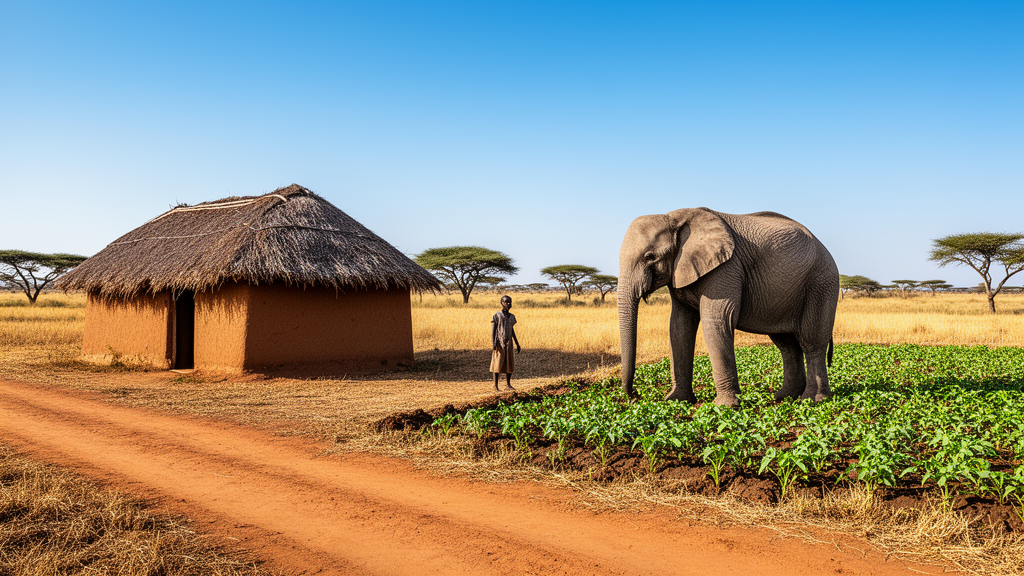
Elephants (Loxodonta africana) were the wildlife species most frequently reported to be involved in conflicts, with 22% of respondents citing them. While other species may also be involved, elephants represented the highest proportion of reported incidents in this study. The researchers noted that local communities face challenges including crop raiding, habitat destruction, livestock depredation, and property damage by wildlife.

These factors collectively lead to food insecurity for the residents living near the reserve. Based on these findings, the authors recommend that comprehensive and sustainable strategies be strengthened to mitigate human-wildlife conflicts. The study suggests that community participation and education are essential components for promoting coexistence between humans and wildlife in the Swagaswaga Game Reserve landscape.

Subject of Research: Socio-demographic factors and impacts of human-wildlife conflicts in communities adjacent to Swagaswaga Game Reserve, Tanzania

Article Title: Assessment of human-wildlife conflicts in communities living adjacent to Swagaswaga Game Reserve, Tanzania

Article References: Senkondo, N., & Kilonzo, M. (2026). Assessment of human-wildlife conflicts in communities living adjacent to Swagaswaga Game Reserve, Tanzania. Discover Sustainability. https://doi.org/10.1007/s43621-026-04723-3

Image Credits: AI Generated

DOI: 10.1007/s43621-026-04723-3

Keywords: human-wildlife conflict, Tanzania, Swagaswaga Game Reserve, crop destruction, livestock loss, socio-demographics, elephants, food security, conservation, community impact, Assessment, human-wildlife

Cite Scienmag News

Margaret Porter. (October 26, 2026). Study Links Household Size to Wildlife Conflicts in Tanzania. Scienmag. https://scienmag.com/study-links-household-size-to-wildlife-conflicts-in-tanzania/

Margaret Porter. "Study Links Household Size to Wildlife Conflicts in Tanzania." Scienmag, 26 October 2026, https://scienmag.com/study-links-household-size-to-wildlife-conflicts-in-tanzania/. Accessed 26 October 2026.

Margaret Porter. "Study Links Household Size to Wildlife Conflicts in Tanzania." Scienmag. October 26, 2026. https://scienmag.com/study-links-household-size-to-wildlife-conflicts-in-tanzania/


Tags: assessmentcommunity impactcommunity-based wildlife conflict managementconservationcrop destructiondemographic influences on wildlife conflict riskelephantsFood securityhousehold size and vulnerability to wildlife incursionshuman-wildlifehuman-wildlife conflicthuman-wildlife conflict in Tanzaniahuman-wildlife conflict mitigation strategiesimpacts of wildlife on local livelihoodslivestock lossmixed-method research on wildlife conflictssocio-demographic factors and wildlife conflictssocio-demographicsSwagaswaga Game ReserveTanzaniaTanzania wildlife conservation challengesvillage-level wildlife conflict assessmentswildlife conservation and community livelihoodswildlife crop damage and community responses
Share26Tweet16
Previous Post

Quantum Annealing Meets PCA to Sharpen Carbon Emissions Predictions

Next Post

Testican-2: from glomerular activity to circulating biomarker

Related Posts

One Laser, 744 Sediments: China’s Shelf Seas Mapped in a Single Grain-Size Dataset
Earth Science

One Laser, 744 Sediments: China’s Shelf Seas Mapped in a Single Grain-Size Dataset

October 26, 2026
AI Pushes Nigerian Vocational Lecturers to Redefine What Authentic Teaching Means
Earth Science

AI Pushes Nigerian Vocational Lecturers to Redefine What Authentic Teaching Means

October 26, 2026
Price Position Signals Stress Shifts in EU Carbon Futures
Earth Science

Price Position Signals Stress Shifts in EU Carbon Futures

October 26, 2026
Green finance meets FinTech and AI: mapping a fast-growing research field
Earth Science

Green finance meets FinTech and AI: mapping a fast-growing research field

October 26, 2026
AI market swings track technology stocks more than clean energy
Earth Science

AI market swings track technology stocks more than clean energy

October 26, 2026
January Pollarding Emerges as Best Practice for Sustainable Acacia Fuelwood in Ethiopia
Earth Science

January Pollarding Emerges as Best Practice for Sustainable Acacia Fuelwood in Ethiopia

October 26, 2026
  • Mothers who receive childcare support from maternal grandparents show more optimized

    Mothers who receive childcare support from maternal grandparents show more parental warmth, finds NTU Singapore study

    27656 shares
    Share 11059 Tweet 6912
  • University of Seville Breaks 120-Year-Old Mystery, Revises a Key Einstein Concept

    1061 shares
    Share 424 Tweet 265
  • Bee body mass, pathogens and local climate influence heat tolerance

    682 shares
    Share 273 Tweet 171
  • Researchers record first-ever images and data of a shark experiencing a boat strike

    546 shares
    Share 218 Tweet 137
  • Groundbreaking Clinical Trial Reveals Lubiprostone Enhances Kidney Function

    531 shares
    Share 212 Tweet 133
Science

Embark on a thrilling journey of discovery with Scienmag.com—your ultimate source for cutting-edge breakthroughs. Immerse yourself in a world where curiosity knows no limits and tomorrow’s possibilities become today’s reality!

RECENT NEWS

  • Testican-2: from glomerular activity to circulating biomarker
  • Study Links Household Size to Wildlife Conflicts in Tanzania
  • Quantum Annealing Meets PCA to Sharpen Carbon Emissions Predictions
  • Feed Additives Reshape the Ruminant Microbiome as a Whole-Body System, Review Finds

Categories

  • Agriculture
  • Anthropology
  • Archaeology
  • Athmospheric
  • Biology
  • Biotechnology
  • Blog
  • Bussines
  • Cancer
  • Chemistry
  • Climate
  • Earth Science
  • Editorial Policy
  • Marine
  • Mathematics
  • Medicine
  • Pediatry
  • Policy
  • Psychology & Psychiatry
  • Science Education
  • Science News
  • Social Science
  • Space
  • Technology and Engineering

Subscribe to Blog via Email

Enter your email address to subscribe to this blog and receive notifications of new posts by email.

Join 5,151 other subscribers

© 2025 Scienmag - Science Magazine

Welcome Back!

Login to your account below

Forgotten Password?

Retrieve your password

Please enter your username or email address to reset your password.

Log In
No Result
View All Result
  • HOME
  • SCIENCE NEWS
  • CONTACT US

© 2025 Scienmag - Science Magazine

Discover more from Science

Subscribe now to keep reading and get access to the full archive.

Continue reading