


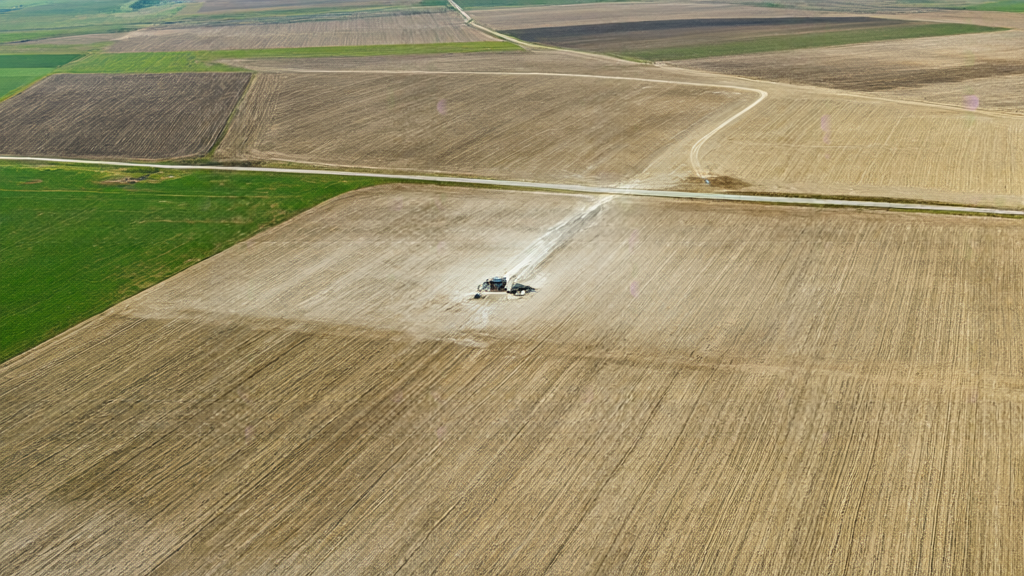
A new study led by researchers at Yale University suggests that agricultural liming in the Mississippi River Basin has functioned as a major carbon sink over the past century. The research, published in the journal Nature, indicates that agricultural liming in this region has removed more carbon dioxide from the atmosphere than it has released. This finding challenges previous assumptions about the climate impact of this widespread agricultural practice and highlights a potential opportunity for large-scale carbon removal in the American heartland.
The Mississippi River Basin covers approximately 41% of the contiguous United States and encompasses roughly 65% of U.S. croplands. For generations, farmers in this area have utilized liming to manage soil pH, reduce acidity, and improve crop yields. The practice involves spreading crushed limestone over agricultural fields. While the primary goal has historically been agricultural productivity, the new study reveals that this activity also has significant implications for climate change mitigation by removing carbon dioxide from the atmosphere.
Tim Jesper Suhrhoff, a geochemist at Yale and the first author of the study, noted that the results align climate action with practices that are already beneficial for farmers. Suhrhoff, a postdoctoral associate at the Yale Center for Natural Carbon Capture, explained that the study provides a more complete picture of the liming process. The research team analyzed more than 120 years of historical records to trace the long-term effects of adding crushed carbonate rock to agricultural soil. This extensive dataset allowed the researchers to evaluate the net carbon impact of liming over a significant period.
The mechanism by which liming stores carbon is similar to a related practice known as enhanced weathering. In this process, adding crushed rock to soil reacts with carbon dioxide to form stable bicarbonate ions. These ions can be transported through soils, groundwater, and rivers, eventually reaching the ocean where the associated carbon can remain stored for long periods. While enhanced weathering has often focused on silicate rocks, the new study demonstrates that carbonate-based liming also contributes to net carbon removal when evaluated against a realistic baseline.
A key advance of the study is its accounting for what would have occurred without liming. The researchers noted that even in the absence of lime, acidity generated by fertilizer use and air pollution would cause chemical reactions in the soil and water that release carbon dioxide. By comparing the liming scenario to this more complex baseline, the study finds that liming results in long-term net carbon removal. This approach provides a more accurate assessment of the practice’s climate benefits than previous methods that did not account for these background emissions.
The findings challenge the way agricultural liming is currently treated in conventional greenhouse gas accounting. The default methodology of the Intergovernmental Panel on Climate Change treats the carbon contained in applied lime as emitted carbon dioxide. However, the study suggests that a more complete framework could recognize situations where liming benefits both farmers and the climate. Suhrhoff and his colleagues emphasized that they support the IPCC’s efforts to document emissions but argued that accounting for liming’s net carbon removal would better align climate and agricultural incentives.
Christopher Reinhard, a professor at the Georgia Institute of Technology and co-corresponding author of the study, stated that better soil pH management can improve yields and soil health while also benefiting the climate. He suggested that this provides another reason to expand access to liming where it is sensible. The study’s results indicate that carbonate-based enhanced weathering may deserve renewed attention as a strategy for scaling up climate change mitigation. The researchers highlighted the potential for this practice to contribute significantly to global carbon removal efforts if adopted more broadly.
Noah Planavsky, a professor of Earth and planetary science at Yale and a corresponding author, described the study as a unique opportunity to trace historical records that demonstrate the effectiveness of enhanced weathering. He noted that the process already provides benefits to farmers and is now shown to be beneficial for the climate by removing carbon dioxide from the atmosphere. Planavsky, who is also a faculty member of the Yale Center for Natural Carbon Capture, emphasized the importance of understanding the long-term impacts of agricultural practices on the global carbon cycle.
The study estimates that since 1900, liming in the Mississippi River Basin has removed between 300 and 400 million metric tons of carbon dioxide. This substantial amount of carbon removal suggests an opportunity to scale up enhanced weathering by helping more farmers conduct agricultural liming. However, the researchers noted that the climate impact of liming will vary depending on local factors such as existing soil acidity, soil buffering capacity, and hydrology. The magnitude and duration of any upfront carbon dioxide emissions, as well as the efficiency of carbon removal, depend on these specific conditions.
Despite the promising findings, the researchers cautioned that the results from the Mississippi River Basin will not always transfer directly to every agricultural setting. Planavhoff noted that many farmers currently cannot afford optimal soil pH management and suggested that funding mechanisms could be developed to support this process by taking into account the carbon removals. The study was supported by funding from the Yale Center for Natural Carbon Capture, the Swiss National Science Foundation, the Environmental Defense Fund, the Foundation for Science and Technology, and the U.S. Department of Energy. Co-authors of the study include researchers from Yale, the Georgia Institute of Technology, Newcastle University, and Texas A&M University.
Subject of Research: Climate Change
Article Title: Adding limestone to Mississippi River Basin farmlands acts as a major carbon sink, study finds
Article References: Adding limestone to Mississippi River Basin farmlands acts as a major carbon sink, study finds. (n.d.). Original publication
Image Credits: AI Generated
DOI: Not provided
Keywords: carbon sink, agricultural liming, Mississippi River Basin, enhanced weathering, soil management, climate mitigation, Yale University, Nature journal, Adding, limestone, Mississippi, River
Cite Scienmag News
Violet Maxwell. (October 2, 2026). Study Finds Limestone Application in Mississippi River Basin Acts as Significant Carbon Sink. Scienmag. https://scienmag.com/study-finds-limestone-application-in-mississippi-river-basin-acts-as-significant-carbon-sink/
Violet Maxwell. "Study Finds Limestone Application in Mississippi River Basin Acts as Significant Carbon Sink." Scienmag, 2 October 2026, https://scienmag.com/study-finds-limestone-application-in-mississippi-river-basin-acts-as-significant-carbon-sink/. Accessed 4 October 2026.
Violet Maxwell. "Study Finds Limestone Application in Mississippi River Basin Acts as Significant Carbon Sink." Scienmag. October 2, 2026. https://scienmag.com/study-finds-limestone-application-in-mississippi-river-basin-acts-as-significant-carbon-sink/


