


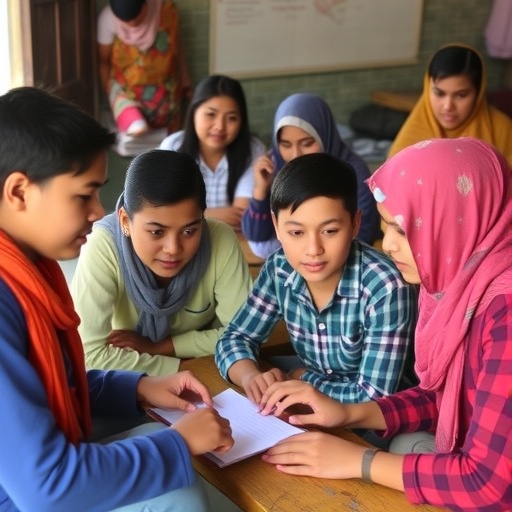
Large language models (LLMs) have recently made waves across various sectors, and their influence on education, particularly K-12 schooling in rural India, is gaining attention. The evolving role of these models is particularly relevant as educational institutions look for ways to bridge gaps caused by geographical and economic disparities. A study conducted by researchers Goyal, Garg, and Mordia examines how student volunteers perceive the impact of large language models on their educational experiences, and it reveals transformative insights that could shape future pedagogical practices.
In an era where technology increasingly permeates everyday life, the integration of artificial intelligence into education is both necessary and transformative. LLMs, designed to generate human-like text based on the input they receive, can offer personalized learning experiences tailored to individual needs. For students in rural India, this could be a game-changer, providing access to high-quality educational resources that may not be available locally. This research sheds light on how these models can democratize education by breaking down traditional barriers to learning.
One of the most compelling findings of the study is that student volunteers in rural settings perceive LLMs as powerful allies in enhancing their learning experiences. Through interviews and feedback, students expressed enthusiasm about receiving instant help with homework, understanding complex concepts, and obtaining additional information on various subjects. The unique ability of LLMs to process vast amounts of information means that they can deliver tailored responses quickly, thus acting as supplemental teachers for students who lack access to professional tutoring.
Moreover, the study highlights the adaptability of LLMs in catering to different learning styles. For instance, students who thrive on visual learning have found that language models can generate written explanations that are accompanied by relevant visual content or illustrative examples. This capability allows students to engage with the material in a manner that best suits their learning preferences. Ultimately, this adaptability fosters an inclusive learning environment where all students can excel.
Nevertheless, the researchers underscore that the implementation of such advanced technology is not without challenges. Access to reliable internet and devices remains a significant barrier in many rural parts of India. The study suggests that while LLMs can provide substantial educational benefits, the digital divide must first be addressed to ensure these resources are accessible to all students. Infrastructure improvement, community training, and government support will be crucial in making the advantages of LLMs a reality in rural education systems.
The role of educators is also pivotal in leveraging these technologies effectively. The researchers emphasize that while LLMs can supplement traditional teaching methods, they should not replace human interaction within the classroom. Teachers in rural areas often act as mentors and facilitators; this nurturing role cannot easily be replicated by machines. Therefore, the optimal approach is a hybrid model that incorporates LLMs to enhance the instructional strategies employed by educators, thereby fostering a collaborative learning experience.
Another noteworthy aspect of the research is the ethical considerations surrounding the use of LLMs in education. For instance, students expressed concerns about the potential for misinformation or biased information being presented by these AI systems. The study advocates for the establishment of guidelines and best practices for developing educational AI tools, ensuring that they provide accurate and fair content. Inclusivity and equity in AI technology are paramount, guiding the development process to protect vulnerable populations from exposure to biased data.
Additionally, training student volunteers to use LLMs effectively is vital for maximizing their potential. The research indicates that workshops focusing on critical thinking and media literacy can help students navigate the information generated by LLMs. By equipping students with skills to discern accurate information from inaccuracies, the educational system can foster not only better academic performance but also informed and engaged citizens.
Community engagement is another important facet of this educational paradigm shift. As LLMs begin to permeate educational structures, involving local communities in the conversation ensures that the technology aligns with their cultural values and priorities. Organizations that work with rural communities must collaborate with educational institutions to design curricula and training programs that utilize LLMs effectively while respecting local traditions and contexts.
As large language models continue to evolve, ongoing research will be essential in understanding their long-term impacts on education. The findings from Goyal, Garg, and Mordia’s study lay the groundwork for future investigations into how these technologies can be optimized within varied educational settings. As educators, policymakers, and technologists come together, there is significant potential for innovative solutions that address the specific needs of rural learners.
The dynamic interplay between technology and pedagogy calls for continuous reflection and adaptation. According to the research findings, integrating LLMs into K-12 education in rural India can lead to significant advancements. This will rely not only on the constituents of technology but also on a comprehensive approach that considers cultural, economic, and infrastructural challenges.
In conclusion, the implications of large language models on K-12 education in rural India are far-reaching. This study not only sheds light on the positive perceptions students hold about these technologies but also urges attention to the broader socio-economic contexts in which they are used. As the global educational landscape evolves with technology, rural educators and students stand to benefit significantly from the progressive integration of LLMs. This research emphasizes that while challenges exist, the potential for achieving substantial educational gains is within reach, contingent upon strategic investments in technology, training, and community involvement.
The journey towards enhanced educational outcomes in rural India through the use of large language models has just begun. The voices of students in this research challenge educational stakeholders to think critically about how best to harness these tools for transformative learning experiences. As we look to the future, the potential to shape a more equitable and innovative educational landscape is on the horizon, provided collaborations and collective efforts are sustained.
Goyal, H., Garg, G., Mordia, P. et al. Thematic insights into the impact of large language models on K-12 education in rural India from student volunteers’ perspectives.
Sci Rep (2025). https://doi.org/10.1038/s41598-025-18047-1
Cite Scienmag News
Courtney Benton. (December 28, 2025). Student Volunteers Explore Language Models’ Impact in Rural Education. Scienmag. https://scienmag.com/student-volunteers-explore-language-models-impact-in-rural-education/
Courtney Benton. "Student Volunteers Explore Language Models’ Impact in Rural Education." Scienmag, 28 December 2025, https://scienmag.com/student-volunteers-explore-language-models-impact-in-rural-education/. Accessed 4 September 2026.
Courtney Benton. "Student Volunteers Explore Language Models’ Impact in Rural Education." Scienmag. December 28, 2025. https://scienmag.com/student-volunteers-explore-language-models-impact-in-rural-education/


