


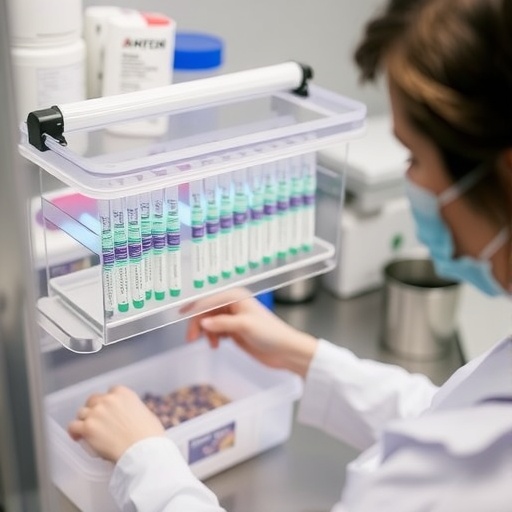
In recent advancements in genomic research, a groundbreaking study led by Mah, A.H. and collaborators has introduced a simplified hybrid capture technique that promises to revolutionize current methodologies in the field. This innovative approach not only retains high specificity in genomic capture but also facilitates a seamless PCR-free workflow, marking a significant evolution in how genomic sequences are analyzed. With an increasing push towards reducing the complexities associated with traditional genomic analysis, this new method could be the key to more efficient and accessible genetic research.
Traditional genomic methods often rely heavily on polymerase chain reaction (PCR) to amplify DNA, a process that can introduce biases and errors into genomic analyses. The simplified hybrid capture approach developed by Mah and team offers a refreshing alternative that minimizes these complications. By eliminating the need for PCR, the approach addresses one of the most significant limitations faced by researchers: the potential for amplification bias, which can distort the true representation of the genomic material being analyzed. The implications of this advancement are critical, particularly in applications such as clinical diagnostics and the study of complex genetic diseases.
At the heart of this study is a meticulous evaluation of hybrid capture strategies. The researchers intricately detail how their method preserves the integrity of the genomic sequences while enhancing specificity. This is particularly important in scenarios where precise mutations or variations are being targeted. By employing this new approach, researchers can expect more accurate results when constructing genetic portraits of individuals, especially those battling rare genetic conditions that demand precise outcomes in their genomic analysis.
One of the alluring aspects of the simplified hybrid capture method is its adaptability across different genomic studies. Whether it’s for large-scale population studies or targeted analyses of specific genes, this method demonstrates versatility that can cater to a range of research needs. This adaptability ensures that it can be a fundamental tool in laboratories across the globe, empowering researchers from various backgrounds to utilize the technology effectively, irrespective of their previous experience with complex capture methods.
Moreover, this technique has been validated through a series of rigorous tests that demonstrate its efficacy compared to traditional methods. In the study, it was shown that the hybrid capture method produced results with a significantly lower rate of false positives. This enhancement in accuracy stands to benefit researchers tremendously, as it allows for more reliable interpretation of data, which is vital when making conclusions that may influence diagnosis or treatment strategies in various medical fields.
The workflow associated with this simplified hybrid capture is another notable advancement. Researchers have identified the steps required to implement this capture efficiently, ensuring that it can be executed with minimal resources and technical expertise. Such an approach enhances the accessibility of high-quality genomic analysis, enabling more laboratories, even those in resource-limited settings, to adopt these methodologies without the immense financial burdens typically associated with advanced genomic technologies.
Furthermore, the potential for high throughput is significantly bolstered by this novel capture method. In genomic research, high throughput refers to the ability to analyze a large number of samples simultaneously, a crucial element in large-scale genomic projects. By streamlining the workflow and simplifying the procedure, researchers can handle greater volumes of samples, considerably speeding up the pace of research and paving the way for expedited discoveries in the genomic landscape.
In an era where personalized medicine is gaining traction, the implications of this research study cannot be understated. Accurate genomic profiling is pivotal for tailored therapeutic plans, especially in oncology, where the genetic landscape of tumors significantly influences treatment pathways. The ability to conduct such analyses without the biases introduced by traditional amplification methods highlights the potential of this research to contribute significantly to the future of personalized medicine.
The team’s meticulous attention to detail in the validation of their hybrid capture method reflects their commitment to advancing genetic studies. They provide comprehensive data supporting their findings, enabling other researchers to replicate and build upon their success. This sharing of knowledge is crucial for the scientific community, as it fosters collaboration and innovation, driving progress in genomic research.
In addition to its many advantages, the simplified hybrid capture technique may also serve as an educational tool in genomic studies. Academic institutions and research organizations can leverage this straightforward methodology to train new scientists and students, thereby enhancing the next generation’s understanding of genomic technologies. This educational potential ensures that upcoming researchers will be well-versed in modern genomic analysis techniques that prioritize accuracy and efficiency.
The methodological innovations presented in this research also herald the potential for future studies to explore even more sophisticated applications. As researchers become more proficient in utilizing the hybrid capture approach, the possibility of integrating it with other genomic technologies emerges, paving the way for multi-dimensional analyses that could further deepen our understanding of complex genetic landscapes.
The simplicity and effectiveness of the hybrid capture method developed by Mah et al. makes it an exciting prospect for researchers who have struggled with the limitations of traditional genomic analysis techniques. The study not only fills a critical gap in the existing methodologies but also serves as a beacon of innovation in the ongoing quest to enhance genomic research efficacy. With the scientific community poised to embrace this advancement, future studies could potentially reveal new insights into genomic sequences that were previously obscured by the intricacies of conventional methods.
In conclusion, the work of Mah and colleagues emphasizes the importance of continued innovation in the realm of genomic sciences. As the demand for precise and extensive genetic analysis continues to grow, the introduction of a simplified hybrid capture approach could very well be the catalyst that reshapes the landscape of genomic research. Researchers worldwide now have the opportunity to adopt this cutting-edge method, which not only retains high specificity but represents a leap toward more effective, accessible, and meaningful genomic analysis in a myriad of scientific applications.
Mah, A.H., Qi, X., Zhao, J. et al. A simplified hybrid capture approach retains high specificity and enables PCR-free workflow. BMC Genomics 26, 799 (2025). https://doi.org/10.1186/s12864-025-11939-6
Cite Scienmag News
Juliet Wilcox. (September 2, 2025). Streamlined Hybrid Capture Enhances Specificity, Eliminates PCR. Scienmag. https://scienmag.com/streamlined-hybrid-capture-enhances-specificity-eliminates-pcr/
Juliet Wilcox. "Streamlined Hybrid Capture Enhances Specificity, Eliminates PCR." Scienmag, 2 September 2025, https://scienmag.com/streamlined-hybrid-capture-enhances-specificity-eliminates-pcr/. Accessed 4 September 2026.
Juliet Wilcox. "Streamlined Hybrid Capture Enhances Specificity, Eliminates PCR." Scienmag. September 2, 2025. https://scienmag.com/streamlined-hybrid-capture-enhances-specificity-eliminates-pcr/


