


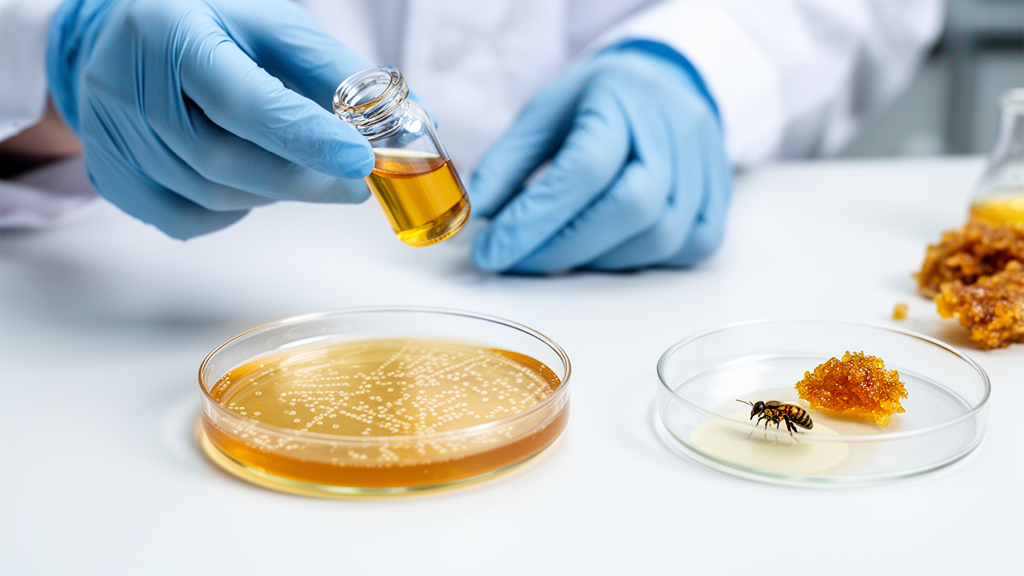
Honey and propolis from the Australian stingless bee Tetragonula carbonaria can inhibit a range of clinically significant bacteria and fungi, according to a laboratory study that tested these hive products against 16 pathogens using broth microdilution methods. The findings, reported by researchers including Jasmin Li, Rosalyn Gloag, Dee A. Carter and Kenya E. Fernandes, add to growing interest in bee-derived natural products as potential sources of new antimicrobials at a time of rising antimicrobial resistance. Most research on antimicrobial hive products has focused on the European honey bee, Apis mellifera.
Yet around 550 stingless bee species worldwide also produce honey and other hive materials, and these remain largely unexplored as sources of bioactive compounds. The new study examined products from T. carbonaria, a native Australian stingless bee, to assess whether they possess measurable antimicrobial properties. The two products showed clearly distinct activity profiles.
Propolis extracts displayed selective activity, inhibiting only a subset of the tested bacteria along with certain filamentous fungi. The researchers also probed what drives this activity. In T. carbonaria honey, however, hydrogen peroxide production was only moderately correlated with antimicrobial activity, indicating that additional compounds contribute to its potency.
Similarly, the total phenolic content of propolis did not correlate significantly with its antimicrobial effect, suggesting that other bee- or plant-derived compounds, rather than phenolics alone, underpin the observed inhibition. The authors conclude that T. carbonaria propolis and honey are promising antimicrobials and potential sources of novel bioactive molecules. As the work was conducted in vitro against laboratory cultures, further studies would be needed to establish efficacy in real-world or clinical settings.
Subject of Research: Antimicrobial activity of honey and propolis from the Australian stingless bee Tetragonula carbonaria
Article Title: The antibacterial and antifungal activity of honey and propolis from the Australian stingless bee Tetragonula carbonaria
Article References: Li, J., Gloag, R., Carter, D. A., & Fernandes, K. E. (2026). The antibacterial and antifungal activity of honey and propolis from the Australian stingless bee Tetragonula carbonaria. PLOS One, 21(10), e0361610. https://doi.org/10.1371/journal.pone.0361610
Image Credits: AI Generated
DOI: 10.1371/journal.pone.0361610
Keywords: stingless bees, Tetragonula carbonaria, honey, propolis, antimicrobial resistance, natural products, antibacterial, antifungal, hydrogen peroxide, phenolic content, broth microdilution, bioactive compounds
Cite Scienmag News
Roger Howard. (October 27, 2026). Stingless Bee Honey and Propolis Show Antimicrobial Activity Against Key Pathogens. Scienmag. https://scienmag.com/stingless-bee-honey-and-propolis-show-antimicrobial-activity-against-key-pathogens/
Roger Howard. "Stingless Bee Honey and Propolis Show Antimicrobial Activity Against Key Pathogens." Scienmag, 27 October 2026, https://scienmag.com/stingless-bee-honey-and-propolis-show-antimicrobial-activity-against-key-pathogens/. Accessed 27 October 2026.
Roger Howard. "Stingless Bee Honey and Propolis Show Antimicrobial Activity Against Key Pathogens." Scienmag. October 27, 2026. https://scienmag.com/stingless-bee-honey-and-propolis-show-antimicrobial-activity-against-key-pathogens/


