


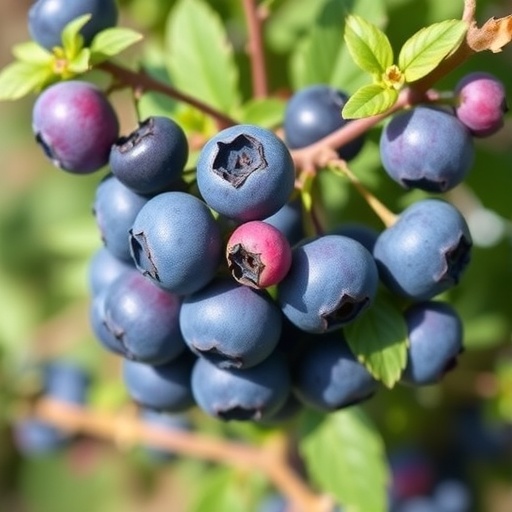
Scientists have recently achieved significant breakthroughs in the field of plant tissue culture with a focus on the propagation of blueberries, specifically the variety known as ‘Blue Ribbon’. In a groundbreaking study published in Discover Plants, researchers including Taku, Singh, and Singh have developed a robust in vitro protocol for the sterilization, callogenesis, and shoot organogenesis of Vaccinium corymbosum L. This newly established methodology promises to enhance blueberry production and provide vital insights for both agronomy and horticulture.
The research begins by addressing the challenges faced in the conventional cultivation of blueberries, particularly issues related to disease management and the availability of high-quality plant material. Traditional propagation methods often lead to inconsistent results, with cultivars susceptible to pathogens, causing setbacks in yield and quality. In response, the study expedites the journey from explant to rooted plant by implementing streamlined in vitro techniques, thereby providing an efficient pathway to establishing healthy, disease-free plants.
At the heart of the study is the process of sterilization, which is paramount to ensure that cultures are free from microbial contamination. The researchers utilized a series of chemical disinfectants, specifically targeting surface microorganisms that could compromise explants. They meticulously optimized the concentration and exposure time of sodium hypochlorite and ethanol within their protocol. The successful implementation of this sterilization technique forms the foundation for subsequent processes, ensuring that only the desired cells contribute to plant regeneration.
Following successful sterilization, the advent of callogenesis takes center stage in this protocol. Callogenesis refers to the process where explants develop callus tissue, a mass of undifferentiated cells that can give rise to new plants. The researchers highlighted the importance of selecting appropriate culture media containing plant growth regulators, such as auxins and cytokinins, which are essential for promoting cell division and callus formation. Their careful balance of these phytohormones ultimately yielded vigorous callus that serves as a precursor for shoot organogenesis, thereby advancing the regeneration process.
Once the callus is established, the next critical step is the induction of shoot organogenesis. Herein lies the significance of the research; the generation of axillary shoots from the callus is crucial for the eventual development of a complete plant. The team experimented with varying ratios of plant growth regulators to stimulate shoot formation, demonstrating how slight adjustments in hormone concentrations yielded substantial differences in shoot induction rates. Their methodology illustrates the intricate relationship between hormonal balance and successful shoot regeneration.
The study further emphasizes the duration of incubation periods and the necessity of environmental conditions in fostering shoot growth. By meticulously monitoring light exposure, temperature, and humidity, the researchers were able to replicate ideal conditions for shoot development. The incorporation of these parameters underscores the importance of simulating natural plant environments while maintaining control over external factors that could hinder growth.
As the shoots develop, the next necessary phase involves the acclimatization and rooting of the plantlets. This critical transition from in vitro conditions to ex vitro is often challenging and can greatly influence the survival rates of propagated plants. The research outlines a comprehensive acclimatization process, detailing how the plantlets were gradually introduced to lower humidity environments. This step is pivotal, as it conditions the young plants to thrive in their eventual outdoor habitats.
Through this research, the authors do not just present a protocol but also contribute a foundational understanding of the underlying biological processes at play during in vitro culture. Their work elucidates the significance of genetic and physiological responses to exogenous factors, enriching the overall knowledge base surrounding plant tissue culture practices.
Moreover, the implications of this research extend beyond blueberry propagation alone. The techniques outlined in this study are applicable to a variety of horticultural crops, allowing for broader agricultural innovations. This resonance with other species hints at a potential revolution in the propagation of delicate and high-value plants, alleviating some of the challenges currently faced by growers and researchers alike.
As the demand for blueberries continues to rise due to dietary trends and health benefits associated with these berries, the findings from this comprehensive study come at a critical time. The ability to rapidly produce disease-free and high-quality plants directly impacts the agricultural landscape, ensuring that supply can meet the increasing consumer demand. Furthermore, this research provides essential groundwork for future studies aimed at improving other traits within the Vaccinium genus.
Through the deployment of this well-structured in vitro protocol, the researchers have paved the way for a substantial transformation in the blueberry cultivation process. Not only does it enable the swift propagation of elite cultivars, but it also diminishes reliance on traditional propagation methods that often include lengthy growing periods and vulnerability to environmental uncertainties.
The excitement around these advancements is palpable, especially as they hold the potential to influence sustainable agricultural practices. By reducing the time from lab to field, this study illustrates a progressive move towards a more efficient and resilient food production system. On a larger scale, such contributions align with global agricultural goals aiming for improved crop efficiency under fluctuating climate conditions and increasing population pressures.
In conclusion, the innovative in vitro protocol established by Taku, Singh, and Singh is set to become a game-changer for blueberry cultivation. By advancing our understanding of plant tissue culture and showcasing effective methodologies for regenerating healthy Vaccinium corymbosum L. plants, this study not only contributes significant value to blueberries but also offers transferable techniques that could benefit a multitude of other crops. As researchers and agriculturalists build upon this work, the future of food security and sustainable agriculture looks brighter than ever.
Taku, N., Singh, B., Singh, S. et al. In vitro protocol for sterilization, callogenesis and shoot organogenesis for blueberry (Vaccinium corymbosum L.) var. ‘Blue ribbon’.
Discov. Plants 2, 225 (2025). https://doi.org/10.1007/s44372-025-00312-2
Cite Scienmag News
Alan Morgan. (August 24, 2025). Sterilization and Regeneration Protocol for Blueberry Varieties. Scienmag. https://scienmag.com/sterilization-and-regeneration-protocol-for-blueberry-varieties/
Alan Morgan. "Sterilization and Regeneration Protocol for Blueberry Varieties." Scienmag, 24 August 2025, https://scienmag.com/sterilization-and-regeneration-protocol-for-blueberry-varieties/. Accessed 3 September 2026.
Alan Morgan. "Sterilization and Regeneration Protocol for Blueberry Varieties." Scienmag. August 24, 2025. https://scienmag.com/sterilization-and-regeneration-protocol-for-blueberry-varieties/


