


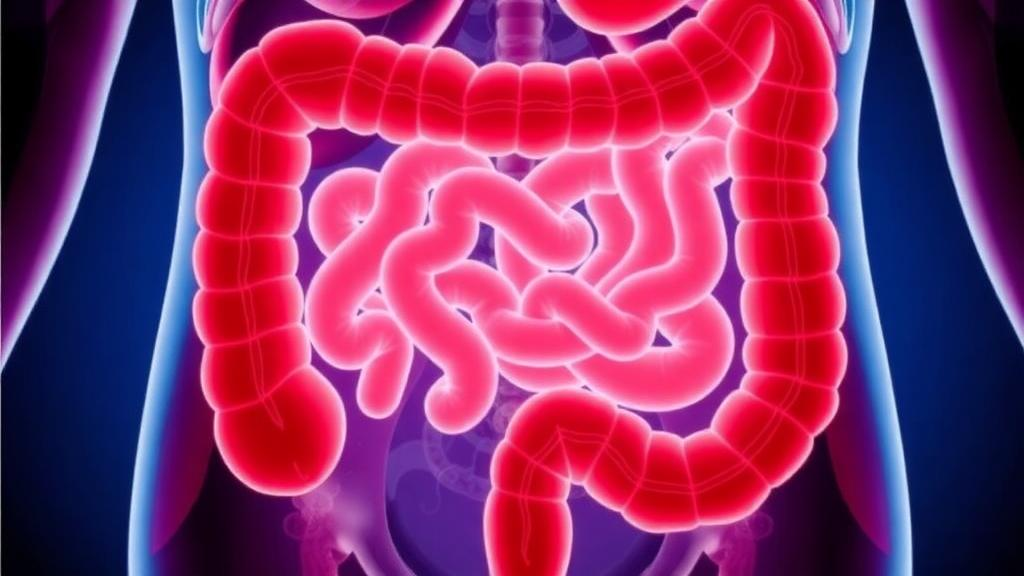
When a colon tumor grows large enough to completely block the bowel, surgeons have traditionally faced an unenviable choice: operate immediately in an emergency setting, with all the risks that entails, or try to relieve the obstruction first with a metallic stent and then operate electively. A new multicenter prospective study published in the British Journal of Cancer suggests there may be a third, more powerful option. By inserting a self-expanding metallic stent, or SEMS, to reopen the blocked colon and then delivering a course of neoadjuvant chemotherapy before the operation, clinicians may be able to substantially improve long-term survival without adding procedural danger. The findings, drawn from 246 patients across five Chinese hospitals, are among the strongest clinical evidence yet that the window created by stenting can be used not merely to stabilize patients but to attack their cancer systemically before the scalpel ever touches it.
The clinical problem begins with anatomy. Left-sided colon cancers, arising in the descending and sigmoid colon where the bowel lumen is narrow and stool is solid, are notorious for presenting as complete obstructions. Unlike tumors on the right side of the colon, where wide lumens and liquid contents delay symptoms, left-sided lesions can seal off the bowel abruptly, causing abdominal distension, vomiting, and the risk of perforation. The traditional response was emergency surgery: remove the obstructed segment, often with a temporary or permanent colostomy, in patients who are frequently dehydrated, septic, and physiologically fragile. Emergency colectomy in this setting carries high rates of complications and stoma creation, and it forecloses the possibility of giving chemotherapy before surgery, a strategy that has shown promise in non-obstructed colon cancer in randomized trials.
Self-expanding metallic stents changed the calculus. Deployed endoscopically across the tumor, a SEMS springs open to hold the narrowed segment patent, restoring bowel transit within hours and converting a surgical emergency into a scheduled operation. Numerous trials and meta-analyses have established stenting as a bridge to surgery as a reasonable alternative to emergency resection, reducing stoma rates and allowing time for optimization. But the technology has long carried an oncological shadow. Manipulating the tumor with a stent could, in theory, dislodge cancer cells and promote dissemination, and some studies have reported increased perineural invasion or local recurrence after stenting. That concern made many oncologists reluctant to extend the stent-to-surgery interval, and guidelines have generally recommended proceeding to surgery within a couple of weeks rather than exploiting the interval for systemic therapy.
The new study, led by Yang Shi, Zhi Wei Zhai, and Ke Cao of Beijing Chaoyang Hospital, Capital Medical University, together with senior authors Zhen Jun Wang and Jia Gang Han, directly confronts that hesitation. Between the two study arms, 105 patients received a stent followed directly by elective surgery, while 141 patients received a stent, then neoadjuvant chemotherapy, then scheduled surgery. All patients had complete obstruction of the left colon caused by cancer. Because patients were not randomized, the investigators used two complementary statistical strategies to level the playing field: one-to-one propensity score matching, which paired patients across arms on baseline characteristics to yield a matched cohort of 206, and an eight-week landmark analysis, which discounts survival time accrued before the chemotherapy arm could realistically have received its treatment, guarding against immortal time bias.
The safety result is the study’s quiet foundation. If adding weeks of chemotherapy while a metal stent sits inside a tumor had caused stents to occlude, migrate, or perforate the bowel, the strategy would be dead on arrival. Instead, SEMS-related complications occurred at nearly identical rates in both groups: 15.5 percent in the neoadjuvant group versus 14.6 percent in the direct-surgery group, a difference that was statistically indistinguishable with a P value of 0.845. In practical terms, the chemotherapy interval did not appear to erode the mechanical integrity of the stent or inflame the tumor-stent interface in ways that endangered patients. That finding addresses the principal fear that has kept the approach out of mainstream practice and gives the survival data room to speak.
And speak they do. In the propensity score-matched cohort, patients who received chemotherapy before surgery had a five-year overall survival of 66.2 percent, compared with 51.7 percent for those who went straight to surgery, a difference highly unlikely to be explained by chance. Disease-free survival, which tracks patients who remain free of any cancer recurrence, diverged even more sharply: 65.3 percent versus 40.0 percent at five years, again with P values below 0.001. The eight-week landmark analysis reproduced the same pattern, confirming that the benefit was not an artifact of comparing patients who survived long enough to receive treatment against those who did not. Kaplan-Meier curves in both the original and matched cohorts separated early and stayed separated, and subgroup analyses of overall survival were consistent across the strata examined.
Multivariable Cox regression, which adjusts simultaneously for multiple prognostic factors, elevated neoadjuvant chemotherapy to the status of an independent protective factor. For overall survival, the hazard ratio was 0.436, with a 95 percent confidence interval of 0.188 to 0.996 and a P value of 0.015, meaning patients receiving the neoadjuvant strategy had less than half the hazard of death over follow-up. For disease-free survival, the hazard ratio was 0.661, with a confidence interval of 0.551 to 0.830 and a P value of 0.002. In the language of clinical epidemiology, these are modest but meaningful effect sizes, and the fact that the chemotherapy variable retained significance after adjustment strengthens the causal interpretation that the treatment itself, rather than some favorable patient characteristic, drove the survival advantage.
The biological logic behind the result is straightforward. Neoadjuvant chemotherapy treats micrometastatic disease while it is most vulnerable, before surgical stress and inflammatory responses can nurture dormant tumor cells, and it can downstage the primary tumor, potentially improving the quality of resection. The FOxTROT international randomized trial, cited by the authors, previously demonstrated that preoperative chemotherapy for operable colon cancer improves pathological outcomes and is well tolerated, but obstructed patients were excluded from such trials precisely because their tumors blocked the way. The stent removes that barrier, literally and figuratively, creating a therapeutic window in which systemic therapy becomes feasible. The present study suggests that window can be exploited safely, with complication rates that do not differ from the direct-surgery pathway.
Important caveats remain. This was a prospective cohort study, not a randomized controlled trial, and even careful propensity matching cannot eliminate every source of confounding; clinicians may have selected fitter patients or less aggressive tumors for the chemotherapy pathway in ways not captured by measured variables. The eight-week landmark analysis mitigates the most dangerous bias, but the authors themselves frame the results as strongly supporting feasibility and oncological safety rather than proving superiority. The study also reflects practice at Chinese tertiary centers with experienced endoscopists, and generalization will depend on reproducing these outcomes elsewhere. Stenting itself carries recognized risks, including perforation and occlusion, and the interplay between specific chemotherapy regimens, such as anti-angiogenic agents, and indwelling stents has raised perforation concerns in earlier literature.
Even so, the direction of travel is clear and the clinical implications are immediate. For the substantial minority of colon cancer patients who present with complete left-sided obstruction, a strategy of stent decompression, neoadjuvant chemotherapy, and elective surgery delivered five-year overall survival approaching two-thirds and disease-free survival of 65 percent, without increasing stent-related complications. If randomized confirmation follows, the standard of care for obstructive left-sided colon cancer could shift from a race to the operating room toward a deliberate, sequenced campaign: reopen the bowel, treat the disease systemically, then resect on planned terms. For patients facing one of the most feared acute presentations of cancer, that sequence could translate into years of additional survival.
Subject of Research: Neoadjuvant chemotherapy after colonic stenting as a bridge to surgery for obstructive left-sided colon cancer
Article Title: Neoadjuvant chemotherapy as a bridge to surgery versus direct surgery following SEMS placement in obstructive left-sided colon cancer: a multicenter prospective cohort study
Article References: Shi, Y., Zhai, Z. W., Cao, K., Ye, C. X., Li, Y. S., Wang, Y. L., Yang, K. Y., Ding, Z., Hu, X. H., Dai, Y., Qian, Q., Wang, G. Y., Wang, Z. J., & Han, J. G. (2026). Neoadjuvant chemotherapy as a bridge to surgery versus direct surgery following SEMS placement in obstructive left-sided colon cancer: a multicenter prospective cohort study. British Journal of Cancer. https://doi.org/10.1038/s41416-026-03623-7
Image Credits: AI Generated
DOI: 10.1038/s41416-026-03623-7
Keywords: colon cancer, colonic obstruction, self-expanding metallic stent, neoadjuvant chemotherapy, bridge to surgery, overall survival, disease-free survival, propensity score matching, British Journal of Cancer, colorectal surgery, oncology, clinical study
Cite Scienmag News
Nathaniel Bowman. (September 30, 2026). Stent Plus Chemotherapy Before Surgery Boosts Survival in Blocked Colon Cancer. Scienmag. https://scienmag.com/stent-plus-chemotherapy-before-surgery-boosts-survival-in-blocked-colon-cancer/
Nathaniel Bowman. "Stent Plus Chemotherapy Before Surgery Boosts Survival in Blocked Colon Cancer." Scienmag, 30 September 2026, https://scienmag.com/stent-plus-chemotherapy-before-surgery-boosts-survival-in-blocked-colon-cancer/. Accessed 4 October 2026.
Nathaniel Bowman. "Stent Plus Chemotherapy Before Surgery Boosts Survival in Blocked Colon Cancer." Scienmag. September 30, 2026. https://scienmag.com/stent-plus-chemotherapy-before-surgery-boosts-survival-in-blocked-colon-cancer/


