


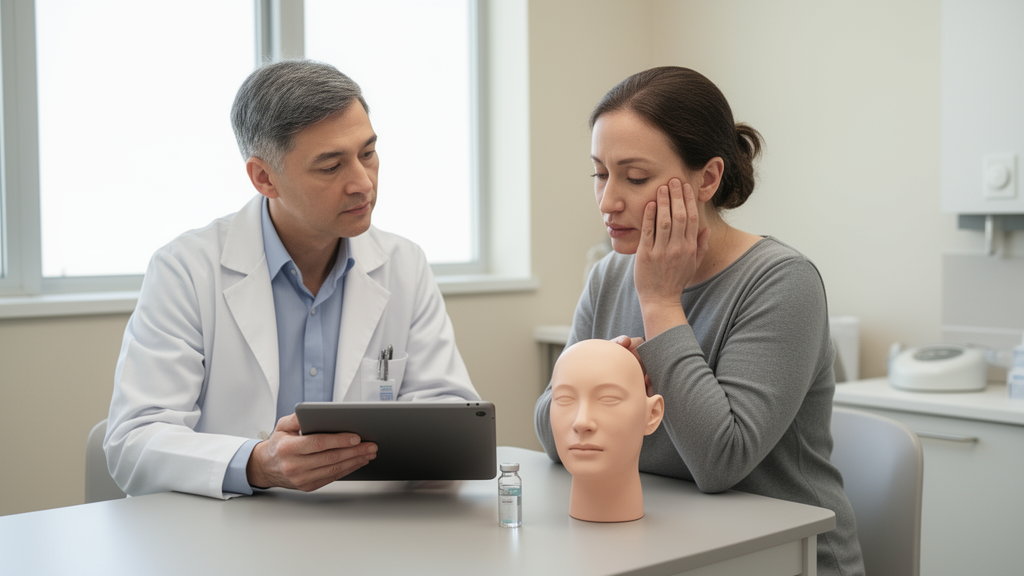
A secondary analysis of three randomized studies found no detected differences in early patient-reported outcomes between craniofacial reconstruction using experimental stem-cell therapy and standard-of-care grafting. The analysis included 64 participants undergoing procedures for tooth-extraction sockets, maxillary sinus floor augmentation, craniofacial trauma or alveolar cleft reconstruction. Researchers assessed discomfort, adverse events, quality of life and wound healing at one, two and four weeks after surgery.
Participants received one of two approaches: bone marrow aspirate collected from the posterior iliac crest and combined with a scaffold, or standard treatment based on guided bone regeneration or an autogenous bone block graft. The experimental group contained 35 participants, while the standard-of-care group contained 29. The investigators used mixed models to compare outcomes between treatment groups. They also trained machine-learning models on extraction-socket and trauma or cleft-reconstruction datasets, then tested the models on trauma data to evaluate their ability to predict wound-healing index, quality of life, discomfort and whether adverse events occurred.
Discomfort increased across all groups over the four-week assessment period, indicating worsening symptoms after surgery; the change over time reached p < 0.001. The total quality-of-life score worsened with increasing age (p = 0.02). Hispanic participants recorded the highest overall quality-of-life scores (p = 0.01), while adverse events increased with age and among female participants (p < 0.001). These patterns describe associations within the analyzed population and do not establish causes. The analysis did not detect differences between the stem-cell and standard-care groups, supporting the authors’ conclusion that the two approaches had equivalent effects on the measured early outcomes.
Machine-learning approaches performed well in predicting the continuous outcomes of wound-healing index, quality of life and discomfort, particularly with nonlinear models. All tested models also predicted the binary outcome of adverse events. Together, the results suggest that computational models captured patterns in the postoperative outcome data. The analysis was limited to short-term assessments at one, two and four weeks, 64 participants pooled from three randomized studies, and several types of craniofacial procedure. As a secondary analysis of previously conducted trials, the work evaluated existing trial data rather than constituting a new randomized comparison of treatment effects.
Overall, the study found that experimental regenerative therapy did not produce detectable differences from established grafting approaches during early recovery after oral and craniofacial reconstruction. The findings support including patient-reported measures when evaluating these procedures, as the analysis evaluated recovery-related experiences in addition to wound-healing indicators. The results do not establish whether the treatments have equivalent long-term outcomes, implant success or tissue-regeneration benefits, and they cannot be extended beyond the four-week assessment period. The authors called for further research focused on patient-reported outcomes in oral and craniofacial reconstruction.
Subject of Research: Early patient-reported outcomes after experimental stem-cell therapy for craniofacial bone reconstruction
Article Title: Patient-reported outcomes following craniofacial regenerative stem cell therapy: a secondary analysis and machine learning approach
Article References: Almujaydil, R., Leow, N., Nguyen, L., Giannobile, W. V., D’Aiuto, F., & Kaigler, D. J. (2026). Patient-reported outcomes following craniofacial regenerative stem cell therapy: a secondary analysis and machine learning approach. Journal of Translational Medicine. https://doi.org/10.1186/s12967-026-09106-w
Image Credits: AI Generated
DOI: 10.1186/s12967-026-09106-w
Keywords: stem-cell therapy, craniofacial reconstruction, patient-reported outcomes, wound healing, quality of life, bone grafting, machine learning, postoperative discomfort, adverse events, randomized trials, Patient-reported, outcomes
Cite Scienmag News
Ophelia Keating. (October 21, 2026). Stem-cell craniofacial therapy shows similar early patient-reported outcomes. Scienmag. https://scienmag.com/stem-cell-craniofacial-therapy-shows-similar-early-patient-reported-outcomes/
Ophelia Keating. "Stem-cell craniofacial therapy shows similar early patient-reported outcomes." Scienmag, 21 October 2026, https://scienmag.com/stem-cell-craniofacial-therapy-shows-similar-early-patient-reported-outcomes/. Accessed 21 October 2026.
Ophelia Keating. "Stem-cell craniofacial therapy shows similar early patient-reported outcomes." Scienmag. October 21, 2026. https://scienmag.com/stem-cell-craniofacial-therapy-shows-similar-early-patient-reported-outcomes/


