

Wednesday, October 21, 2026
Science
No Result
View All Result
  • Login
  • HOME
  • SCIENCE NEWS
  • CONTACT US
  • HOME
  • SCIENCE NEWS
  • CONTACT US
No Result
View All Result
Scienmag
No Result
View All Result
Home Science News

Expanded Predictors Improve Classification of Adolescent Overweight and Obesity

October 21, 2026
in Science News
Daisy Hatcher
By Daisy Hatcher Scienmag Editorial Profile - Food Safety and Toxicology
Reading Time: 2 mins read
0
Expanded Predictors Improve Classification of Adolescent Overweight and Obesity

Expanded Predictors Improve Classification of Adolescent Overweight and Obesity

65
SHARES
587
VIEWS
Share on FacebookShare on Twitter
ADVERTISEMENT

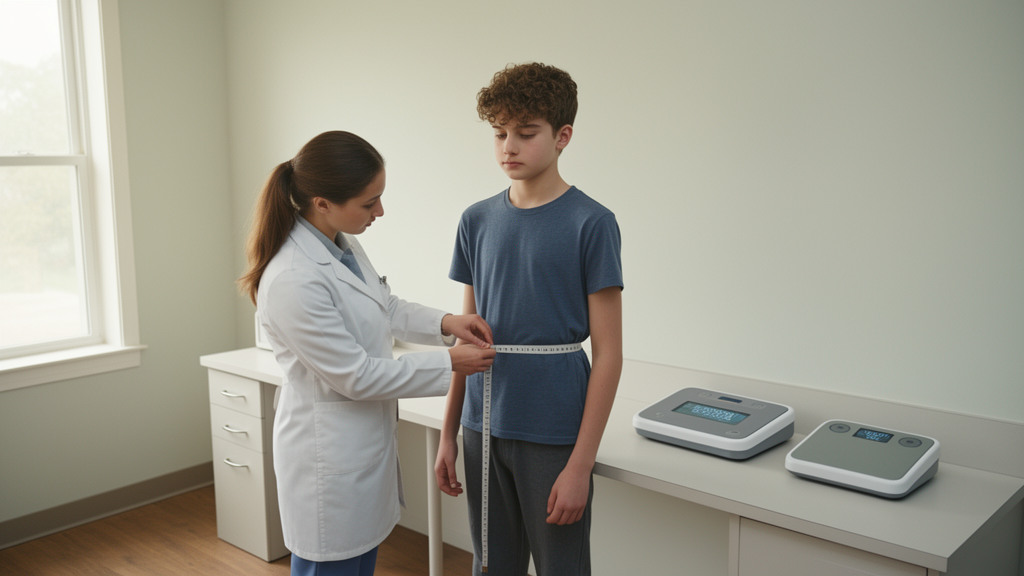
A cross-sectional analysis of 17,814 U.S. adolescents found that adding broader predictor information improved machine-learning classification of current overweight or obesity. The study used 2023 Youth Risk Behavior Surveillance System data from participants aged 12 to 18 years and estimated that 31.8% had overweight or obesity. Because body mass index and candidate predictors were measured in the same survey cycle, the models classified adolescents’ status at that time rather than predicting future obesity.

Researchers used survey-aware multivariable logistic regression to identify variables independently associated with overweight or obesity, then compared Random Forest and XGBoost under base and extended predictor frameworks. On a held-out test set, the extended Random Forest model increased its area under the receiver operating characteristic curve from 0.6241 to 0.6894. The corresponding XGBoost value rose from 0.6217 to 0.6724. These results indicate that the expanded information improved classification within this dataset and analysis; they do not show that changing an adolescent’s characteristics would cause a change in body mass index status.

Male sex was associated with higher odds of overweight or obesity, as were Black or African American and Hispanic/Latino race or ethnicity. Higher moderate-to-vigorous physical activity and more frequent breakfast intake were associated with lower odds. The Random Forest model with extended predictors, designated RF-Extended, was selected for calibration and interpretability analysis. Isotonic recalibration preserved its discrimination while improving the reliability of its probability estimates. The Brier score decreased from 0.2126 to 0.1960, and expected calibration error fell from 0.1160 to 0.0213.

Exploratory SHAP analysis identified sex, race or ethnicity, physical activity, sleep duration, age and breakfast frequency among the features contributing most strongly to RF-Extended output. This analysis described contributions within the fitted model and did not establish biological mechanisms or causal determinants. The study’s scope remains important: it was based on one survey cycle, and its models estimated current status rather than forecasting later obesity. Prospective and external validation would be required before considering applications in other populations, including Vietnamese adolescents. The findings therefore provide a survey-aware evaluation of expanded predictors, two machine-learning algorithms, probability calibration and feature attribution, rather than evidence that the models are ready for screening or prevention use.

Subject of Research: Survey-aware machine-learning classification of current overweight and obesity among 17,814 U.S. adolescents using 2023 YRBSS data

Article Title: Broader factors associated with current adolescent overweight/obesity status in YRBSS 2023: Survey-aware analysis and calibrated AI-assisted classification

Article References: Thanh, T. H., Thi, N. N., & Nguyen Khac, T. (2026). Broader factors associated with current adolescent overweight/obesity status in YRBSS 2023: Survey-aware analysis and calibrated AI-assisted classification. PLOS One, 21(10), e0360155. https://doi.org/10.1371/journal.pone.0360155

Image Credits: AI Generated

DOI: 10.1371/journal.pone.0360155

Keywords: adolescent overweight, adolescent obesity, machine learning, Random Forest, XGBoost, model calibration, physical activity, breakfast intake, YRBSS, SHAP analysis, Broader, factors

Cite Scienmag News

Daisy Hatcher. (October 21, 2026). Expanded Predictors Improve Classification of Adolescent Overweight and Obesity. Scienmag. https://scienmag.com/expanded-predictors-improve-classification-of-adolescent-overweight-and-obesity/


Daisy Hatcher. "Expanded Predictors Improve Classification of Adolescent Overweight and Obesity." Scienmag, 21 October 2026, https://scienmag.com/expanded-predictors-improve-classification-of-adolescent-overweight-and-obesity/. Accessed 21 October 2026.

Daisy Hatcher. "Expanded Predictors Improve Classification of Adolescent Overweight and Obesity." Scienmag. October 21, 2026. https://scienmag.com/expanded-predictors-improve-classification-of-adolescent-overweight-and-obesity/

Tags: adolescent obesityadolescent obesity risk factorsadolescent overweightadolescent overweight predictionbreakfast intakeBroadercross-sectional adolescent health studyextended predictor modelsfactorsimpact of broader predictors on obesity detectionMachine learningmachine learning classification of obesitymachine learning in public healthmodel calibrationPhysical activityphysical activity and breakfast habitsRandom ForestRandom Forest vs XGBoost accuracySHAP analysissocioeconomic and demographic influences on youth obesitysurvey-based obesity classificationXGBoostyouth risk behavior surveillance dataYRBSS
Share26Tweet16
Previous Post

Bioinformatics study links two downregulated genes to tendinopathy biomarkers

Next Post

Chimeric RNAs produce immune proteins that tune inflammation

Related Posts

Stem-cell craniofacial therapy shows similar early patient-reported outcomes
Medicine

Stem-cell craniofacial therapy shows similar early patient-reported outcomes

October 21, 2026
Chimeric RNAs produce immune proteins that tune inflammation
Medicine

Chimeric RNAs produce immune proteins that tune inflammation

October 21, 2026
Bioinformatics study links two downregulated genes to tendinopathy biomarkers
Technology and Engineering

Bioinformatics study links two downregulated genes to tendinopathy biomarkers

October 21, 2026
Research report: Work-time arrangements, career progression, and job satisfaction among physicians in Germany: a cross-sectional survey
Medicine

Research report: Work-time arrangements, career progression, and job satisfaction among physicians in Germany: a cross-sectional survey

October 21, 2026
Human Cell Models Clarify Neutrophil Roles in Cancer Immunotherapy
Technology and Engineering

Human Cell Models Clarify Neutrophil Roles in Cancer Immunotherapy

October 21, 2026
Delphi Study Builds Nurse Employee Assistance Evaluation Framework
Medicine

Delphi Study Builds Nurse Employee Assistance Evaluation Framework

October 21, 2026
Next Post
Chimeric RNAs produce immune proteins that tune inflammation

Chimeric RNAs produce immune proteins that tune inflammation

  • Mothers who receive childcare support from maternal grandparents show more optimized

    Mothers who receive childcare support from maternal grandparents show more parental warmth, finds NTU Singapore study

    27656 shares
    Share 11059 Tweet 6912
  • University of Seville Breaks 120-Year-Old Mystery, Revises a Key Einstein Concept

    1061 shares
    Share 424 Tweet 265
  • Bee body mass, pathogens and local climate influence heat tolerance

    682 shares
    Share 273 Tweet 171
  • Researchers record first-ever images and data of a shark experiencing a boat strike

    546 shares
    Share 218 Tweet 137
  • Groundbreaking Clinical Trial Reveals Lubiprostone Enhances Kidney Function

    531 shares
    Share 212 Tweet 133
Science

Embark on a thrilling journey of discovery with Scienmag.com—your ultimate source for cutting-edge breakthroughs. Immerse yourself in a world where curiosity knows no limits and tomorrow’s possibilities become today’s reality!

RECENT NEWS

  • Stem-cell craniofacial therapy shows similar early patient-reported outcomes
  • Chimeric RNAs produce immune proteins that tune inflammation
  • Expanded Predictors Improve Classification of Adolescent Overweight and Obesity
  • Bioinformatics study links two downregulated genes to tendinopathy biomarkers

Categories

  • Agriculture
  • Anthropology
  • Archaeology
  • Athmospheric
  • Biology
  • Biotechnology
  • Blog
  • Bussines
  • Cancer
  • Chemistry
  • Climate
  • Earth Science
  • Editorial Policy
  • Marine
  • Mathematics
  • Medicine
  • Pediatry
  • Policy
  • Psychology & Psychiatry
  • Science Education
  • Science News
  • Social Science
  • Space
  • Technology and Engineering

Subscribe to Blog via Email

Enter your email address to subscribe to this blog and receive notifications of new posts by email.

Join 5,150 other subscribers

© 2025 Scienmag - Science Magazine

Welcome Back!

Login to your account below

Forgotten Password?

Retrieve your password

Please enter your username or email address to reset your password.

Log In
No Result
View All Result
  • HOME
  • SCIENCE NEWS
  • CONTACT US

© 2025 Scienmag - Science Magazine

Discover more from Science

Subscribe now to keep reading and get access to the full archive.

Continue reading