


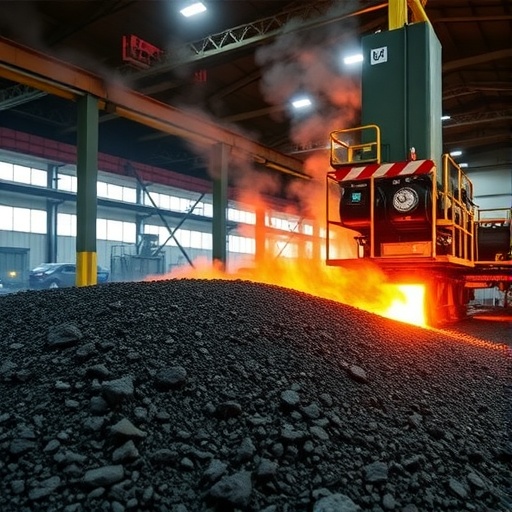
In an era where climate change and environmental sustainability dominate headlines, innovative approaches to carbon dioxide (CO2) sequestration are more important than ever. A groundbreaking study conducted by researchers including Bilen Özkan and colleagues sheds light on an advanced method of carbon capture using steel slag, a byproduct of steel production. This novel technique for CO2 sequestration not only promises to enhance carbon capture efficiency but also provides potential benefits for the steel industry and the environment.
The research focuses on carbonation processes that utilize steel slag, a material that is often discarded or underutilized. By transforming steel slag into a medium for CO2 fixation, the researchers aim to demonstrate how industrial byproducts can play a pivotal role in reducing greenhouse gas emissions. The carbonation process involves the reaction of CO2 with minerals present in steel slag, leading to the formation of stable carbonates. This method presents a dual advantage: it captures CO2 while simultaneously valorizing waste materials.
An innovative aspect of this research is the exploration of desorption techniques for monoethanolamine (MEA), a common chemical used in CO2 capture processes. By effectively managing the CO2-loaded MEA, the authors propose a strategy for not only enhancing the efficiency of carbon capture but also minimizing the energy required for regeneration of the absorbent. This could provide a significant reduction in the operational costs of carbon capture technologies, making them more viable for widespread adoption.
The study also delves into the thermodynamic and kinetic factors influencing the carbonation of steel slag. By carefully optimizing these parameters, the researchers were able to achieve higher sequestration rates, ultimately demonstrating the potential for large-scale implementation of this method. The findings underscore the importance of integrating waste management and carbon capture technologies as a holistic approach to mitigating carbon emissions.
Understanding the mineral composition of steel slag is crucial, as it directly influences the reactions that take place during carbonation. The research highlights specific minerals that are particularly reactive with CO2, paving the way for further investigations and optimizations. These insights could lead to the development of tailored steel slag formulations that maximize CO2 sequestration efficiency.
Moreover, the implications of this research extend beyond just industrial applications. Urban environments can greatly benefit from methodologies that promote carbon capture using local resources. The integration of steel slag carbonation in urban planning and the construction industry could foster a more sustainable future by reducing the carbon footprint of buildings and infrastructure as steel is a widespread material used.
Another vital aspect of this study is its alignment with global sustainability goals. It emphasizes the potential of industrial byproducts to contribute to national and international climate targets. As countries strive to meet emissions reduction commitments, the utilization of steel slag as a medium for CO2 sequestration presents an exciting new avenue for investment and development.
The research also raises intriguing questions about the public perception of CO2 sequestration technologies. As awareness about climate change grows, there is a unique opportunity to engage communities in discussions about the advantages of innovative carbon capture solutions. Promoting the narrative that industrial waste can be transformed into valuable resources might enhance public support for such initiatives.
Furthermore, the potential scalability of the carbonation of steel slag is noteworthy. As the study suggests, this approach can be implemented in existing steel manufacturing facilities without significant infrastructural changes. This ease of integration means that industries can adopt sustainable practices rapidly, contributing to global efforts in reducing carbon emissions effectively.
As industries grapple with the rising costs of carbon regulation, utilizing a byproduct like steel slag for CO2 sequestration can alleviate some financial burdens. Industries equipped with carbon capture mechanisms may find themselves more competitive and socially responsible, enhancing their brand image and customer loyalty.
In conclusion, this novel method proposed by Bilen Özkan and colleagues is a testament to the ingenuity required in combating climate change. The carbonation of steel slag not only presents a feasible solution for CO2 sequestration but also symbolizes a bright future where waste materials are reshaped into essential tools for environmental remediation. The collaborative effort in the research community exemplifies the need for interdisciplinary approaches to tackle complex environmental challenges and reinforces the notion that innovative solutions can emerge from unexpected sources.
As the findings from this study embark on a path toward potential industrial application, they invite further scrutiny and exploration. The coupling of steel production with carbon capture may not only lead to a single technological advancement but might well transform the overall sustainability strategy of the steel manufacturing industry. The research creates an excellent foundation for additional studies on the economics, scalability, and long-term impacts of implementing these methods in real-world scenarios.
In a world that demands immediate action against climate change, the implications of research like this are significant. It poses a challenge and an opportunity for the entire steel industry to innovate and adapt to modern demands and environmental standards. As further research unfolds, the carbonation of steel slag paves the way for a new paradigm in industrial waste management, sustainable practices, and CO2 mitigation.
With the urgent need for sustainable practices becoming increasingly evident, the adoption of methodologies like carbonation of steel slag could lead to meaningful change. Researchers and industrial leaders must work hand in hand, leveraging such innovative approaches to ensure a cleaner and greener future for generations to come.
Cite Scienmag News
Sloane Callahan. (November 22, 2025). Steel Slag Carbonation Boosts CO2 Desorption Method. Scienmag. https://scienmag.com/steel-slag-carbonation-boosts-co2-desorption-method/
Sloane Callahan. "Steel Slag Carbonation Boosts CO2 Desorption Method." Scienmag, 22 November 2025, https://scienmag.com/steel-slag-carbonation-boosts-co2-desorption-method/. Accessed 5 September 2026.
Sloane Callahan. "Steel Slag Carbonation Boosts CO2 Desorption Method." Scienmag. November 22, 2025. https://scienmag.com/steel-slag-carbonation-boosts-co2-desorption-method/


