


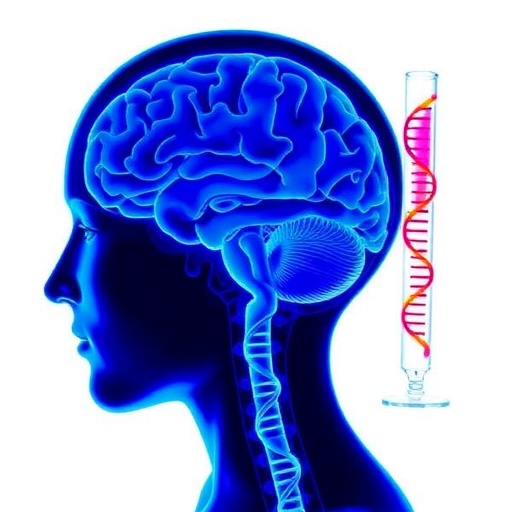
In a groundbreaking study that could revolutionize the treatment of neurological injuries, researchers have identified a novel molecular mechanism centered around a mammalian RNA thermometer that offers promising neuroprotection following subarachnoid hemorrhage (SAH). This discovery not only illuminates an intricate layer of gene regulation in mammalian cells but also lays the foundation for developing innovative therapies aimed at improving outcomes after brain hemorrhagic events, which notoriously have high morbidity and mortality rates.
Subarachnoid hemorrhage, a severe form of stroke caused by bleeding into the space surrounding the brain, leads to devastating neurological impairments. Currently, therapeutic options are limited and largely supportive, focusing on managing intracranial pressure and preventing rebleeding. The identification of molecular targets within this context has been a scientific priority. This new research unveils the role of a specialized RNA structure acting as a thermometer that senses temperature changes during physiological stress, thereby modulating gene expression critical for neuronal survival.
The concept of RNA thermometers—RNA sequences that alter their secondary structure in response to temperature fluctuations—is well-established in prokaryotes, whereby such thermosensors regulate heat shock responses and virulence factor expression. However, their presence and role in mammals had remained elusive until now. Zhang and colleagues demonstrate that a conserved mammalian RNA thermometer exists and can be stabilized to enhance its protective functions in the brain during pathological conditions such as SAH.
At the core of the discovery is a particular RNA motif that undergoes conformational changes when the cellular environment is stressed by elevated temperature or other associated factors during hemorrhagic insult. This structural rearrangement influences the translation of key neuroprotective proteins. Unlike the static dogma of gene regulation, this dynamic RNA-based mechanism allows for a rapid cellular response tuned to the severity of the injury, introducing an ingenious molecular switch that nature has subtly embedded in mammalian neurons.
The researchers utilized a combination of advanced structural biology techniques, including cryo-electron microscopy and nuclear magnetic resonance spectroscopy, to resolve the detailed configuration of the RNA thermometer. Their experiments confirmed that the native mammalian RNA thermometer adopts a folded conformation at normal physiological temperatures but unfolds when exposed to the elevated temperatures or molecular stress associated with brain hemorrhage. This unfolding facilitates or inhibits binding by specific RNA-binding proteins that regulate the translation of downstream protective effectors.
Further, genetic and pharmacological stabilization of this RNA thermometer resulted in significant neuroprotection in animal models of subarachnoid hemorrhage. By using small molecules designed to bind and maintain the folded state of the RNA thermometer, researchers observed decreased neuronal death, reduced inflammation, and improved behavioral outcomes. This therapeutic approach stands apart from conventional drug targets because it modulates RNA structure rather than protein function directly, underscoring the untapped potential of RNA-based regulation in therapeutic development.
Beyond its acute implications for SAH, this research has broad ramifications for understanding molecular stress responses in the brain. The ability to fine-tune translation via RNA thermosensors hints at an evolutionarily conserved strategy to rapidly adapt protein synthesis in highly sensitive tissues like the central nervous system. Such mechanisms could be involved in a variety of neuropathological contexts, including ischemic stroke, traumatic brain injury, and neurodegenerative diseases where cellular stress responses dictate the course of neuronal survival or demise.
This pioneering study also opens avenues for the burgeoning field of RNA-targeted therapeutics. While the pharmaceutical industry has historically prioritized protein targets, RNA molecules are now recognized as potent regulatory hubs and versatile drug targets thanks to their structural plasticity and central role in gene expression. The mammalian RNA thermometer exemplifies this shift by demonstrating that RNA conformational stability can be manipulated pharmacologically to achieve functional outcomes, establishing a new class of neuroprotective agents.
Moreover, the investigators explored the molecular partners that interact with the RNA thermometer, identifying novel RNA-binding proteins that control its activity. These proteins function as co-regulators by either stabilizing or destabilizing the RNA structure in response to cellular cues. Understanding this protein-RNA interface provides deeper insight into post-transcriptional regulatory networks and suggests potential combinatorial strategies where both RNA structure and associated proteins are targeted for maximal therapeutic efficacy.
In terms of translational impact, the immediate challenge lies in developing clinically viable molecules capable of specifically targeting the mammalian RNA thermometer without off-target effects. The study showcases proof-of-concept compounds with high specificity and efficacy in preclinical models, but future work will need to address delivery methods, pharmacokinetics, and safety in humans. Should these hurdles be overcome, the approach could herald a paradigm shift in how brain injury and possibly other acute neurological disorders are managed.
Additionally, the implications extend to personalized medicine, where individual variability in RNA thermometer sequences or their interacting proteins might influence susceptibility to brain injury and treatment responses. The genetic and epigenetic regulation of this RNA element could provide biomarkers for prognosis and therapeutic stratification, offering patients tailored interventions based on their unique molecular profiles.
Beyond the laboratory, the scientific community has greeted these findings with enthusiasm, recognizing the elegance of an endogenous nucleic acid structure acting as a rapid-response molecular sensor in mammals. This bridges a fundamental gap between bacterial RNA thermosensing and mammalian gene regulation, expanding our understanding of evolutionary conservation and innovation in cellular stress adaptation mechanisms.
The innovation lies not only in identifying the mammalian RNA thermometer but also in harnessing its controllable plasticity for therapeutic gain. This dual achievement reflects the convergence of structural biology, molecular neuroscience, and drug discovery, illustrating how interdisciplinary approaches drive scientific breakthroughs with real-world clinical potential.
As research progresses, it is anticipated that RNA thermometers may be found regulating other stress pathways beyond neuroprotection, including metabolism, immune responses, and cancer biology. This could transform broad areas of biomedical science, positioning RNA-based sensors as universal mediators of cellular homeostasis and disease.
In summary, the work by Zhang, Zhang, Liu, and colleagues represents a landmark in neurobiology by elucidating a mammalian RNA thermometer that, when stabilized, confers robust neuroprotection against subarachnoid hemorrhage. It challenges existing notions of how neurons respond to injury and opens unprecedented therapeutic avenues by targeting RNA structure. This study propels the field into a new era where RNA is appreciated not merely as a messenger but as a dynamic regulator and drug target, igniting hope for treating devastating brain injuries more effectively.
Zhang, M., Zhang, B., Liu, C. et al. Stabilizing a mammalian RNA thermometer confers neuroprotection in subarachnoid hemorrhage. Nat Commun 16, 8319 (2025). https://doi.org/10.1038/s41467-025-63911-3
Cite Scienmag News
Cassandra Pierce. (September 18, 2025). Stabilizing RNA Thermometer Protects Brain After Hemorrhage. Scienmag. https://scienmag.com/stabilizing-rna-thermometer-protects-brain-after-hemorrhage/
Cassandra Pierce. "Stabilizing RNA Thermometer Protects Brain After Hemorrhage." Scienmag, 18 September 2025, https://scienmag.com/stabilizing-rna-thermometer-protects-brain-after-hemorrhage/. Accessed 3 September 2026.
Cassandra Pierce. "Stabilizing RNA Thermometer Protects Brain After Hemorrhage." Scienmag. September 18, 2025. https://scienmag.com/stabilizing-rna-thermometer-protects-brain-after-hemorrhage/


