


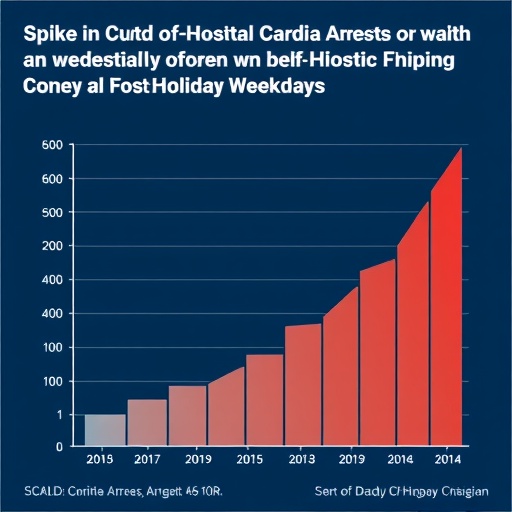
Recent research emerging from South Korea has revealed a startling increase in the incidence of out-of-hospital cardiac arrests (OHCAs) immediately following holiday periods, particularly on weekdays after consecutive rest days. This comprehensive nationwide cohort study provides a rigorous epidemiological analysis, shedding light on an understudied phenomenon that intersects cardiovascular medicine, public health emergency preparedness, and preventive intervention strategies.
The study meticulously tracked cardiac arrest occurrences across South Korea, focusing on temporal associations with holiday cycles. A key finding was the statistically significant elevation in OHCA incidence on postholiday weekdays—a period notably distinct from routine, non-holiday weekdays. These acute shifts suggest that the transitions from rest to routine exert measurable physiological stress on vulnerable individuals, triggering cardiac events outside hospital settings.
From a pathophysiological perspective, the study posits that the postholiday period may induce destabilizing autonomic fluctuations. Rest days typically involve altered sleep patterns, changes in physical activity levels, dietary variations, and psychosocial stressors. The reintroduction to work-related stress and environmental demands immediately following breaks likely exacerbates sympathetic nervous system activation, potentially precipitating fatal arrhythmic events in patients with underlying cardiovascular disorders.
Importantly, the research underscores heightened vulnerability in certain population subsets, notably the elderly and those with pre-existing cardiovascular conditions. This heterogeneity in risk points to a need for granular risk stratification and personalized preventive health strategies during holiday transitions. Medical professionals and healthcare systems must acknowledge these temporal risk patterns to optimize clinical vigilance and resource allocation.
Beyond clinical implications, the study advocates for actionable public health interventions. Emergency medical service (EMS) systems should adapt to fluctuating demand by enhancing staffing, training, and readiness during identified high-risk periods. Such preparedness would significantly improve response times and outcomes for sudden cardiac events occurring in the community, thereby reducing preventable mortality.
Furthermore, the findings prompt targeted health communication campaigns to educate at-risk populations about the increased danger during postholiday intervals. Educating patients on modifiable risk factors—including stress management, medication adherence, and symptom recognition—during these critical periods could mitigate incidence rates considerably.
Preventive medicine stands to benefit from the insights gained, as the temporal pinpointing of heightened risk allows for precise timing of clinical interventions. For instance, pre-holiday cardiac evaluations and the reinforcement of emergency action plans could become standard practice for high-risk patients, potentially forestalling adverse events in the vulnerable weeks surrounding holidays.
From an epidemiological and public health research standpoint, this study sets a precedent for exploring temporal patterns in cardiovascular emergencies worldwide. It highlights the importance of integrating social and behavioral dimensions with clinical data to build comprehensive models predicting cardiac event surges.
Moreover, emergency medicine protocols may evolve to incorporate these findings by instituting dynamic, data-driven resource distribution. Health systems could leverage predictive analytics based on temporal risk to improve EMS efficiency and patient outcomes, particularly in urban centers with high cardiac arrest incidence.
The societal implications extend to workplace policies and occupational health. Employers might reconsider the intensity of workload resumption after holidays, integrating wellness programs or phased returns to lessen physiological stress. Such systemic shifts could further diminish the risk of postholiday adverse cardiac events.
Technological advancements in wearable cardiac monitoring and remote patient management could be harnessed to provide real-time surveillance during postholiday periods. This proactive approach would enable rapid identification of arrhythmias or ischemic warnings, facilitating timely interventions before catastrophic arrests occur.
Ethically and socially, these findings raise awareness about healthcare disparities and the necessity for equitable access to emergency and preventive services, especially during vulnerable periods identified by the study. Policy-makers should ensure that emergency infrastructure and health education campaigns are inclusive and far-reaching.
In conclusion, this groundbreaking study elucidates a critical temporal nexus wherein out-of-hospital cardiac arrest rates surge following holiday rest days in South Korea. Its implications ripple across clinical cardiology, emergency medical services, public health policy, and preventive medicine, offering multifaceted pathways to reduce cardiac mortality through targeted timing and preparedness. As societies globally grapple with cardiovascular disease burdens, recognizing and addressing the postholiday risk window represents a novel frontier in comprehensive cardiac care.
News Publication Date: [Not specified in the provided content]
Web References: [Not provided]
References: DOI:10.1001/jamanetworkopen.2026.0832
Cite Scienmag News
Phoebe Ingram. (March 7, 2026). Spike in Out-of-Hospital Cardiac Arrests Observed on Post-Holiday Weekdays. Scienmag. https://scienmag.com/spike-in-out-of-hospital-cardiac-arrests-observed-on-post-holiday-weekdays/
Phoebe Ingram. "Spike in Out-of-Hospital Cardiac Arrests Observed on Post-Holiday Weekdays." Scienmag, 7 March 2026, https://scienmag.com/spike-in-out-of-hospital-cardiac-arrests-observed-on-post-holiday-weekdays/. Accessed 3 September 2026.
Phoebe Ingram. "Spike in Out-of-Hospital Cardiac Arrests Observed on Post-Holiday Weekdays." Scienmag. March 7, 2026. https://scienmag.com/spike-in-out-of-hospital-cardiac-arrests-observed-on-post-holiday-weekdays/


