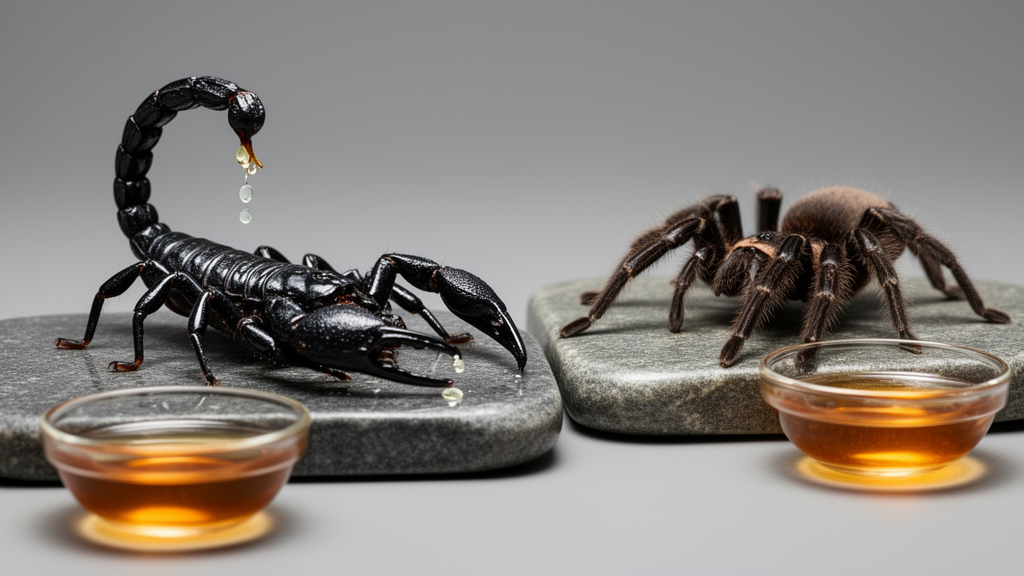
Peptide drugs have long carried a reputational burden: for all their exquisite potency and selectivity, they are widely assumed to be locked out of the cells and tissues they might treat. Biological membranes, built from a double layer of lipid molecules, present an energetic and chemical wall that large, water-loving molecules struggle to cross. That assumption is now being overturned for a surprising class of molecules. A new review published in Frontiers in Arachnid Science by Yachen Wang, Shaodong Guo, Katie F. Jee and Volker Herzig of the University of the Sunshine Coast in Australia compiles the evidence that a growing number of venom peptides from spiders, scorpions and even pseudoscorpions can traverse cellular membranes, the vertebrate blood-brain barrier, the insect blood-brain barrier and the insect midgut epithelium, and it dissects the physico-chemical tricks that make such crossings possible.
The stakes are considerable. Arachnid venom peptides are attracting intense interest as candidates for human therapeutics, agricultural bioinsecticides and agents that target vectors of human disease such as ticks and mosquitoes. Their typical molecular targets read like a catalogue of druggable biology: voltage-gated sodium, calcium and potassium channels, ligand-gated ion channels, glutamate receptors and transient receptor potential channels, many of them concentrated in the central nervous system and neuromuscular junctions. Yet a peptide can only reach such targets if it can get past the barriers in between. Understanding membrane permeation is therefore not a technical footnote; it is a prerequisite for translating venom chemistry into medicines and pesticides.
The review first examines the general machinery of cell-penetrating peptides, or CPPs, which cross membranes either by endocytosis, in which the cell engulfs them into vesicles, or by direct permeation through the lipid bilayer. Most CPPs are rich in positively charged residues, particularly arginine and lysine. The guanidinium group of arginine and the amine group of lysine interact with negatively charged membrane surfaces and can help form hydrophobic alpha-helical structures within the bilayer. Once inside endosomes, cationic CPPs exploit their high content of basic amino acids to perturb endosomal pH and escape before being degraded in lysosomes. A second class, the amphipathic peptides, translocate by forming multi-peptide complexes with hydrophobic faces pointing outward and hydrophilic faces inward, sliding through the membrane as a group.
Strikingly, the authors catalogue eight arachnid CPPs from four spider and four scorpion species, six of them cationic and two amphipathic. Among those with characterized mechanisms are latarcin 1 and lycosin-1, both from spiders, whose entry is significantly reduced by cold temperature and endocytosis inhibitors, hallmarks of energy-dependent uptake. The amphipathic peptide LETX-VI, isolated from the eggs of the black widow spider Latrodectus tredecimguttatus, penetrates PC12 cell membranes via endocytosis using the vesicular membrane protein synaptotagmin 1 as a receptor, ultimately promoting dopamine release. Other candidates remain mechanistically mysterious, including LVTX-8, which permeates cancer cell membranes and activates the mitochondrial death pathway, and the scorpion toxins imperatoxin A, maurocalcine and hadrucalcin, all of which must reach the intracellular faces of ryanodine receptors in the endoplasmic reticulum to exert their effects.
Perhaps the most remarkable case is the wasabi receptor toxin WaTx from the Australian scorpion Urodacus manicatus. Despite being amphipathic with a low content of cationic residues, WaTx appears to enter cells by passive diffusion, crossing the membrane without any transporter or endocytic machinery to reach its intracellular binding site on TRPA1 channels. The example underscores that arachnids have evolved more than one solution to the membrane problem. The authors also note that all four known scorpion CPPs are believed to possess cell-penetrating properties because their receptor and channel binding sites sit inside the cell, an indirect but compelling inference from their pharmacology.
Beyond single cells, the review turns to the vertebrate blood-brain barrier, the three-layered fortress of endothelial cells, basement membrane and astrocytic glia limitans that shields the central nervous system. The numbers cited are sobering: only about 2 percent of lipophilic small molecules can cross the barrier, nearly 98 percent of small molecules under 500 daltons fail without delivery systems, and essentially 100 percent of large molecules, including peptides, are excluded. Yet five arachnid peptides have been reported to breach it. Chlorotoxin from the deathstalker scorpion Leiurus quinquestriatus crosses the barrier in tumor-bearing mice and specifically enters glioma cells by clathrin-mediated endocytosis, binding Annexin-2 and matrix metalloproteinase-2, and its safety in human tumor therapy has already been tested in clinical trials. HsTX1[R14A] from the scorpion Heterometrus spinnifer, a selective blocker of the KV1.3 channel linked to Alzheimer’s and Parkinson’s disease, penetrates the mouse brain under neuroinflammatory conditions when tight junctions are disrupted, suggesting a route to treating secondary neuroinflammation.
On the agricultural side, the insect midgut is the critical gate for oral insecticidal activity. Venoms are injected by stinging, so there was no evolutionary pressure to make them orally active, yet eight arachnid venom peptides have now shown oral toxicity against arthropods, implying they can survive the harsh, alkaline midgut environment and cross its epithelium. Transport may occur transcellularly through endocytosis or pore formation, or paracellularly through septate junctions, the invertebrate analogues of tight junctions, through which peptides up to about 5 kilodaltons are thought to pass. The commercial bioinsecticide Spear-T, containing GS-omega/kappa-HXTX-Hv1a from the Blue Mountains funnel-web spider Hadronyche versuta, is designed as a contact spray presumed to enter insects through their respiratory system, with the mesothoracic spiracles offering the fastest route to the central nervous system.
When it comes to physico-chemical signatures, the review delivers a genuinely surprising observation. Although arginine dominates most cationic cell-penetrating peptides outside arachnids, venom CPPs and membrane-crossing arachnid peptides preferentially deploy lysine, which predominates in 18 of the 23 membrane-crossing peptides analysed. One explanation offered is that while arginine-rich peptides are absorbed more efficiently during endocytosis, lysine-rich peptides are more potent at causing liposome leakage, potentially easing their escape into the hemolymph. Lysine substitutions have also been shown to enhance the activity of scorpion antimicrobial venom peptides, hinting at a broader functional role. Compounding the picture, the disulfide-rich inhibitor cystine knot motif, or knottin, grants venom peptides extraordinary thermal and chemical stability, allowing them to survive serum enzymes and the midgut, although several linear, unknotted peptides cross barriers too, possibly relying on pore-forming amphipathic helices.
For peptides with no inherent permeating ability, the review surveys an expanding toolkit of delivery strategies. Poly-lysine and poly-arginine tags can shepherd cargo across cell membranes. Midgut penetration can be boosted by fusion to carrier proteins such as snowdrop lectin, which accumulates in insect hemolymph after oral ingestion, or by co-delivery with insect-specific entomopathogens like Beauveria and Metarhizium fungi or luteoviruses and baculoviruses, whose phyletic selectivity limits off-target effects. Co-application with pore-forming Cry toxins from Bacillus thuringiensis, already deployed in genetically modified crops worldwide, can open the gut lining to venom peptides, while nanoformulations and virus-like particles stripped of genetic material offer safer vehicles. For brain delivery, cationized albumin, the transferrin receptor antibody OX26, liposomes and established CPPs such as TAT provide routes across the blood-brain barrier.
The authors close with a vision in which dissecting these permeation mechanisms benefits both venom biology and applied pharmacology. Conserved features between vertebrate and invertebrate barriers, such as ATP-binding cassette transporters mediating efflux in both, suggest that insect BBB models could reduce the need for vertebrate experiments and accelerate screening of bioinsecticide candidates. Understanding how barrier composition differs between taxa may likewise enable the engineering of drugs and insecticides with sharper selectivity, sparing beneficial organisms. Much remains unresolved, including why lysine outperforms arginine in arachnid peptides and whether in vitro permeation findings hold up in the presence of proteases, renal clearance and off-target binding. But the message is clear: the wall between a promising peptide and its target is no longer assumed to be impassable, and some of nature’s oldest chemical weapons are teaching us how to open the gate.
Subject of Research: Membrane-permeating arachnid venom peptides and their mechanisms for crossing biological barriers
Article Title: Thou shalt not pass – arachnid venom peptides interacting with biological membranes
Article References: Thou shalt not pass – arachnid venom peptides interacting with biological membranes. (n.d.). https://doi.org/10.3389/frchs.2024.1490313
Image Credits: AI Generated
DOI: 10.3389/frchs.2024.1490313
Keywords: arachnid venom, cell-penetrating peptides, blood-brain barrier, insect midgut, bioinsecticides, drug delivery, spider venom, scorpion venom, lipid bilayer, knottins, chlorotoxin, lysine-rich peptides
Cite Scienmag News
Louis Brooks. (October 16, 2026). Spider and Scorpion Venom Peptides That Slip Through Biological Barriers. Scienmag. https://scienmag.com/spider-and-scorpion-venom-peptides-that-slip-through-biological-barriers/
Louis Brooks. "Spider and Scorpion Venom Peptides That Slip Through Biological Barriers." Scienmag, 16 October 2026, https://scienmag.com/spider-and-scorpion-venom-peptides-that-slip-through-biological-barriers/. Accessed 16 October 2026.
Louis Brooks. "Spider and Scorpion Venom Peptides That Slip Through Biological Barriers." Scienmag. October 16, 2026. https://scienmag.com/spider-and-scorpion-venom-peptides-that-slip-through-biological-barriers/