

Friday, September 4, 2026
Science
No Result
View All Result
  • Login
  • HOME
  • SCIENCE NEWS
  • CONTACT US
  • HOME
  • SCIENCE NEWS
  • CONTACT US
No Result
View All Result
Scienmag
No Result
View All Result
Home Science News Biology

SPF2 and SGO2/CTF18 limit centromere-near crossovers by regulating SUMOylation

July 26, 2026
in Biology
Drew Townsend
By Drew Townsend Scienmag Editorial Profile - Cell Biology
Reading Time: 2 mins read
0
SPF2 and SGO2/CTF18 limit centromere-near crossovers by regulating SUMOylation

SPF2 and SGO2/CTF18 limit centromere-near crossovers by regulating SUMOylation

65
SHARES
587
VIEWS
Share on FacebookShare on Twitter
ADVERTISEMENT

A new study in Nature Plants spotlights how plants keep their chromosomes properly wired during the critical process of meiosis. Researchers report that a deSUMOylase enzyme called SPF2, together with two cohesin regulators—SGO2 and CTF18—forms a coordinated defense against unwanted crossover events close to centromeres, the chromosome regions that help ensure accurate segregation.

During meiosis, homologous chromosomes must exchange DNA through crossover formation. These exchanges are not random: their location affects how reliably chromosomes separate. Crossovers too near centromeres can destabilize meiotic progression, increasing the risk of errors that would otherwise compromise fertility.

The team focused on the functional interplay between SPF2 and cohesin-associated control factors. SUMOylation—an essential protein modification pathway—can act like molecular “switching” for many chromosomal proteins. By removing SUMO tags, SPF2 helps tune the activity or stability of meiotic regulators, shifting the balance of where recombination is permitted to occur.

SGO2 and CTF18 are known to modulate cohesin, the ring-like protein complex that holds sister chromatids together. Cohesin dynamics are tightly regulated in space and time, and centromeres are particularly sensitive because they must support proper kinetochore attachment while still guiding meiotic recombination toward safe genomic neighborhoods.

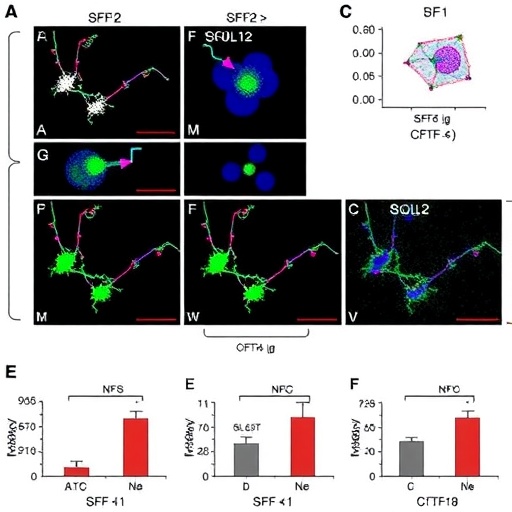
Using genetic and cytological approaches, the authors show that disrupting SPF2 or its cohesin regulatory partners leads to a measurable increase in crossover frequency near centromeres. This pattern suggests that these proteins normally create a restrictive microenvironment, limiting recombination in the centromere-proximal zone.

Mechanistically, the study supports a model in which altered SUMO signaling and compromised cohesin regulation change how recombination intermediates are processed. Instead of being redirected or suppressed, crossover-prone structures appear more readily in regions where they are typically avoided.

The findings carry broader implications beyond plants. Because the choreography of SUMOylation and cohesin is conserved across eukaryotes, the work hints at universal strategies cells use to preserve genome integrity—especially in the most structurally complex chromosomal territories.

Ultimately, the paper reframes centromeres as active regulatory hubs that do not simply “hold” chromosomes, but actively shape the recombination landscape. By suppressing risky exchanges near centromeres, SPF2, SGO2, and CTF18 help protect the fidelity of meiosis and the continuity of plant reproduction.

Subject of Research: Meiosis, chromosome recombination control near centromeres, SUMOylation and cohesin regulation in plants.

Article Title: The deSUMOylase SPF2 and the cohesin regulators SGO2 and CTF18 suppress crossovers near centromeres.

Article References: Salinas Gamboa, R., Fernandes, J. B., Lian, Q., Singh, D. K., Durand, S., Sahu, D., Capilla-Perez, L., Lopez, H., Kalde, A., & Mercier, R. (2026). The deSUMOylase SPF2 and the cohesin regulators SGO2 and CTF18 suppress crossovers near centromeres. Nature Plants, 12(8), 1498-1513. https://doi.org/10.1038/s41477-026-02329-1

Image Credits: AI Generated

DOI: 10.1038/s41477-026-02329-1

Keywords: centromere-proximal crossover suppression, chromosomal crossover regulation in plants, chromosomal stability and meiotic errors, chromosome stability and fertility in plants, cohesin complex regulation during meiosis, genetic regulation of recombination hotspots, meiotic chromosome segregation, protein modification pathways in meiosis, SGO2 and CTF18 cohesin regulators, SPF2 deSUMOylase enzyme function, SUMOylation in meiosis

Cite Scienmag News

Drew Townsend. (July 26, 2026). SPF2 and SGO2/CTF18 limit centromere-near crossovers by regulating SUMOylation. Scienmag. https://scienmag.com/spf2-and-sgo2-ctf18-limit-centromere-near-crossovers-by-regulating-sumoylation/


Drew Townsend. "SPF2 and SGO2/CTF18 limit centromere-near crossovers by regulating SUMOylation." Scienmag, 26 July 2026, https://scienmag.com/spf2-and-sgo2-ctf18-limit-centromere-near-crossovers-by-regulating-sumoylation/. Accessed 4 September 2026.

Drew Townsend. "SPF2 and SGO2/CTF18 limit centromere-near crossovers by regulating SUMOylation." Scienmag. July 26, 2026. https://scienmag.com/spf2-and-sgo2-ctf18-limit-centromere-near-crossovers-by-regulating-sumoylation/

Tags: centromere-proximal crossover suppressionchromosomal crossover regulation in plantschromosomal stability and meiotic errorschromosome stability and fertility in plantscohesin complex regulation during meiosisgenetic regulation of recombination hotspotsmeiotic chromosome segregationprotein modification pathways in meiosisSGO2 and CTF18 cohesin regulatorsSPF2 deSUMOylase enzyme functionSUMOylation in meiosis
Share26Tweet16
Previous Post

Gene transfer between infecting bacteria drives extreme antibiotic resistance in lungs

Next Post

Redox Mediator Enables Bacterial Cooperation for Anammox Extracellular Electron Transfer

Related Posts

Losing desmoplakin in lung epithelium triggers fibrotic Wnt signaling in vitro
Biology

Losing desmoplakin in lung epithelium triggers fibrotic Wnt signaling in vitro

September 4, 2026
Genetic diversity of full-length HLA-E gene characterized in Estonians
Biology

Genetic diversity of full-length HLA-E gene characterized in Estonians

September 4, 2026
Microcapsules deliver probiotic-derived extracellular vesicles via mucosal adhesion
Biology

Microcapsules deliver probiotic-derived extracellular vesicles via mucosal adhesion

September 4, 2026
Narcissus transcriptomics reveals modified ABCDE model and double flower mechanism
Biology

Narcissus transcriptomics reveals modified ABCDE model and double flower mechanism

September 4, 2026
Cyclin gene evolution in Arabidopsis and Brassica links polyploid duplication to flowering time
Biology

Cyclin gene evolution in Arabidopsis and Brassica links polyploid duplication to flowering time

September 3, 2026
Genetic Structure and Environment-Linked Loci in a Resilient Coral Along Eutrophication Gradient
Biology

Genetic Structure and Environment-Linked Loci in a Resilient Coral Along Eutrophication Gradient

September 3, 2026
Next Post
Redox Mediator Enables Bacterial Cooperation for Anammox Extracellular Electron Transfer

Redox Mediator Enables Bacterial Cooperation for Anammox Extracellular Electron Transfer

  • Mothers who receive childcare support from maternal grandparents show more optimized

    Mothers who receive childcare support from maternal grandparents show more parental warmth, finds NTU Singapore study

    27656 shares
    Share 11059 Tweet 6912
  • University of Seville Breaks 120-Year-Old Mystery, Revises a Key Einstein Concept

    1061 shares
    Share 424 Tweet 265
  • Bee body mass, pathogens and local climate influence heat tolerance

    682 shares
    Share 273 Tweet 171
  • Researchers record first-ever images and data of a shark experiencing a boat strike

    546 shares
    Share 218 Tweet 137
  • Groundbreaking Clinical Trial Reveals Lubiprostone Enhances Kidney Function

    531 shares
    Share 212 Tweet 133
Science

Embark on a thrilling journey of discovery with Scienmag.com—your ultimate source for cutting-edge breakthroughs. Immerse yourself in a world where curiosity knows no limits and tomorrow’s possibilities become today’s reality!

RECENT NEWS

  • Denmark launches national injury cohort with detailed design features
  • Building trust: advancing clinical autonomy in ESICM training
  • Symptomatic, Incidental DWI Lesions Show Distinct Risk Factors in Cerebral Amyloid Angiopathy
  • What drives meeting length in breast cancer multidisciplinary team discussions

Categories

  • Agriculture
  • Anthropology
  • Archaeology
  • Athmospheric
  • Biology
  • Biotechnology
  • Blog
  • Bussines
  • Cancer
  • Chemistry
  • Climate
  • Earth Science
  • Editorial Policy
  • Marine
  • Mathematics
  • Medicine
  • Pediatry
  • Policy
  • Psychology & Psychiatry
  • Science Education
  • Social Science
  • Space
  • Technology and Engineering

Subscribe to Blog via Email

Enter your email address to subscribe to this blog and receive notifications of new posts by email.

Join 5,151 other subscribers

© 2025 Scienmag - Science Magazine

Welcome Back!

Login to your account below

Forgotten Password?

Retrieve your password

Please enter your username or email address to reset your password.

Log In
No Result
View All Result
  • HOME
  • SCIENCE NEWS
  • CONTACT US

© 2025 Scienmag - Science Magazine

Discover more from Science

Subscribe now to keep reading and get access to the full archive.

Continue reading