


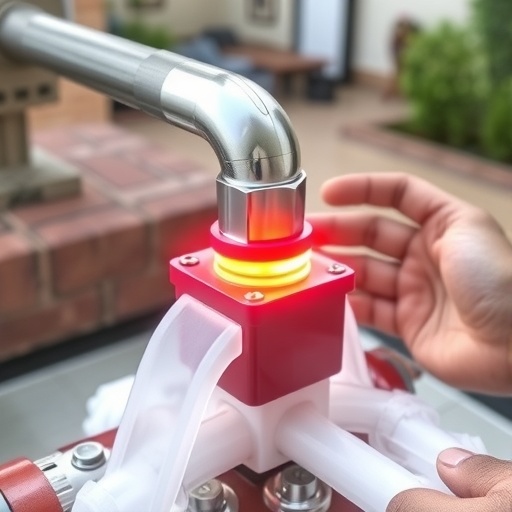
In the realm of energy resources, one persistent obstacle has been the efficient transportation of heavy crude oil due to its inherent high viscosity. Addressing this major challenge, Southwest Research Institute (SwRI) has unveiled an innovative solution, the EZ Flow™ technology, which substantially reduces the viscosity of heavy crude oil by 40 to 60%. This breakthrough represents a critical advancement in optimizing the flow properties of heavy crude, promising profound implications for the petroleum transportation industry in North America.
Viscosity, a fundamental fluid property, quantifies a fluid’s internal resistance to flow, effectively dictating how readily a liquid can be transported. Being influenced by variables such as temperature, pressure, compositional makeup, and presence of contaminants, heavy crude oil often exhibits formidable resistance to flow due to its dense molecular structure and elevated viscosity. Traditional methods to facilitate its movement through pipelines have relied heavily on costly chemical additives, substantial diluent blending, or the application of heat, all contributing to increased operational expenditures and environmental concerns.
The patented EZ Flow™ technology developed by SwRI employs a sophisticated two-part process designed to circumvent these limitations. Initial stages involve the injection of a proprietary low-concentration chemical additive tailored to interact synergistically with the crude matrix. This is followed by controlled hydrodynamic cavitation, a nuanced mixing technique utilizing a rotor to generate microscopic vapor bubbles within the fluid. When these bubbles collapse, they emit localized shockwaves that transiently elevate temperature and promote intimate mixing of the additive throughout the heavy crude oil, thereby dramatically lowering the fluid’s viscosity.
Importantly, this hydrodynamic cavitation process preserves the chemical integrity of the heavy crude oil. Unlike chemical treatments that alter crude composition or pose challenges for downstream refining, EZ Flow’s additive components do not interfere with subsequent processing stages. This ensures the treated crude remains compatible with existing refinery operations, minimizing adjustments or additional processing steps downstream. The enhanced flow dynamics achieve a substantial viscosity reduction extending over a prolonged duration, with current data indicating efficacy for a minimum of six months.
Principal Scientist James Wood of SwRI elaborated that the primary intent behind EZ Flow’s development was to facilitate the transport of heavy crude oil through existing pipeline infrastructure, thereby negating the need for complex pretreatment requirements. He emphasized that conventional transportation methods often involve expensive diluent usage or heat application, both of which not only raise costs but also engender logistical constraints and environmental liabilities. The innovative EZ Flow process proactively mitigates these issues by enabling viscous crude to flow more freely at ambient pipeline conditions.
A pivotal aspect of the EZ Flow technology resides in its controlled hydrodynamic cavitation mechanism. The generation and subsequent collapse of microbubbles infuse energy directly into the heavy crude at a microscopic level, instigating breakdown of molecular interactions responsible for elevated viscosity. This mechanical energy input, coupled with the chemical additive’s effects, achieves a synergistic decrease in fluid resistance to flow. The process represents a cutting-edge intersection of fluid dynamics and chemical engineering designed explicitly for energy resource applications.
While the research outcomes are lauded, SwRI acknowledges ongoing investigations are essential to fully characterize EZ Flow’s performance under diverse environmental conditions, particularly lower ambient temperatures common in northern pipelines. Temperature significantly influences crude viscosity, and understanding how EZ Flow responds to such variations will inform deployment strategies in varying geographies. The institute anticipates further experimental and field trials to validate long-term operational reliability and cost-benefit analyses associated with widespread adoption.
Moreover, beyond transportation enhancements, the implications of EZ Flow extend to supply chain stability. Reducing logistical hurdles in moving heavy crude oil can alleviate market disruptions triggered by shifting global energy demands and supply constraints. By enabling more flexible, cost-efficient crude logistics, EZ Flow supports energy security objectives and potentially decreases dependency on light crude sources or imported fuels. This aligns with broader energy strategies seeking to optimize domestic resources while minimizing environmental impacts.
EZ Flow emerges as a testament to the power of targeted internal research and development. SwRI’s sustained investment exceeding $13 million in fiscal year 2025 into exploratory IR&D projects underscores the critical role of cutting-edge innovation in advancing applied sciences. By fostering expertise in fluid mechanics, chemical engineering, and process innovation, SwRI continues to pioneer technologies that address existing industrial bottlenecks, while reinforcing its position as a leader in energy and materials research.
Underscoring the commercial potential, Southwest Research Institute is actively pursuing licensing and technology transfer opportunities for EZ Flow. Such collaborations could expedite the technology’s integration within industry pipelines and refineries globally. By bridging the gap between laboratory innovation and field-scale application, EZ Flow stands poised to revolutionize the heavy crude oil transport landscape, delivering measurable economic and environmental benefits.
In conclusion, the introduction of EZ Flow technology marks a pivotal development in overcoming one of the most significant technical challenges in the petroleum sector. Through the ingenious application of hydrodynamic cavitation paired with a specialized additive, SwRI has crafted a process that reduces viscosity sustainably without compromising crude integrity or downstream processing. With further validation and strategic partnerships, EZ Flow promises to reshape heavy crude logistics, enhance energy resilience, and stimulate a new era of petroleum transport efficiencies.
News Publication Date: June 15, 2026
Web References:
https://www.swri.org/markets/chemistry-materials/chemistry-chemical-engineering/process-engineering-fuels/treating-heavy-crude-oil-transport?&utm_medium=referral&utm_source=eurekalert!&utm_campaign=ez-flow-pr
Cite Scienmag News
Bethany Barker. (June 15, 2026). Southwest Research Institute Secures Patent for Energy-Efficient EZ Flow™ Technology. Scienmag. https://scienmag.com/southwest-research-institute-secures-patent-for-energy-efficient-ez-flow-technology/
Bethany Barker. "Southwest Research Institute Secures Patent for Energy-Efficient EZ Flow™ Technology." Scienmag, 15 June 2026, https://scienmag.com/southwest-research-institute-secures-patent-for-energy-efficient-ez-flow-technology/. Accessed 4 September 2026.
Bethany Barker. "Southwest Research Institute Secures Patent for Energy-Efficient EZ Flow™ Technology." Scienmag. June 15, 2026. https://scienmag.com/southwest-research-institute-secures-patent-for-energy-efficient-ez-flow-technology/


