


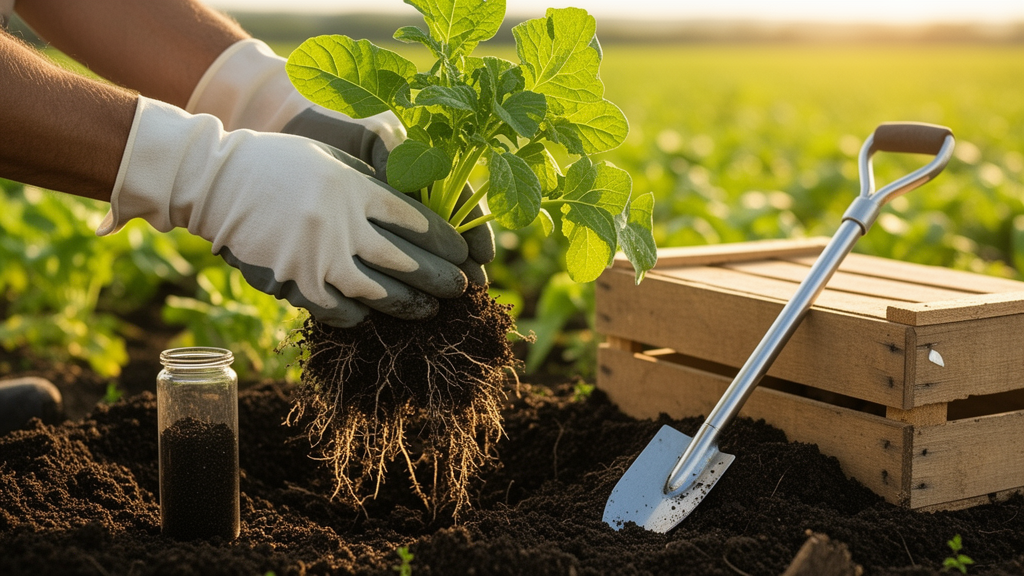
Lead-contaminated soil is one of the most stubborn cleanup challenges in environmental science, but a new study reports that a humble soil bacterium can dramatically supercharge a plant’s ability to pull the toxic metal out of the ground. Researchers inoculated the phosphate-solubilizing bacterium Leclercia adecarboxylata strain L1-5 into the rhizosphere of Artemisia annua L., the sweet wormwood plant, and measured a 96.72 percent increase in lead extraction efficiency compared with uninoculated controls.
The growth gains were striking. Above-ground biomass of A. annua rose by 51.39 percent and root biomass by 155.22 percent when the bacterium was present. Chlorophyll a content climbed from 0.30 mg per gram fresh weight to 1.55 mg per gram, while chlorophyll b rose from 0.44 to 1.50 mg per gram, and the Ca/Cb ratio increased by 51.56 percent, indicating that the bacteria supported both plant growth and chlorophyll synthesis under lead stress.
The activities of three key antioxidant enzymes rose sharply with bacterial inoculation: superoxide dismutase increased by 155.95 percent, catalase by 271.23 percent, and peroxidase by 192.55 percent. These enzyme boosts suggest that the PSB treatment reduced lead-induced oxidative stress, giving the plant more capacity to tolerate the metal while continuing to accumulate it.
Transmission electron microscopy added a structural dimension to the picture. Leaf ultrastructure, which lead exposure normally disrupts, showed less damage in bacterium-treated plants, consistent with the biochemical evidence that the microbe helped shield the plant from toxicity rather than simply stimulating growth.
The authors frame the findings as new insight into the combined effect of PSB and A. annua, and they emphasize the pairing’s translational potential for sustainable remediation of heavy-metal-contaminated soils. Because the mechanism by which PSB enhances metal extraction has remained only partially elucidated, this study contributes a detailed physiological and ultrastructural characterization of how the partnership works in the rhizosphere. The reported percentages describe measured differences between inoculated and uninoculated plants in the experiment, and translating them to real contaminated sites would require further testing of dose, soil type, and long-term performance. Still, the scale of the effect is notable for the remediation field, and the study underscores that the microbes surrounding a plant’s roots are not passive bystanders but active partners in detoxifying polluted land.
Subject of Research: Phosphate-solubilizing bacteria enhancing lead phytoextraction by Artemisia annua
Article Title: Phosphate-solubilizing bacteria enhance lead extraction efficiency by Artemisia annua L.: insights into detoxification, tolerance and mechanisms
Article References: Zhang, Y., Yuan, J., Cheng, Y., Liu, X., Wang, L., Pei, W., & Li, M. (2026). Phosphate-solubilizing bacteria enhance lead extraction efficiency by Artemisia annua L.: insights into detoxification, tolerance and mechanisms. Environmental Science and Pollution Research. https://doi.org/10.1007/s11356-026-38330-6
Image Credits: AI Generated
DOI: 10.1007/s11356-026-38330-6
Keywords: phosphate-solubilizing bacteria, Leclercia adecarboxylata, Artemisia annua, lead phytoextraction, soil remediation, heavy metals, rhizosphere, antioxidant enzymes, chlorophyll, bioremediation, oxidative stress, Phosphate-solubilizing
Cite Scienmag News
Savannah Blake. (October 27, 2026). Soil bacteria boost lead-sucking plant’s cleanup power by nearly 97 percent. Scienmag. https://scienmag.com/soil-bacteria-boost-lead-sucking-plants-cleanup-power-by-nearly-97-percent/
Savannah Blake. "Soil bacteria boost lead-sucking plant’s cleanup power by nearly 97 percent." Scienmag, 27 October 2026, https://scienmag.com/soil-bacteria-boost-lead-sucking-plants-cleanup-power-by-nearly-97-percent/. Accessed 27 October 2026.
Savannah Blake. "Soil bacteria boost lead-sucking plant’s cleanup power by nearly 97 percent." Scienmag. October 27, 2026. https://scienmag.com/soil-bacteria-boost-lead-sucking-plants-cleanup-power-by-nearly-97-percent/


