


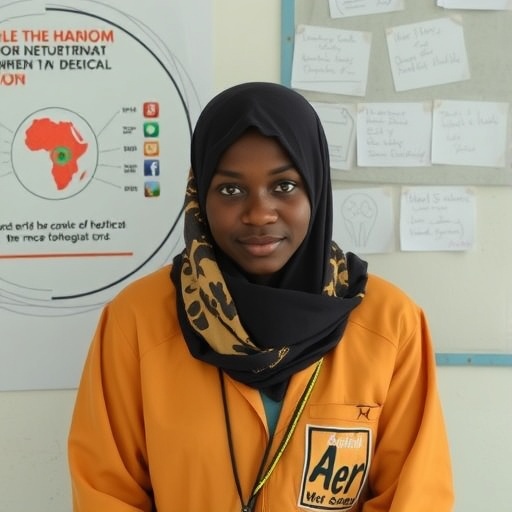
In an intriguing study that traverses the intersection of mental health and medical education, a team of researchers led by Mohamed et al. undertook a comprehensive examination of social anxiety symptoms among undergraduate medical students in Mogadishu, Somalia. This cross-sectional study not only sought to measure the prevalence of social anxiety within this specific academic demographic but also aimed to unveil the associated factors contributing to such mental health concerns. The findings of this exploratory research shine a light on an often overlooked aspect of medical education and its implications for student wellbeing.
Medical students are known to experience high levels of stress due to the strenuous nature of their studies. Increasingly, mental health issues such as anxiety and depression have been brought to the forefront of discussions surrounding medical education. This study encapsulates the urgency of addressing mental health in medical training, especially in regions that have been significantly impacted by socio-political complexities, such as Somalia. Researchers utilized validated assessment tools to discern the prevalence of social anxiety symptoms, providing a clinically relevant perspective on the mental health challenges faced by these students.
The implications of social anxiety in a medical education setting are multi-faceted. On one hand, possessing social anxiety can hinder student participation in group activities, clinical practices, and essential networking opportunities, all of which are critical for career development in medicine. On the other hand, understanding the factors contributing to social anxiety provides an opportunity for targeted interventions. Factors such as cultural contexts, academic pressure, and available mental health support systems can all play a role in influencing the mental wellness of medical students.
In a setting like Mogadishu, where socio-economic conditions and historical conflicts have engendered a unique environment, the challenges associated with mental health are exacerbated. Students may find themselves grappling with the pressure of academic excellence while simultaneously bearing the weight of their socio-political surroundings. Additionally, stigma surrounding mental health issues further exacerbates the difficulties faced by these students, often leading to underreporting of symptoms and reluctance to seek help.
The methodology adopted by Mohamed et al. involved a comprehensive survey that evaluated a broad range of factors linked to social anxiety. By engaging with the students directly, the researchers could capture diverse perspectives and experiences. The study’s population consisted of undergraduate medical students enrolled in various stages of their education, thereby allowing for a nuanced understanding of how anxiety symptoms might fluctuate throughout their academic journey.
Analyzing the data revealed that a significant proportion of students reported experiencing social anxiety symptoms. This finding is corroborated by global studies, reinforcing the notion that medical students universally face mental health challenges regardless of geographic location. Furthermore, the study highlighted demographic factors such as gender and age, which appeared to influence the severity of social anxiety symptoms among the participants.
Interestingly, the social support systems available within the university setting were noted to play a significant role in either mitigating or exacerbating anxiety symptoms. Those students who reported having strong peer and faculty support were less likely to experience elevated levels of social anxiety. This finding suggests that institutions can make impactful changes by fostering supportive environments that prioritize mental health.
Given this evidence, the recommendation for universities extends beyond recognizing the prevalence of mental health issues. Institutions must actively work to cultivate an environment where students feel compelled to seek help without fear of stigma. Workshops, seminars, and peer support groups could serve as viable avenues for fostering this culture. The research advocates for integrating mental health education within the medical curriculum, thereby equipping future healthcare providers with the tools they need to confront their own mental health challenges while also supporting their future patients.
As researchers delve deeper into understanding the intricacies of mental health among medical students, it becomes increasingly clear that effective interventions must be multifactorial. Strategies must address not only the individual aspects of mental health but also the systemic influences that contribute to the overall wellbeing of students. Continuous academic support, accompanied by accessible mental health resources, could significantly enhance the educational experience for medical students.
This pioneering work by Mohamed et al. is significant not just in the context of Somalia but also serves as a valuable piece of the larger puzzle concerning medical education and mental health globally. As medical curricula evolve, the importance of mental wellbeing for medical students cannot be overstated. The implications of such studies lay the groundwork for improving educational strategies and supportive measures aimed at promoting healthier academic environments.
In conclusion, the prevalence of social anxiety among undergraduate medical students in Mogadishu underscores an urgent call for more profound systemic change. By recognizing the factors that contribute to these symptoms and creating supportive systems, medical educational institutions can better foster not only competent future doctors but also mentally resilient individuals. The insights gained from this research could catalyze broader awareness and inspire a movement towards integrating mental health into the educational framework of medicine worldwide, further reinforcing its significance in shaping well-rounded healthcare professionals.
Mohamed, N.A., Haji Mohamud, R.Y., Hassan, M.S. et al. Distribution of social anxiety symptoms and associated factors among undergraduate medical students in Mogadishu, Somalia: a cross-sectional study.
BMC Med Educ (2026). https://doi.org/10.1186/s12909-026-08580-6
Cite Scienmag News
Glenn Wilkins. (January 10, 2026). Social Anxiety in Mogadishu’s Medical Students: A Study. Scienmag. https://scienmag.com/social-anxiety-in-mogadishus-medical-students-a-study/
Glenn Wilkins. "Social Anxiety in Mogadishu’s Medical Students: A Study." Scienmag, 10 January 2026, https://scienmag.com/social-anxiety-in-mogadishus-medical-students-a-study/. Accessed 4 September 2026.
Glenn Wilkins. "Social Anxiety in Mogadishu’s Medical Students: A Study." Scienmag. January 10, 2026. https://scienmag.com/social-anxiety-in-mogadishus-medical-students-a-study/


