


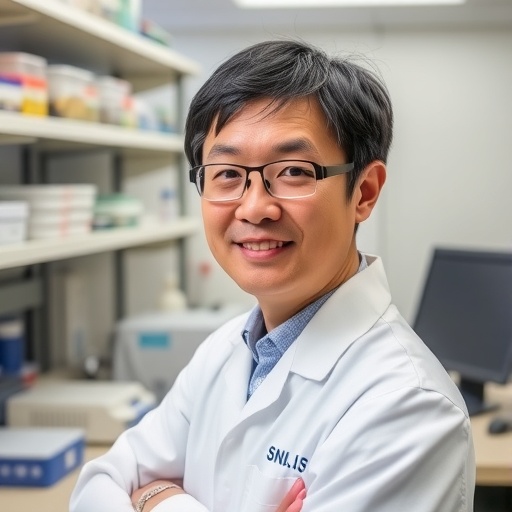
In a groundbreaking advancement at the intersection of genome engineering and biocontainment, researchers at Seoul National University have developed a pioneering technology enabling irreversible and precise control over engineered bacterial survival. Published in the prestigious journal Nucleic Acids Research, this study unveils a multiplexed CRISPR base editing system that activates in pulses and permanently disables essential genes in bacteria without inflicting harmful DNA double-strand breaks. This innovation has profound implications for improving biosafety in industrial biotechnology and biopharmaceutical applications, where genetically modified microorganisms (GMMs) play a pivotal role.
The surge in using engineered microbes in the production of biofuels, biodegradable plastics, sustainable chemicals, and therapeutics has simultaneously raised critical concerns about unintended environmental dissemination and uncontrolled microbial growth outside laboratory or industrial settings. Traditionally, methods for microbial biocontainment have included auxotrophy-based dependencies, toxin-antitoxin modules, and DNA cleavage tools such as CRISPR-Cas9. Yet these conventional strategies often fall short in reliability due to environmental variability, genetic instability, or the induction of deleterious mutations triggered by double-stranded DNA breaks.
Unlike CRISPR-Cas9 systems that rely on targeted DNA cleavage and can inadvertently cause genome instability, the new approach leverages base editing through a catalytically inactive form of Cas9 (dCas9) fused to a nucleotide deaminase enzyme. This system precisely converts specific nucleotides in the genome—most notably converting start codons of essential genes—to alternative codes that disrupt translation initiation, effectively acting as a “kill switch.” What sets this mechanism apart is its avoidance of DNA cleavage; by circumventing double-strand breaks, it prevents DNA damage responses and reduces off-target mutagenesis, preserving overall genome integrity while ensuring permanent gene inactivation.
The research team intelligently designed a multiplexing feature in their system, allowing simultaneous editing of multiple essential genes in a single induction pulse. This multi-targeting approach drastically decreased escape frequency—a perennial challenge in containment technologies whereby rare mutant bacteria evade control mechanisms and proliferate undesirably. The pulse-activated induction strategy further enhanced system robustness by enabling transient expression that irreversibly compromised cell viability, removing the need for continuous gene editing enzyme presence, which can often foster selective pressures and mutation accumulations in microbial populations.
Mechanistically, their system reprograms the start codons—usually AUG—in essential bacterial genes to alternative codons that abolish the initiation of translation. This strategy can be conceptualized as permanently turning off the “power buttons” that switch bacterial survival pathways on. The absence of translation initiation ensures that essential proteins cannot be synthesized, leading to irreversible cell death. By employing CRISPR-dCas9-guided base editors targeting these loci, the researchers achieved a high degree of specificity and efficiency, which surpasses the reversibility and partial efficacy issues commonly observed in CRISPR interference (CRISPRi) systems.
Importantly, the researchers demonstrated through rigorous experimental validations that only a short pulse of activating the base editing machinery is required to kill bacterial cells, contrasting sharply with previous models that demanded continuous expression of toxic or containment-inducing elements. This pulse activation not only reduces cellular stress but also minimizes energy expenditure within engineered microbes, a critical consideration for industrial applications where microbial performance and yield are paramount.
The implications of this technology extend well beyond microbial factories. The developed irreversible biocontainment system can be integrated into engineered live biotherapeutics, offering a genetically hardwired safety switch that prevents unintended proliferation of therapeutic bacteria within the human body or in the environment. This provides a much-needed layer of biosafety as engineered microbes advance into clinical use for treating diseases or delivering drugs.
Moreover, this next-generation containment tool addresses long-standing public apprehensions about the environmental release of genetically modified organisms. By ensuring that escape mutants cannot thrive outside designated environments, the technology bolsters regulatory confidence and societal trust in synthetic biology and microbial manufacturing fields. Industrial sectors that depend on microbial bioprocesses—ranging from biofuel production to fine chemicals manufacturing—stand to benefit substantially through safer operational protocols informed by this platform.
The team’s work is underpinned by advanced synthetic biology techniques and precise genome editing competencies. Lead author Dr. Sung Won Cho focuses on synthetic biology and microbial control systems, emphasizing biosafety and scalable engineering solutions, while co-first author TaeHyun Kim’s expertise lies in microbial systems engineering and next-generation biotechnologies. Together, they have charted a transformation in how researchers conceive biosafety at the genetic level.
Beyond its technical virtuosity, the study underscores a paradigm shift in biocontainment philosophy—from reactive measures reliant on continuous cellular intervention to proactive, irreversible genetic safeguards that are both efficient and elegant. It sets a new standard for how engineered organisms can be safely harnessed for human benefit without compromising ecological or clinical safety.
This innovative research was made possible through support from the National Research Foundation of Korea and collaborative funding from Samsung Electronics’ incubation arm. It symbolizes a significant step forward in the application of CRISPR-based tools for real-world safety solutions and shows how strategic genome editing can mitigate long-standing challenges in synthetic biology.
Professor Sang Woo Seo, the corresponding author and a leading figure in genome engineering at Seoul National University, highlighted the potential of this approach, stating, “Our base editing-based biocontainment system offers a novel means to control microbial viability irreversibly and precisely. We anticipate this will serve as a foundation for future biosafety platforms in both industrial and therapeutic settings.”
As genetically engineered microbes gain traction for diverse applications, ensuring their safety becomes paramount. This multiplexed, pulse-activated base editing biocontainment platform exemplifies how cutting-edge scientific and engineering insights can converge to solve societal challenges, opening pathways to safer, scalable, and responsible microbial biotechnology.
News Publication Date: 4-May-2026
Web References: 10.1093/nar/gkag422
Cite Scienmag News
Juliet Wilcox. (May 8, 2026). SNU Professor Sangwoo Seo’s Team Develops Next-Generation CRISPR Biocontainment Technology to Control Microbial Survival Without DNA Cleavage. Scienmag. https://scienmag.com/snu-professor-sangwoo-seos-team-develops-next-generation-crispr-biocontainment-technology-to-control-microbial-survival-without-dna-cleavage/
Juliet Wilcox. "SNU Professor Sangwoo Seo’s Team Develops Next-Generation CRISPR Biocontainment Technology to Control Microbial Survival Without DNA Cleavage." Scienmag, 8 May 2026, https://scienmag.com/snu-professor-sangwoo-seos-team-develops-next-generation-crispr-biocontainment-technology-to-control-microbial-survival-without-dna-cleavage/. Accessed 3 September 2026.
Juliet Wilcox. "SNU Professor Sangwoo Seo’s Team Develops Next-Generation CRISPR Biocontainment Technology to Control Microbial Survival Without DNA Cleavage." Scienmag. May 8, 2026. https://scienmag.com/snu-professor-sangwoo-seos-team-develops-next-generation-crispr-biocontainment-technology-to-control-microbial-survival-without-dna-cleavage/


