


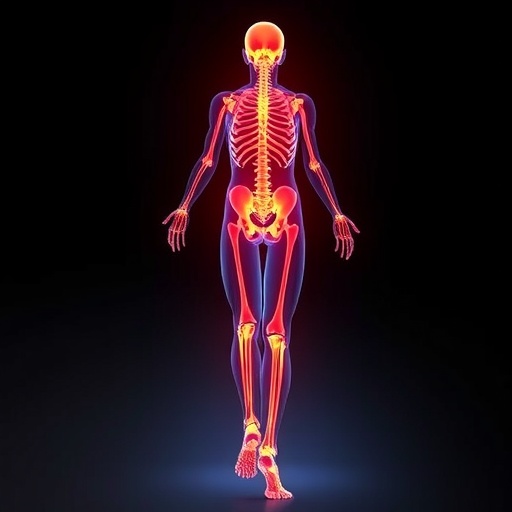
The blood vessels running through muscle and bone may be more than passive delivery routes. They could be the central communication network that determines whether these tissues remain strong or deteriorate together with age. A new article in The Journal of Bone and Mineral Metabolism examines how vascular health shapes the structure, function, and recovery of both tissues, offering a framework for understanding why sarcopenia and osteoporosis so often appear in the same individuals.
Muscle and bone have long been recognized as closely connected. Muscles generate the mechanical forces that stimulate bone formation, while the skeleton provides the structural platform required for movement. Their relationship, however, extends beyond biomechanics. Both tissues develop from related mesenchymal progenitor populations and are influenced by overlapping molecular signals, including bone morphogenetic proteins, Wnt proteins, and the Notch pathway. These signaling systems regulate cell proliferation, differentiation, and tissue repair, while blood vessels help organize the local environments in which these processes occur.
The vascular system contributes to this relationship in several ways. Capillaries deliver oxygen and nutrients, remove metabolic waste, and transport hormones and other signaling molecules between distant tissues. Endothelial cells lining the inner surface of blood vessels also release factors that influence stem cells, immune cells, and neighboring structural cells. Within bone marrow and muscle, this endothelial signaling helps maintain specialized niches in which progenitor cells can remain dormant, multiply, or differentiate in response to injury and physiological demand.
With advancing age, this vascular support system becomes progressively less effective. Capillary density can decline, blood vessels may become less responsive to changes in metabolic demand, and endothelial cells can lose their ability to regulate vessel tone and tissue repair. In skeletal muscle, inadequate perfusion may limit oxygen availability, weaken satellite-cell activation, and reduce the capacity for protein synthesis after exercise or injury. These changes can contribute to the loss of muscle mass and strength characteristic of sarcopenia.
Bone is also highly dependent on an efficient vascular network. Blood vessels supply osteoblasts with oxygen and nutrients and transport minerals and regulatory molecules needed for bone remodeling and mineralization. Vascular rarefaction, or the reduction in small blood vessels, may therefore impair osteoblast activity and disturb the balance between bone formation and bone resorption. Over time, this imbalance can reduce bone density and compromise the internal architecture of the skeleton, increasing vulnerability to fractures.
The article places these changes within the growing clinical concept of osteosarcopenia, a condition in which muscle and bone loss develop together. Sarcopenia and osteoporosis share multiple risk factors, including aging, chronic inflammation, physical inactivity, nutritional deficiencies, and hormonal changes. Their combined effects can be more serious than either condition alone: weaker muscles increase the likelihood of falls, while fragile bones make injuries more likely to become fractures. Together, they can sharply reduce mobility, independence, and quality of life.
At the molecular level, communication between muscle and bone is carried partly through circulating factors. Muscle-derived myokines, including irisin and myostatin, can influence bone-forming cells and remodeling activity. Bone-derived osteokines, such as osteocalcin, have been linked to muscle metabolism and performance. The bloodstream provides the route through which these signals travel, but vascular dysfunction may alter their production, distribution, or effects. Oxidative stress and persistent low-grade inflammation can further damage endothelial cells, creating a feedback loop in which poor circulation accelerates tissue decline and deteriorating tissues release signals that worsen systemic dysfunction.
This vascular-musculoskeletal axis may also explain why exercise remains one of the most effective approaches for preserving both muscle and bone. Resistance training imposes mechanical loads that stimulate muscle protein synthesis and bone remodeling, while also improving endothelial function and blood-flow regulation. Regular physical activity may increase the efficiency of nutrient delivery and promote the release of beneficial muscle-derived signals. The article also identifies pharmacological strategies aimed at endothelial performance, angiogenesis, and specific molecular pathways as potential complements to exercise, although such interventions will require careful evaluation for safety and tissue-specific effects.
Nutritional strategies may provide another layer of support. Dietary patterns rich in polyphenols and other compounds associated with vascular protection could help reduce oxidative stress, while nitrate-containing foods or supplements may influence nitric-oxide signaling and blood-vessel function. Future research will need to determine which interventions can meaningfully improve vascular health and whether those improvements translate into measurable gains in muscle strength, bone density, and fracture resistance. Biomarkers that detect early changes in the vascular-musculoskeletal system could also allow clinicians to identify people at risk before substantial tissue loss occurs.
By treating muscle, bone, and blood vessels as parts of a connected biological system, the work challenges the traditional separation of osteoporosis and sarcopenia into unrelated specialties. Assessing vascular function alongside muscle performance and bone health could lead to earlier diagnosis and more integrated treatment plans for older adults. The emerging picture is that healthy aging depends not only on preserving the tissues that generate movement and provide support, but also on maintaining the vascular network that allows them to communicate, repair themselves, and respond to changing demands.
Web References: https://doi.org/10.1007/s11684-026-1204-4
References: 10.1007/s11684-026-1204-4
Cite Scienmag News
Beatrice Stafford. (August 1, 2026). Targeting Vascular–Musculoskeletal Links May Treat Sarcopenia and Osteoporosis. Scienmag. https://scienmag.com/targeting-vascular-musculoskeletal-links-may-treat-sarcopenia-and-osteoporosis/
Beatrice Stafford. "Targeting Vascular–Musculoskeletal Links May Treat Sarcopenia and Osteoporosis." Scienmag, 1 August 2026, https://scienmag.com/targeting-vascular-musculoskeletal-links-may-treat-sarcopenia-and-osteoporosis/. Accessed 4 September 2026.
Beatrice Stafford. "Targeting Vascular–Musculoskeletal Links May Treat Sarcopenia and Osteoporosis." Scienmag. August 1, 2026. https://scienmag.com/targeting-vascular-musculoskeletal-links-may-treat-sarcopenia-and-osteoporosis/


