


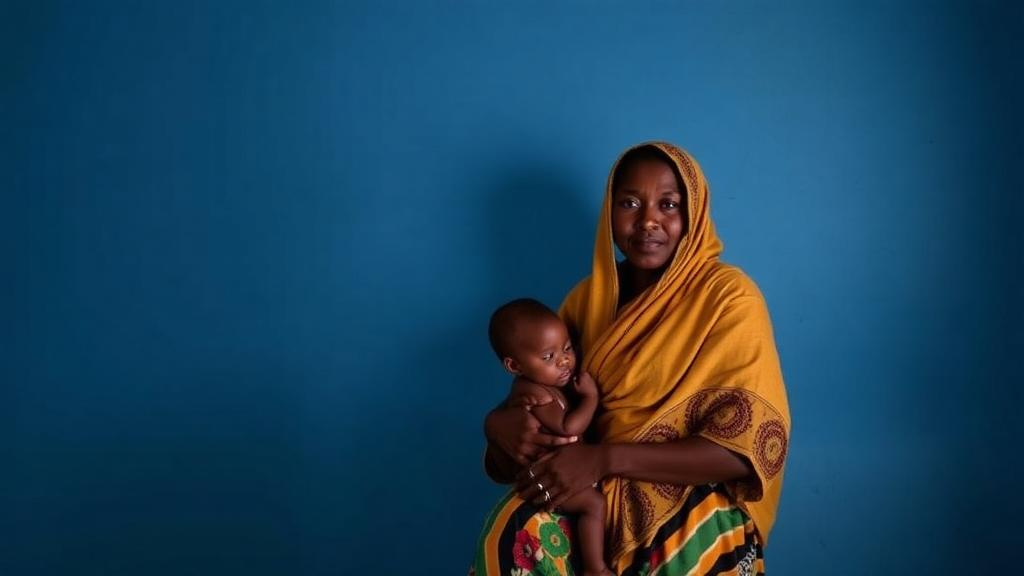
The weeks after childbirth are among the most dangerous and most neglected in a woman’s life. A new qualitative study from northwestern Tanzania has given voice to young and first-time mothers navigating this fragile window, revealing a striking mixture of pride, exhaustion, anxiety, and unmet need. The research, published in the International Journal of Public Health, explored the postpartum needs and lived experiences of mothers in Mwanza City, an urban setting that carries one of the heaviest institutional maternal mortality burdens in the country.
The study team, based at the Catholic University of Health and Allied Sciences, conducted a descriptive phenomenological investigation between April and July 2022. Phenomenology, in this context, means an effort to describe the essence of lived experience as participants themselves perceive it, with researchers deliberately bracketing their own preconceptions to minimize bias. The researchers recruited 62 women who had given birth within the previous six weeks, a cutoff chosen to minimize recall bias. Data came from 20 in-depth interviews and seven focus group discussions involving 42 participants, all recruited from government health facilities across six wards in Mwanza City’s Nyamagana and Ilemela districts. Interviews were conducted in Kiswahili, audio-recorded, transcribed, translated into English, and analyzed using inductive thematic analysis with NVivo software, in which two investigators coded independently and resolved discrepancies by consensus.
The choice of setting was not incidental. According to Tanzania’s national Maternal and Perinatal Death Surveillance and Response report for 2018 to 2023, Mwanza Region recorded 962 institutional maternal deaths, the second highest total nationally after Dar es Salaam, and Mwanza City Council alone accounted for 511 deaths, roughly 5.3 percent of the national total. This burden is linked to suboptimal coverage of antenatal care visits, skilled birth attendance, and postnatal care, alongside prevalent conditions such as maternal anemia, malaria during pregnancy, and HIV. Against this backdrop, understanding what new mothers actually need after delivery becomes a matter of survival as much as wellbeing.
Demographically, the study sample skewed toward first-time mothers, who made up 77.8 percent of participants, while 24.2 percent were young mothers under 20 years old. Most respondents, 69.4 percent, were aged 25 to 35, and 80.6 percent were married. Educational attainment was spread across primary, secondary, and higher education, and wards were purposively selected to capture both high- and low-population-density areas, giving the sample socio-economic diversity. Sampling continued until data saturation, the point at which no new themes emerged, was confirmed after 15 interviews and six focus groups, with additional collection conducted for robustness.
Three major themes emerged from the analysis: postpartum needs, positive experiences, and negative experiences. The needs clustered into informational support, psychological support, and practical or material assistance. Participants repeatedly described feeling unprepared for motherhood and hungry for early, continuous education. One mother explained that during pregnancy women are often not ready to absorb information, saying they would have liked to be prepared early and informed about what happens after a first baby. Another wished someone had talked to her beforehand about infant acne, caring for the umbilical cord, and the strange sounds babies make, which she found frightening. The researchers note that this information gap is not unique to Tanzania; similar deficits in postpartum information have been documented among first-time mothers in England.
Psychological isolation emerged as a powerful undercurrent. Mothers described wanting a reference person during pregnancy, whether a friend, relative, or nurse, with whom they could share experiences and receive reassurance. One participant put it plainly: it is a stressful period. The practical dimension was equally concrete. Women asked for family support so they could rest, and one mother said she simply wanted someone to look after the baby so she could sleep for at least an hour. Material needs, from basic items like clothes and soap to financial preparedness, rounded out the picture of households stretched thin by a newborn’s arrival.
Yet the study is emphatically not a story of unrelieved hardship. Participants reported genuine joy and fulfillment in motherhood, pride in their new social identity, and deep emotional bonding with their infants. One mother described being in love with her baby as a feeling she was proud of, and another said that motherhood meant confidently seeing all the possibilities in the world through her children’s eyes. Motherhood was also associated with increased confidence and a heightened sense of responsibility. The authors align these positive findings with existing literature suggesting that joy can buffer stress and strengthen parent-infant attachment, an important component of psychological health and wellbeing.
The negative experiences, however, were pervasive and physically grounded. Sleep disturbances were nearly universal, with mothers describing relentless cycles of breastfeeding and diaper changes, compounded for some by pain from cesarean wounds. Breastfeeding difficulties were common, particularly among women who had delivered by cesarean section, a finding consistent with prior research linking cesarean delivery to lower early milk production and maternal depression. Some mothers reported pressure from family members to take herbal medication to boost milk supply, and one first-time mother lamented that she lacked skills and experience, never having breastfed before, and had received no classes or demonstrations. Appetite changes and weight fluctuations added to the physical toll, with some women losing weight while trying to maintain milk supply and others gaining weight amid high appetites and reduced activity.
Emotional distress, including anxiety and symptoms of depression, threaded through many accounts. Mothers worried about their inexperience in caring for newborns and about insufficient milk, and the distress was exacerbated by limited support. The discussion points to sobering local context: earlier research in Mwanza City found a 33.8 percent prevalence of antenatal depression, particularly among first-time pregnant women, associated with poor partner relationships and lower socioeconomic status. Participants also raised systemic concerns, calling for adequate numbers of well-trained healthcare workers. One woman recounted witnessing a friend’s baby die at the hospital because no healthcare worker was available to assist on the night shift, an account the authors present as illustrative of staffing gaps that mothers believe contribute to hospital-based neonatal mortality.
The authors conclude that young and first-time mothers in northwestern Tanzania face significant physical, emotional, and informational challenges in the postpartum period, and they call for strengthening social support and targeted postnatal interventions to improve maternal and infant outcomes in high-burden settings. Their recommendations include integrating psychosocial screening into antenatal and postnatal services, improving relationships between mothers and midwives, engaging partners and families who need education in their communities, encouraging exclusive breastfeeding for six months to support both infant health and postpartum weight control, and investing in continuous on-the-job training for healthcare workers. The study’s limitations are acknowledged: it relied on self-reports without provider perspectives, and women with severe obstetric complications were excluded, potentially underrepresenting the most extreme experiences. Even so, the message from Mwanza’s new mothers is clear: the first six weeks after birth are a critical window in which information, rest, and human connection are not luxuries but lifelines.
Subject of Research: Postpartum needs and lived experiences of young and first-time mothers in northwestern Tanzania
Article Title: Postpartum needs and experiences of young and first-time mothers in northwestern Tanzania
Article References: Postpartum needs and experiences of young and first-time mothers in northwestern Tanzania. (n.d.). https://doi.org/10.3389/ijph.2026.1609545
Image Credits: AI Generated
DOI: 10.3389/ijph.2026.1609545
Keywords: postpartum care, first-time mothers, young mothers, Tanzania, maternal health, qualitative research, breastfeeding, postnatal depression, social support, Mwanza, phenomenology, public health
Cite Scienmag News
Glenn Wilkins. (October 15, 2026). Sleepless Nights and Silent Struggles: First-Time Mothers in Tanzania Reveal Postpartum Gaps. Scienmag. https://scienmag.com/sleepless-nights-and-silent-struggles-first-time-mothers-in-tanzania-reveal-postpartum-gaps/
Glenn Wilkins. "Sleepless Nights and Silent Struggles: First-Time Mothers in Tanzania Reveal Postpartum Gaps." Scienmag, 15 October 2026, https://scienmag.com/sleepless-nights-and-silent-struggles-first-time-mothers-in-tanzania-reveal-postpartum-gaps/. Accessed 15 October 2026.
Glenn Wilkins. "Sleepless Nights and Silent Struggles: First-Time Mothers in Tanzania Reveal Postpartum Gaps." Scienmag. October 15, 2026. https://scienmag.com/sleepless-nights-and-silent-struggles-first-time-mothers-in-tanzania-reveal-postpartum-gaps/


