


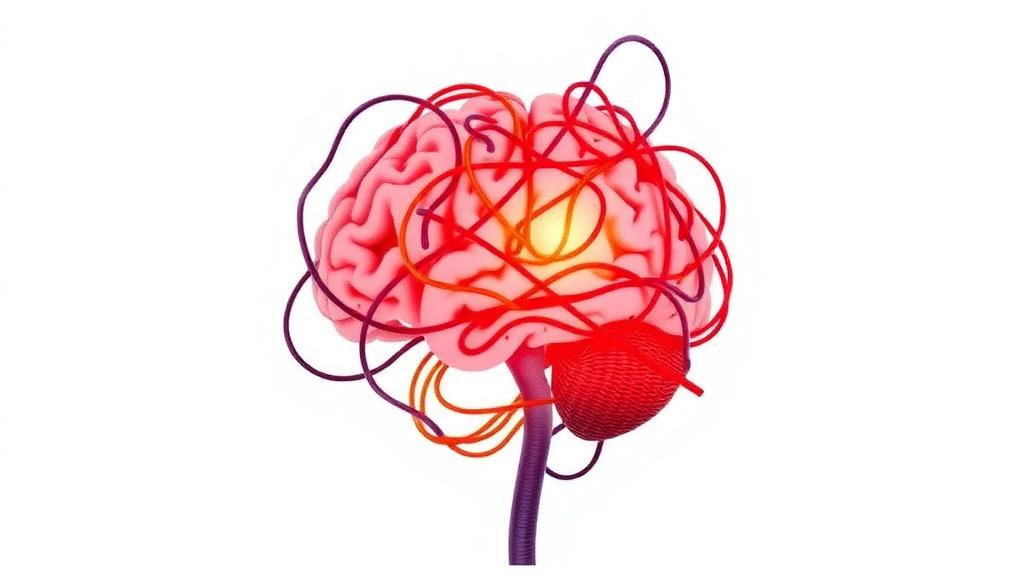
People with narcolepsy are far more likely than the general population to live with chronic pain, but the reason has puzzled researchers for years. A new mini-review published in Frontiers in Sleep by Maria Munch-Menzer and Birgitte Rahbek Kornum of the University of Copenhagen argues that the answer is neither a simple chemical deficit nor a mere side effect of poor sleep. Instead, chronic pain in narcolepsy appears to emerge from an intricate interplay of neurobiological, psychological, and possibly immune mechanisms, and the authors say the field must abandon the search for a single cause.
Narcolepsy type 1 (NT1) is a rare disorder affecting roughly 200 to 500 people per million, caused by the selective loss of orexin-producing neurons in the brain. Orexin, also called hypocretin, is a neuropeptide system that stabilizes wakefulness, and its loss produces the disorder’s hallmark symptoms: overwhelming daytime sleepiness, fragmented nighttime sleep, cataplexy, sleep paralysis, and vivid hypnagogic hallucinations. Narcolepsy type 2 (NT2) shares most of these symptoms but lacks cataplexy and typically shows normal orexin levels in cerebrospinal fluid, leaving its underlying biology poorly understood. Beyond the classic symptom pentad, patients frequently carry comorbidities including obesity, obstructive sleep apnea, depression, and autonomic dysfunction, and many report chronic pain syndromes such as migraine and lower back pain.
The review, which followed PRISMA systematic review guidelines, compiled clinical and mechanistic literature on chronic pain in narcolepsy. The numbers are striking. Cross-sectional studies report chronic pain prevalence estimates ranging from 32.8 to 84.84 percent in narcolepsy, depending on how pain is defined, whether as pain occurring at least monthly or as pain lasting three months or longer. Observational studies and a community-based cohort, with sample sizes between 66 and 2,057 participants, all found increased pain-related comorbidity. In one study that included both subtypes, 84.84 percent of NT1 patients and 75.75 percent of NT2 patients reported chronic pain.
One particularly revealing finding concerns how pain is perceived by others. When researchers compared patients’ self-reported pain with assessments made by close acquaintances and by physicians, 83 percent of the acquaintances’ evaluations aligned closely with the patients’ own reports. Physicians, however, significantly underestimated pain severity in 60 percent of cases, a statistically significant discrepancy that the authors say reinforces the need for greater clinical awareness of pain in this population.
A central question is whether the pain can be attributed to comorbidities alone. Mood disorders and disturbed sleep are known to influence pain perception, and narcolepsy patients carry a heavy burden of both. To address this, one study used propensity score matching, controlling not only for demographics but for the total number of diagnoses, improving comparability between narcolepsy patients and controls. Even after this adjustment, chronic pain remained significantly more prevalent in the narcolepsy group, suggesting that measured comorbidities do not fully explain the association, although the authors caution that residual confounding cannot be excluded. Population-level data add weight to the synergy hypothesis: depression and sleep disorders each raise chronic pain risk individually, but their combined effect nearly quadruples it, with an odds ratio of 3.95 for chronic low back pain.
Yet when researchers measure pain sensitivity directly, the picture changes dramatically. Quantitative sensory testing in a small NT1 cohort of 13 patients and 13 matched controls found no significant differences in mechanical, cold, warm, or pressure pain thresholds, even though sleepiness was measured and matched between groups. A larger follow-up study of 39 NT1 patients assessing muscle pain sensitivity and temporomandibular disorders likewise found no experimental differences, and notably, those patients did not show elevated chronic pain questionnaire scores, possibly because exclusion criteria removed individuals with pain-affecting conditions, making the sample unrepresentative of the broader NT1 population. The authors conclude that experimental thresholds capture only specific aspects of nociceptive processing and may not reflect the mechanisms driving chronic pain in daily life.
Several mechanistic hypotheses emerge from the review. The near-equal pain prevalence in NT1 and NT2 weakens the argument that orexin deficiency alone drives pain in NT1. However, cerebrospinal fluid measurements may be misleading: conventional assays cannot distinguish intact, biologically active orexin peptides from inactive degradation products. In some NT1 patients initially classified as non-deficient, the fraction of intact orexin was significantly lower than in controls, and NT2 patients showed a non-significant trend toward lower intact orexin. Subtle dysfunction could therefore hide behind seemingly normal concentrations.
The orexin system’s role in pain is genuinely two-sided. Orexin A acts predominantly through the OX1 receptor, whose signaling in the periaqueductal gray supports analgesia, so its loss in NT1 may weaken an important inhibitory pathway. Orexin B binds the OX2 receptor with tenfold greater affinity, and OX2 receptor activation can mediate either pro- or antinociceptive effects depending on context and brain region. Recent animal work suggests orexin B may protect against neuropathic pain by suppressing neuroinflammation and oxidative stress, while other findings indicate OX2 activation can promote nociception under stress-related or inflammatory conditions. With both orexin neuropeptides severely depleted in NT1, the delicate balance between anti- and pronociceptive signaling could tip toward heightened pain perception, potentially explaining why patients show such varied pain profiles.
Another candidate mechanism lies downstream of orexin: dopamine. Orexin neurons innervate dopaminergic regions such as the ventral tegmental area and promote dopamine release in the nucleus accumbens, and the dopaminergic system is involved in both arousal and pain inhibition. Orexin loss in NT1 may therefore impair dopaminergic tone, contributing not only to sleep-wake instability but to altered pain processing. Intriguingly, a case report describes a narcolepsy patient whose chronic migraine resolved with armodafinil, a wake-promoting drug that raises extracellular dopamine by blocking reuptake, with the benefit sustained for over a year and pain returning only after discontinuation. The headache improvement coincided with reduced fatigue, hinting at a shared dopaminergic mechanism, though controlled studies have not yet confirmed this.
A final, more speculative thread involves the immune system. A case series of ten NT1 patients found activating autoantibodies against G-protein-coupled nociceptive receptors in 90 percent of patients, compared with none of 100 healthy controls, a difference the authors describe as statistically striking but based on limited evidence. If these antibodies functionally alter nociceptive signaling, an immune-mediated component of pain in some patients becomes plausible, though functional assays are needed to establish this. Taken together, the review concludes that chronic pain in narcolepsy is best understood as a multifactorial phenomenon shaped by disease biology, disturbed sleep, fatigue, and mood symptoms interacting with one another. The clinical implication is clear: physicians should not rely on targeted pharmacology alone but should address depression, sleep disturbance, and fatigue in parallel with pain, and future studies should improve case-control matching, include larger NT1 samples enriched for chronic pain, and compare subtypes more rigorously.
Subject of Research: Chronic pain mechanisms in narcolepsy type 1 and type 2
Article Title: Chronic pain in narcolepsy reflects interacting neurobiological and psychological mechanisms: a mini-review
Article References: Chronic pain in narcolepsy reflects interacting neurobiological and psychological mechanisms: a mini-review. (n.d.). https://doi.org/10.3389/frsle.2026.1930803
Image Credits: AI Generated
DOI: 10.3389/frsle.2026.1930803
Keywords: narcolepsy, chronic pain, orexin, hypocretin, dopamine, autoantibodies, sleep disorders, depression, quantitative sensory testing, OX1 receptor, OX2 receptor, narcolepsy type 2
Cite Scienmag News
Cassandra Pierce. (October 15, 2026). Why Chronic Pain Haunts People With Narcolepsy: New Review Points to a Tangle of Brain and Mind. Scienmag. https://scienmag.com/why-chronic-pain-haunts-people-with-narcolepsy-new-review-points-to-a-tangle-of-brain-and-mind/
Cassandra Pierce. "Why Chronic Pain Haunts People With Narcolepsy: New Review Points to a Tangle of Brain and Mind." Scienmag, 15 October 2026, https://scienmag.com/why-chronic-pain-haunts-people-with-narcolepsy-new-review-points-to-a-tangle-of-brain-and-mind/. Accessed 15 October 2026.
Cassandra Pierce. "Why Chronic Pain Haunts People With Narcolepsy: New Review Points to a Tangle of Brain and Mind." Scienmag. October 15, 2026. https://scienmag.com/why-chronic-pain-haunts-people-with-narcolepsy-new-review-points-to-a-tangle-of-brain-and-mind/


