


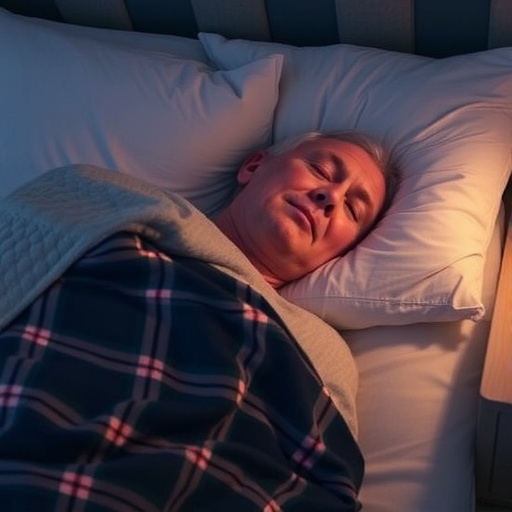
In a groundbreaking study published recently in Nature Communications, a team of researchers has uncovered compelling evidence that acute sleep rebound following periods of sleep restriction can significantly reduce mortality risk. This discovery offers crucial insights into the physiological importance of compensatory sleep and challenges long-held beliefs about the irreparable damage caused by sleep deprivation.
Sleep deprivation, a chronic condition affecting millions globally due to lifestyle choices, occupational demands, and health disorders, has been intricately linked to increased risks of cardiovascular diseases, metabolic disturbances, and overall mortality. However, the mechanisms by which the body might mitigate such detrimental effects, once normal sleep is resumed, remained elusive until now. The research led by Li, Zhang, and colleagues addresses this gap by demonstrating how the body’s acute sleep rebound—an intensified sleep period following deprivation—plays a pivotal role in restoring health and prolonging life expectancy.
Using a multidisciplinary approach combining longitudinal human data, controlled sleep experiments, and advanced statistical modeling, the researchers observed that individuals experiencing restricted sleep but subsequently exhibiting strong rebound sleep phases displayed notably lower mortality rates. This correlation suggests that the rebound sleep phase acts as a vital countermeasure, enabling recovery processes that offset the damage accumulated through prior sleep loss.
At the cellular and molecular level, the study sheds light on how sleep rebound facilitates restorative functions. Rebound sleep is characterized by increases in slow-wave sleep (SWS), often referred to as deep sleep, which is crucial for synaptic homeostasis, immune function, and metabolic regulation. The researchers measured biomarker changes associated with inflammation and oxidative stress, two pathways heavily implicated in chronic disease development, revealing substantial reductions post-rebound sleep episodes.
The findings further extend into neurophysiological territory, highlighting the relationship between sleep architecture modulation during rebound sleep and cognitive resilience. The restoration of memory consolidation processes, attention regulation, and executive function was observed in participants undergoing recovery sleep after restriction, underscoring the necessity of rebound mechanisms for maintaining brain health.
This research utilized a robust sample size, ensuring statistical power and reproducibility. It accounted for confounding variables like age, sex, baseline health status, and lifestyle factors, thereby bolstering the validity of the observed associations between sleep rebound and mortality risk. Notably, the data derived from wearable sleep monitors in combination with comprehensive health records provided a fine-grained analysis of real-world sleep behaviors and outcomes.
Intriguingly, the scientists also explored the evolutionary implications of their findings. They postulated that the ability to engage in acute sleep rebound might represent an adaptive survival strategy, enabling organisms to recuperate vital physiological functions swiftly after periods of enforced wakefulness. This insight opens new avenues for understanding how sleep regulation evolved to optimize health and longevity.
In clinical terms, the study’s implications could be transformative. It suggests that encouraging strategic recovery sleep in populations at risk—such as shift workers, military personnel, and individuals with sleep disorders—might mitigate long-term adverse consequences. Health practitioners could incorporate sleep rebound optimization strategies into therapeutic protocols to enhance patient outcomes.
Furthermore, the study addresses public health messaging around sleep hygiene. While consistent nightly sleep duration remains critical, this work highlights that occasional acute rebound episodes may provide substantial benefits, shifting paradigms in how sleep health is communicated and managed at societal levels.
Technologically, this research leveraged advances in polysomnography combined with machine learning algorithms to classify sleep states with remarkable accuracy. These tools allowed for precise quantification of rebound sleep phenomena and uncovered patterns that report less invasive methods might miss, setting new standards for sleep research methodologies.
In addition to human studies, animal models replicated the beneficial effects of rebound sleep, suggesting conservation of these mechanisms across species. Experimental interventions enhancing rebound sleep phases in rodents yielded improved markers of lifespan and disease resistance, reinforcing the translational potential of these findings.
Despite these advances, the authors acknowledge challenges ahead. Determining the optimal timing, duration, and intensity of sleep rebound needed for maximum protective effects requires further investigation. Moreover, variability in individual sleep recovery capabilities implicates genetics, environmental stressors, and comorbidities, thus necessitating personalized approaches.
The comprehensive nature of this work advocates for an integrative sleep-health paradigm, wherein acute rebound sleep is no longer viewed merely as a reactive catch-up mechanism but as an essential component of health maintenance and disease prevention. This reframing underscores the intricate balance between sleep homeostasis and physiological resilience.
In conclusion, Li and colleagues’ study propels the field forward by elucidating links between sleep rebound and mortality risk reduction. It provides a vital scientific foundation supporting the health benefits of compensatory sleep following deprivation. As societies grapple with increasing sleep deficit burdens, leveraging the restorative power of sleep rebound could emerge as a highly effective intervention with profound implications for global health.
Cite Scienmag News
Ophelia Keating. (April 28, 2026). Sleep Rebound After Restriction Lowers Mortality Risk. Scienmag. https://scienmag.com/sleep-rebound-after-restriction-lowers-mortality-risk/
Ophelia Keating. "Sleep Rebound After Restriction Lowers Mortality Risk." Scienmag, 28 April 2026, https://scienmag.com/sleep-rebound-after-restriction-lowers-mortality-risk/. Accessed 4 September 2026.
Ophelia Keating. "Sleep Rebound After Restriction Lowers Mortality Risk." Scienmag. April 28, 2026. https://scienmag.com/sleep-rebound-after-restriction-lowers-mortality-risk/


