Tuesday, October 27, 2026
Science
No Result
View All Result
  • Login
  • HOME
  • SCIENCE NEWS
  • CONTACT US
  • HOME
  • SCIENCE NEWS
  • CONTACT US
No Result
View All Result
Scienmag
No Result
View All Result
Home Science News Biology

Single-Molecule Tracing Reveals Hidden Diversity in Worm Genome Organization

October 26, 2026
in Biology
Juliet Wilcox
By Juliet Wilcox Scienmag Editorial Profile - Human Genetics
Reading Time: 3 mins read
0
Single-Molecule Tracing Reveals Hidden Diversity in Worm Genome Organization

Single-Molecule Tracing Reveals Hidden Diversity in Worm Genome Organization

65
SHARES
587
VIEWS
Share on FacebookShare on Twitter
ADVERTISEMENT

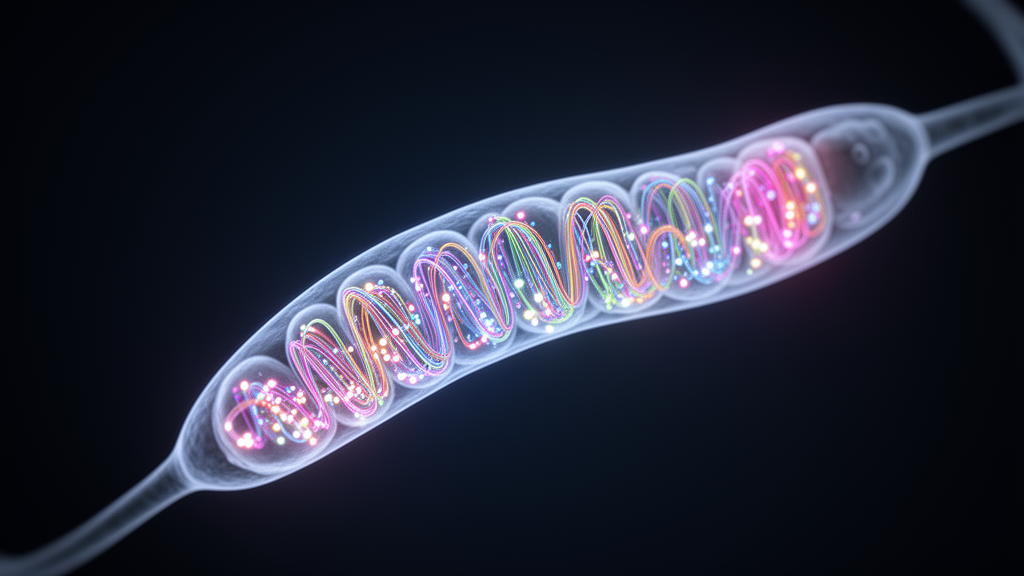
For the cell to function, this enormous amount of genetic material must be organized so that it does not become tangled, while genes remain accessible for reading, copying and repair. Researchers at the University of Basel have now discovered three distinct types of large chromosomal domains that help organize DNA within the nuclei of the roundworm Caenorhabditis elegans, a finding that challenges earlier assumptions about how genomes are arranged in this widely used model organism. Scientists have long known that chromosomes are not randomly distributed inside the nucleus.

Microscopy studies revealed distinct structures resembling small neighborhoods within the nuclear space, while molecular studies identified two major organizational principles: topologically associating domains, or TADs, in which neighboring stretches of DNA frequently interact with one another, and larger compartments in which TADs are grouped together. According to Professor Susan Mango, who led the study, there had long been a gap between what could be seen under the microscope and what molecular measurements suggested about DNA organization. Previous research had suggested that, unlike in vertebrates, TADs were largely absent from C. elegans.

However, those studies relied on measurements averaged across thousands of DNA molecules, an approach that could obscure individual structures. First author Dania Camila Pulido-Barrera took a different route. Using a microscopy-based technique called chromatin tracing, she examined individual DNA molecules one by one and grouped them according to their three-dimensional folding patterns.

When thousands of molecules are averaged together, important differences can disappear, she explained; looking at single molecules revealed structures that had previously remained hidden. The team applied this approach to chromosomes during early embryonic development in C. elegans, tracing individual DNA molecules to see how they fold and are organized within the nucleus. They identified three distinct types of large chromosomal domains within heterochromatin, the densely packed regions of the genome.

These domains differ not only in their three-dimensional structure but also in the mechanisms through which they form. One type closely resembles the TADs found in vertebrates. Another houses a set of genes critical for making ribosomes, the cellular factories that produce proteins.

This so-called 5S eICID domain is distinct from the well-known nucleolus and also behaves differently from the TAD-like domains. The big surprise, Pulido-Barrera noted, was the diversity: the researchers discovered different ways in which large regions of DNA can be organized within the cell nucleus. The findings, published in Nature Structural & Molecular Biology, challenge the previous assumption that C. elegans lacks large, clearly defined TAD-like domains on its autosomes.

They also suggest that fundamental principles of chromosome organization are more widespread across the animal kingdom than previously thought. The study leaves open what these structures actually do. Mango emphasized that the big question now is what function the different domains serve, what happens when they are disrupted, and how disruption affects gene regulation.

The research team plans to continue using C. elegans to investigate these questions, and the new study reinforces the model organism's suitability for such work. For now, the results stand as a reminder that averaging measurements across many molecules can mask biologically meaningful variation, and that single-molecule approaches can uncover genome structures that population-level methods miss.

Subject of Research: Single-molecule chromatin tracing of genome organization in C. elegans embryos

Article Title: Genome organization: More diverse than previously thought

Article References: Genome organization: More diverse than previously thought. Original publication (Bibliographic details unavailable.)

Image Credits: AI Generated

DOI: Not provided

Keywords: genome organization, chromatin tracing, TADs, heterochromatin, C. elegans, nucleus, embryonic development, chromosomes, gene regulation, University of Basel, single-molecule microscopy, 5S eICID

Cite Scienmag News

Juliet Wilcox. (October 26, 2026). Single-Molecule Tracing Reveals Hidden Diversity in Worm Genome Organization. Scienmag. https://scienmag.com/single-molecule-tracing-reveals-hidden-diversity-in-worm-genome-organization/
Juliet Wilcox. "Single-Molecule Tracing Reveals Hidden Diversity in Worm Genome Organization." Scienmag, 26 October 2026, https://scienmag.com/single-molecule-tracing-reveals-hidden-diversity-in-worm-genome-organization/. Accessed 27 October 2026.

Juliet Wilcox. "Single-Molecule Tracing Reveals Hidden Diversity in Worm Genome Organization." Scienmag. October 26, 2026. https://scienmag.com/single-molecule-tracing-reveals-hidden-diversity-in-worm-genome-organization/
Tags: 5S eICIDC. eleganschallenges to existing genome organization modelschromatin tracingchromosomal domain structures in worm nucleichromosome organization principles in C. eleganschromosomesdiversity of chromosomal compartments in nematodesembryonic developmentGene regulationgenome organizationheterochromatinimplications of DNA domainlarge chromosomal domains in worm genomemicroscopy techniques for DNA visualizationmolecular mechanisms of nuclear DNA organizationnuclear architecture and gene accessibilitynucleusrole of topologically associating domains in genome architecturesingle-molecule DNA tracing in model organismssingle-molecule genome organization in Caenorhabditis eleganssingle-molecule microscopyTADsUniversity of Basel
Share26Tweet16
Previous Post

Foxtail Millet Genotypes Show Stable High Yields Across Six Indian Environments

Next Post

AI Scoring of Immune Cells in Breast Cancer Tissue Is Booming, but Almost No Model Is Ready for the Clinic

Related Posts

Three Pseudomonas Strains Show Promise Against Postharvest Citrus Rot
Biology

Three Pseudomonas Strains Show Promise Against Postharvest Citrus Rot

October 27, 2026
Hundreds of spore-forming bacteria from Brazilian soils mapped in landmark phenotypic survey
Biology

Hundreds of spore-forming bacteria from Brazilian soils mapped in landmark phenotypic survey

October 27, 2026
Liposome Treatment Keeps Lactococcus lactis Alive Longer in Storage
Biology

Liposome Treatment Keeps Lactococcus lactis Alive Longer in Storage

October 27, 2026
GC-Rich Heterochromatin and Ribosomal Genes Mapped in Three Fungus-Farming Ants
Biology

GC-Rich Heterochromatin and Ribosomal Genes Mapped in Three Fungus-Farming Ants

October 27, 2026
Gut Microbiota Therapies in Parkinson’s Disease: Probiotics Ease Constipation, Motor Benefits Remain Unproven
Biology

Gut Microbiota Therapies in Parkinson’s Disease: Probiotics Ease Constipation, Motor Benefits Remain Unproven

October 26, 2026
Sepsis Study Points to THBS1 as a Myeloid-Linked Marker of Poor Outcomes
Biology

Sepsis Study Points to THBS1 as a Myeloid-Linked Marker of Poor Outcomes

October 26, 2026
Next Post
AI Scoring of Immune Cells in Breast Cancer Tissue Is Booming, but Almost No Model Is Ready for the Clinic

AI Scoring of Immune Cells in Breast Cancer Tissue Is Booming, but Almost No Model Is Ready for the Clinic

  • Mothers who receive childcare support from maternal grandparents show more optimized

    Mothers who receive childcare support from maternal grandparents show more parental warmth, finds NTU Singapore study

    27656 shares
    Share 11059 Tweet 6912
  • University of Seville Breaks 120-Year-Old Mystery, Revises a Key Einstein Concept

    1061 shares
    Share 424 Tweet 265
  • Bee body mass, pathogens and local climate influence heat tolerance

    682 shares
    Share 273 Tweet 171
  • Researchers record first-ever images and data of a shark experiencing a boat strike

    546 shares
    Share 218 Tweet 137
  • Groundbreaking Clinical Trial Reveals Lubiprostone Enhances Kidney Function

    531 shares
    Share 212 Tweet 133
Science

Embark on a thrilling journey of discovery with Scienmag.com—your ultimate source for cutting-edge breakthroughs. Immerse yourself in a world where curiosity knows no limits and tomorrow’s possibilities become today’s reality!

RECENT NEWS

  • Three Pseudomonas Strains Show Promise Against Postharvest Citrus Rot
  • Hundreds of spore-forming bacteria from Brazilian soils mapped in landmark phenotypic survey
  • Review Maps Mechanism-Based Therapies for Cardiovascular-Kidney-Metabolic Syndrome
  • Liposome Treatment Keeps Lactococcus lactis Alive Longer in Storage

Categories

  • Agriculture
  • Anthropology
  • Archaeology
  • Athmospheric
  • Biology
  • Biotechnology
  • Blog
  • Bussines
  • Cancer
  • Chemistry
  • Climate
  • Earth Science
  • Editorial Policy
  • Marine
  • Mathematics
  • Medicine
  • Pediatry
  • Policy
  • Psychology & Psychiatry
  • Science Education
  • Science News
  • Social Science
  • Space
  • Technology and Engineering

Subscribe to Blog via Email

Enter your email address to subscribe to this blog and receive notifications of new posts by email.

Join 5,151 other subscribers

© 2025 Scienmag - Science Magazine

Welcome Back!

Login to your account below

Forgotten Password?

Retrieve your password

Please enter your username or email address to reset your password.

Log In
No Result
View All Result
  • HOME
  • SCIENCE NEWS
  • CONTACT US

© 2025 Scienmag - Science Magazine

Discover more from Science

Subscribe now to keep reading and get access to the full archive.

Continue reading