


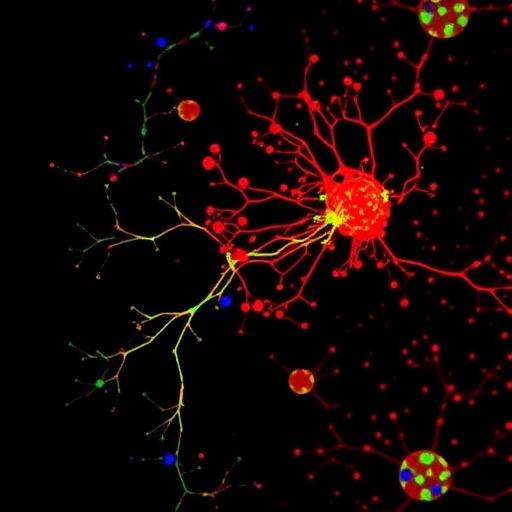
In recent years, the landscape of cancer research has been notably transformed by technological advancements, particularly in the realm of genetic and cellular analysis. A groundbreaking study published in Medical Oncology by Asmar, Awad, Boutros, and their colleagues takes a significant leap forward by harnessing single-cell RNA sequencing technology to delve deep into the molecular intricacies of osteosarcoma. This cutting-edge methodology, which has rapidly become a cornerstone for understanding cellular heterogeneity, offers unprecedented insights into tumor biology, diagnosis, prognosis, and potential therapeutic avenues. The implications of these findings carry profound potential to revolutionize osteosarcoma management and perhaps reshape approaches to other malignancies as well.
Osteosarcoma, a malignant bone tumor predominantly affecting children and young adults, remains one of the most challenging sarcomas to treat effectively. Traditional diagnostic and prognostic tools often fall short in capturing the tumor’s complexity, which is characterized by a diverse array of cell types within the tumor microenvironment. The pioneering use of single-cell RNA sequencing (scRNA-seq) in this study unveils this heterogeneity at the molecular level with exquisite detail, thereby identifying distinct cellular populations and their gene expression profiles. This granular understanding is critical, as it reveals the dynamic nature of tumor cells and their interactions with the surrounding stromal and immune components.
The fundamental principle of scRNA-seq involves isolating individual cells from a heterogeneous tissue sample and sequencing their RNA transcripts. This technique enables researchers to circumvent the limitations of bulk RNA sequencing, which averages gene expression across millions of cells, thereby masking the unique signatures of rare or functionally distinct subpopulations. In the context of osteosarcoma, scRNA-seq empowers investigators to decipher the genetic programs employed by cancer stem cells, differentiated tumor cells, and infiltrating immune cells, illuminating their roles in tumor progression and resistance mechanisms.
Applying scRNA-seq to osteosarcoma biopsy samples, the research team meticulously cataloged transcriptional profiles of thousands of individual cells. The data revealed multiple discrete clusters representing diverse cell states within the tumor. Notably, clusters enriched for genes associated with proliferation, metastasis, and stemness were distinguished, suggesting potential markers for aggressive disease phenotypes. These findings reinforce the notion that osteosarcoma is not a monolithic entity but a complex ecosystem governed by intricate cellular hierarchies and adaptive processes.
Beyond classification, the study leverages bioinformatic tools to map cellular trajectories and infer lineage relationships among tumor cells. This developmental perspective sheds light on the evolutionary paths through which cancer cells diversify, offering clues about the origins of metastatic clones and therapy-resistant populations. By identifying transcription factors and signaling pathways uniquely active in these subsets, the investigation paves the way for targeted interventions that could disrupt critical survival mechanisms within the tumor.
One of the most promising aspects of this research lies in its translational potential. Conventional chemotherapy regimens for osteosarcoma are often associated with significant toxicity and variable efficacy. The insights gleaned from scRNA-seq pave the way toward precision medicine, enabling clinicians to stratify patients based on molecular risk factors and tailor treatments accordingly. For example, a patient harboring a dominant tumor cell population characterized by a specific oncogenic pathway might benefit from pathway-specific inhibitors, thus minimizing unnecessary exposure to broad-spectrum cytotoxic drugs.
Moreover, the identification of immune cell subsets within the tumor microenvironment holds important implications for immunotherapy. The study documented distinct populations of tumor-infiltrating lymphocytes, macrophages, and dendritic cells, each exhibiting unique activation states. Understanding these immune landscapes could help predict responses to checkpoint inhibitors or facilitate the design of combinatorial therapies that harness or modulate immune activity against osteosarcoma cells, historically considered resistant to immunotherapeutic approaches.
An intriguing avenue explored is the relationship between genetic mutations and transcriptomic heterogeneity at the single-cell level. Employing integrated multi-omic analysis, the researchers correlated mutational profiles with gene expression patterns, uncovering how specific mutations drive phenotypic diversity within tumors. This approach not only affirms the genetic underpinnings of cellular behavior but also guides the prioritization of mutations for therapeutic targeting, especially those conferring drug resistance or metastatic potential.
The study also addresses the evolving challenge of minimal residual disease (MRD) detection. By sensitively profiling rare malignant cells that might persist post-treatment, scRNA-seq offers a promising diagnostic modality for early relapse prediction. Detecting subtleties in tumor cell populations at the molecular level can therefore inform more aggressive or alternative therapeutic strategies before overt clinical recurrence occurs, potentially improving patient outcomes.
Technological challenges notwithstanding, the integration of scRNA-seq into clinical workflows for osteosarcoma diagnosis and monitoring demands optimized protocols for sample acquisition, processing, and data interpretation. This study contributes valuable methodological insights, emphasizing the importance of standardized approaches to cell isolation and addressing issues such as batch effects and sequencing depth, which are critical for ensuring reproducibility and accuracy in clinical applications.
The broader oncology field stands to benefit from these advances, as the principles and methodologies demonstrated in osteosarcoma are applicable to various solid tumors exhibiting high cellular heterogeneity and treatment resistance. By fostering collaborations between molecular biologists, oncologists, bioinformaticians, and clinicians, the pathway from bench to bedside is being steadily shortened, with scRNA-seq emerging as a strategic tool for personalized cancer care.
From a societal perspective, the potential impact of such precision oncology approaches transcends individual patient benefits, offering avenues to reduce healthcare costs associated with ineffective treatments and prolonged hospitalizations. Furthermore, the detailed molecular characterization of tumors improves clinical trial design by enabling better patient stratification and the identification of novel biomarkers for therapeutic response, accelerating the development of next-generation cancer therapies.
While still in early stages, the convergence of single-cell transcriptomics with emerging technologies like spatial transcriptomics and proteomics promises even richer, multi-dimensional portraits of cancer biology. Future studies building on the framework established by Asmar et al. are poised to unlock deeper mechanistic insights and uncover vulnerabilities that were previously obscured by the complexity of tumor ecosystems.
The momentum gained by this study underscores a paradigm shift in oncology research towards dissecting cellular diversity and context-dependent gene regulation within tumors. As we accumulate more high-resolution data, the prospect of developing dynamic, adaptive treatment regimens tailored to evolving tumor landscapes is becoming increasingly tangible, heralding a new era of responsive cancer therapy.
In conclusion, the application of single-cell RNA sequencing to osteosarcoma research, as eloquently demonstrated by Asmar and colleagues, marks a pivotal moment in translating molecular precision into clinical reality. The ability to resolve the intricate mosaic of tumor and microenvironmental cells not only enriches our biological understanding but also lays the groundwork for transformative changes in diagnosis, prognosis, and therapeutic stratification. This innovative study heralds a future where cancer care is as finely tuned and dynamic as the disease itself.
Cite Scienmag News
Nathaniel Bowman. (November 13, 2025). Single-Cell RNA Sequencing Advances Osteosarcoma Care. Scienmag. https://scienmag.com/single-cell-rna-sequencing-advances-osteosarcoma-care/
Nathaniel Bowman. "Single-Cell RNA Sequencing Advances Osteosarcoma Care." Scienmag, 13 November 2025, https://scienmag.com/single-cell-rna-sequencing-advances-osteosarcoma-care/. Accessed 4 September 2026.
Nathaniel Bowman. "Single-Cell RNA Sequencing Advances Osteosarcoma Care." Scienmag. November 13, 2025. https://scienmag.com/single-cell-rna-sequencing-advances-osteosarcoma-care/


