


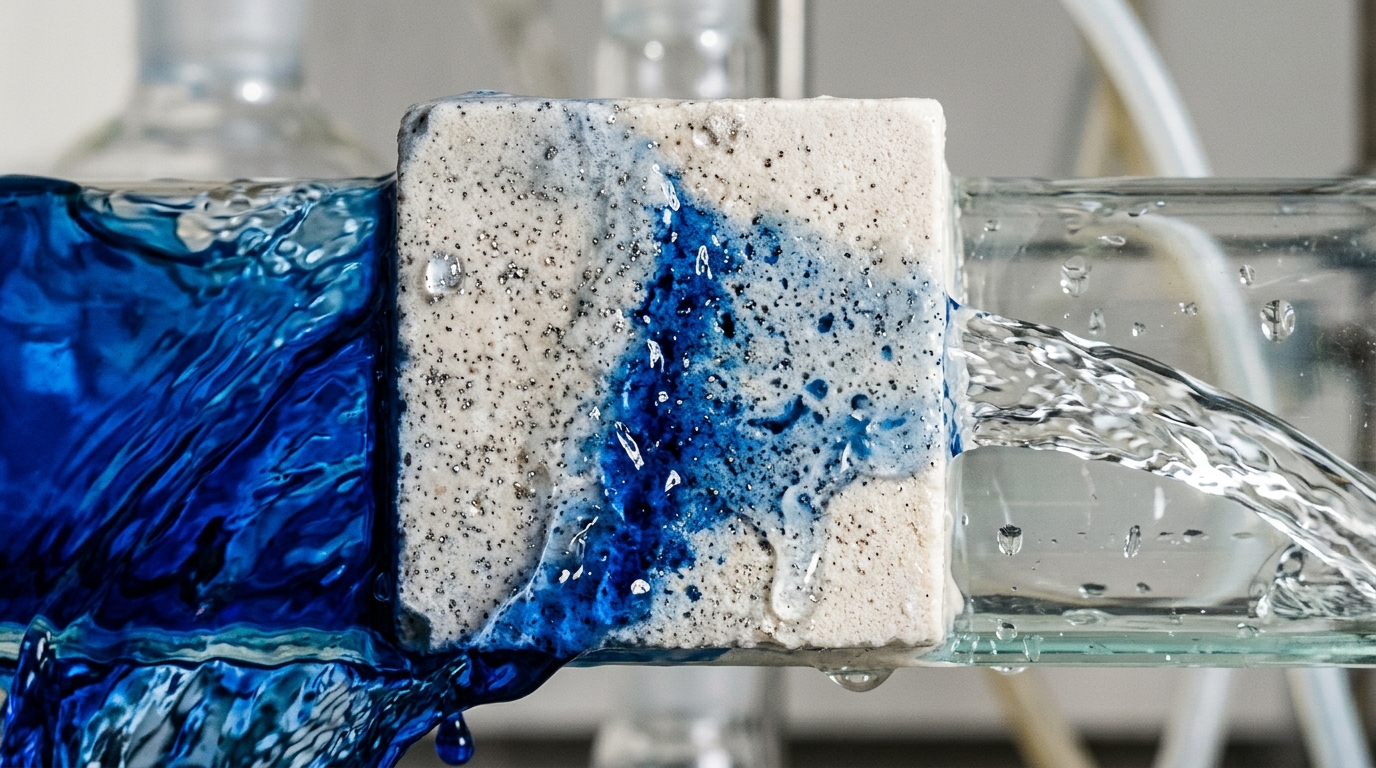
Researchers have synthesized silver-loaded zinc oxide, calcium oxide, and nickel oxide ternary nanocomposites using an environmentally friendly sol–gel process to drive the photocatalytic degradation of methylene blue in aqueous environments. The green fabrication method utilized an extract of Malva sylvestris to serve as a natural reducing and capping medium during the formation of the multi-metal oxide material.
Microscopic analyses and structural characterization confirmed the successful development of well-crystallized heterogeneous oxide networks within the synthesized composite. These analytical evaluations demonstrated that silver nanoparticles were effectively dispersed throughout the mixed ZnO/CaO/NiO matrix.
Photocatalytic testing revealed that the removal of methylene blue was strongly influenced by the reaction medium, with dye decomposition improving markedly under neutral and basic conditions. Continuous ultraviolet-visible spectroscopy tracked a gradual decline in the characteristic absorption band of methylene blue during light exposure, verifying the ongoing breakdown of the organic contaminant.
Kinetic evaluations showed that the photocatalytic breakdown followed pseudo-first-order reaction kinetics, with reaction rate constants rising as solution alkalinity increased. The researchers attributed the heightened activity under higher pH to stronger interactions between the catalyst surface and dye molecules, increased generation of reactive oxidative species, and more effective suppression of electron–hole recombination, indicating the composite’s potential for treating dye-polluted wastewater.
The synthesis procedure relied on an environmentally friendly sol–gel route that incorporated natural extract derived from Malva sylvestris to act as both a reducing and capping medium during material preparation. Microscopic analyses alongside structural characterization confirmed that this green fabrication technique successfully formed well-crystallized heterogeneous oxide networks composed of zinc oxide, calcium oxide, and nickel oxide. Across these ternary oxide networks, silver nanoparticles were effectively dispersed throughout the matrix, yielding the synthesized Ag-loaded ZnO/CaO/NiO nanocomposite structures for subsequent photocatalytic testing.
To evaluate functional capability, the photocatalytic degradation of methylene blue was investigated in aqueous solutions prepared across varying pH values to determine how solution acidity and alkalinity affect dye breakdown. Spectroscopic analysis using ultraviolet–visible measurements documented a gradual decline in the characteristic absorption band of methylene blue during light exposure. This progressive decline in the characteristic absorption band confirmed the ongoing decomposition of the organic contaminant during illumination. The experimental trials showed that the overall photocatalytic performance was highly influenced by the reaction medium, with neutral and basic conditions yielding markedly improved dye removal.
Kinetic studies established that the photocatalytic degradation process followed pseudo-first-order reaction kinetics throughout the experimental evaluations. The calculated reaction rate constants increased as the solution became more alkaline, reflecting heightened degradation activity under basic conditions. The researchers attributed this enhanced activity at higher pH to several interrelated factors: stronger interactions between the catalyst surface and the dye molecules, an increased generation of reactive oxidative species, and a more efficient suppression of electron–hole recombination within the composite matrix.
Overall, the synthesized silver-incorporated ZnO/CaO/NiO ternary oxide nanocomposites demonstrated considerable potential as efficient photocatalysts for environmental cleanup applications. Their demonstrated capacity to degrade methylene blue under light irradiation, especially across neutral and basic aqueous conditions, highlights their practical value for the treatment of dye-polluted wastewater and other environmental cleanup applications.
Subject of Research: Photocatalytic dye degradation using green-synthesized silver-modified ternary nanocomposites
Article Title: Silver-modified ZnO/CaO/NiO ternary oxide nanocomposites prepared through a green sol–gel method for pH-responsive photocatalytic removal of methylene blue
Article References: Shekofteh Narm, T., Darroudi, M., & Khorsand Zak, A. (2026). Silver-modified ZnO/CaO/NiO ternary oxide nanocomposites prepared through a green sol–gel method for pH-responsive photocatalytic removal of methylene blue. Applied Water Science. https://doi.org/10.1007/s13201-026-03017-3
Image Credits: AI Generated
DOI: 10.1007/s13201-026-03017-3
Keywords: photocatalysis, methylene blue, nanocomposites, green synthesis, sol-gel process, water treatment, reaction kinetics, zinc oxide, Silver-modified, ternary, oxide, prepared
Cite Scienmag News
Violet Maxwell. (November 9, 2026). Silver-Modified Oxide Nanocomposites Enable pH-Responsive Dye Removal. Scienmag. https://scienmag.com/silver-modified-oxide-nanocomposites-enable-ph-responsive-dye-removal/
Violet Maxwell. "Silver-Modified Oxide Nanocomposites Enable pH-Responsive Dye Removal." Scienmag, 9 November 2026, https://scienmag.com/silver-modified-oxide-nanocomposites-enable-ph-responsive-dye-removal/. Accessed 14 November 2026.
Violet Maxwell. "Silver-Modified Oxide Nanocomposites Enable pH-Responsive Dye Removal." Scienmag. November 9, 2026. https://scienmag.com/silver-modified-oxide-nanocomposites-enable-ph-responsive-dye-removal/




