

Thursday, September 3, 2026
Science
No Result
View All Result
  • Login
  • HOME
  • SCIENCE NEWS
  • CONTACT US
  • HOME
  • SCIENCE NEWS
  • CONTACT US
No Result
View All Result
Scienmag
No Result
View All Result
Home Science News Archaeology

Silkworm Farming in Southern Central Asia Preceded the Silk Road

July 26, 2026
in Archaeology
Courtney Benton
By Courtney Benton Scienmag Editorial Profile - Science and Technology Policy
Reading Time: 2 mins read
0
Silkworm Farming in Southern Central Asia Preceded the Silk Road

Silkworm Farming in Southern Central Asia Preceded the Silk Road

65
SHARES
587
VIEWS
Share on FacebookShare on Twitter
ADVERTISEMENT

Silk—often treated as the star of the ancient “Silk Road”—may have started traveling much earlier than historians assumed. New archaeological research from Washington University in St. Louis reports direct evidence that silkworm cultivation reached southern Central Asia around 2,000 BCE, nearly 2,000 years before the era typically associated with the Silk Road’s peak.

The breakthrough comes from three exceptionally well-preserved silkworm cocoons recovered at Bronze Age sites along the Surkhan-Darya River in Uzbekistan, including Sapalli Tepe. Local arid conditions helped keep the cocoons intact long enough for scientists to identify them among plant seeds and charcoal fragments.

Researchers extracted silk proteins from the cocoons and used radiocarbon dating to establish reliable timelines. The results confirm the cocoons belong to the domesticated silkworm species, Bombyx mori. According to the study’s corresponding author, Xinyi Liu, these cocoons provide the oldest dependable archaeological record of preserved silkworm remains with direct radiocarbon dates.

The implications are striking: Bombyx mori is tightly linked to the mulberry-based sericulture tradition that originated in ancient China. This evidence therefore suggests that the East Asian silk system—mulberry feeding and domesticated silkworm rearing—had already been established in southern Central Asia by about 4,000 years ago.

At Sapalli Tepe, scientists also found charcoal identified as mulberry wood, strengthening the ecological case for a working sericulture setup rather than a stray imported product. Additional evidence includes citrus wood charcoal, supporting an interpretation of wider cultivated plant presence in the region during this period.

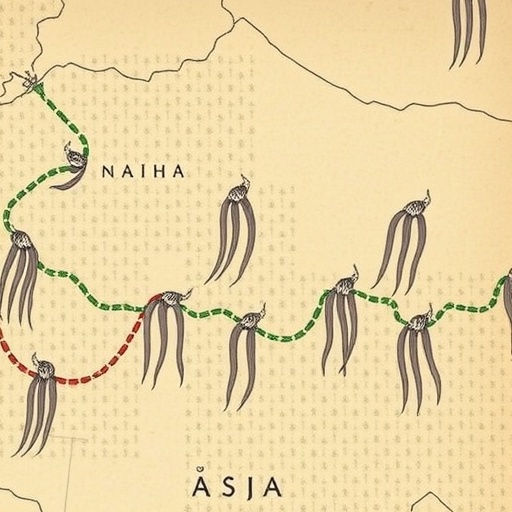
Together, the material record points to an early dispersal pathway that may have crossed the Himalayas instead of following strictly an inner-Asian route. Yet the team notes that silk traditions in South Asia historically relied heavily on non-Bombyx silkworm species, so the study raises a key open question: why did a Bombyx-centered silk tradition not persist clearly there?

Beyond silk, the findings fit a growing pattern of early globalization across Eurasia during the third and second millennia BCE. Similar evidence has already linked ancient China to Central and South Asia through the movement of cereals, fruits, metallurgy, and domesticated livestock.

“Making silk fibers” now appears to belong to this earlier exchange network, pushing the development of sericulture into a Bronze Age timeline rather than a Silk Road narrative centered on later Roman-Han commerce. If confirmed and expanded by future digs around the Tibetan Plateau, silk may join cereals and animals as a viral hallmark of early interconnection.


Subject of Research: Archaeology; sericulture (silkworm cultivation); early cross-regional connectivity
Article Title: Silkworm cultivation predating the Silk Road in southern Central Asia (2000 BCE)
News Publication Date: 23-Jul-2026
Web References: https://anthropology.washu.edu/people/xinyi-liu
References: 10.1126/sciadv.aec8738
Image Credits: Not provided in the supplied content

Article Title: Silkworm Farming in Southern Central Asia Preceded the Silk Road

Article References: Original research article

Image Credits: AI Generated

DOI: Not provided

Keywords: silk, sericulture, Bombyx mori, mulberry, Uzbekistan archaeology, radiocarbon dating, Silk Road reassessment, Bronze Age globalization, material culture

Cite Scienmag News

Courtney Benton. (July 26, 2026). Silkworm Farming in Southern Central Asia Preceded the Silk Road. Scienmag. https://scienmag.com/silkworm-farming-in-southern-central-asia-preceded-the-silk-road/

Courtney Benton. "Silkworm Farming in Southern Central Asia Preceded the Silk Road." Scienmag, 26 July 2026, https://scienmag.com/silkworm-farming-in-southern-central-asia-preceded-the-silk-road/. Accessed 3 September 2026.

Courtney Benton. "Silkworm Farming in Southern Central Asia Preceded the Silk Road." Scienmag. July 26, 2026. https://scienmag.com/silkworm-farming-in-southern-central-asia-preceded-the-silk-road/


Tags: ancient mulberry cultivation practicesancient silkworm cultivationarchaeological evidence of early silk productionBronze Age Central Asia archaeologydomesticated silkworm species Bombyx moriearly silk trade originshistory of sericulture in Asiaprehistoric silk industry developmentradiocarbon dating of silkworm remainssilk protein analysisSilk Road precursor trade routessilkworm cocoon preservation
Share26Tweet16
Previous Post

Venture-Backed Maternal Health Startups Confront Persistent Maternal Health Crisis

Next Post

Prebiotic sodas pack as much sugar as fiber, study finds

Related Posts

Bones and isotopes reveal ranked diets in Liao–Jin royal mobile camps
Archaeology

Bones and isotopes reveal ranked diets in Liao–Jin royal mobile camps

August 30, 2026
Wear analysis reveals Neolithic Sudan stone tools dug wood and soil
Archaeology

Wear analysis reveals Neolithic Sudan stone tools dug wood and soil

August 30, 2026
Carnivores and humans both left marks on small prey at Teixoneres cave
Archaeology

Carnivores and humans both left marks on small prey at Teixoneres cave

August 29, 2026
Preliminary Surveys Reveal New Findings at Mauritania’s Tagant Escarpment
Archaeology

Preliminary Surveys Reveal New Findings at Mauritania’s Tagant Escarpment

August 29, 2026
Early-to-Mid-Holocene Continuity and Change Revealed at Strathalan Cave Excavations
Archaeology

Early-to-Mid-Holocene Continuity and Change Revealed at Strathalan Cave Excavations

August 28, 2026
Mississippians May Have Consumed Cacao at 12th-Century Feasts in Georgia
Archaeology

Mississippians May Have Consumed Cacao at 12th-Century Feasts in Georgia

August 28, 2026
Next Post
Prebiotic sodas pack as much sugar as fiber, study finds

Prebiotic sodas pack as much sugar as fiber, study finds

  • Mothers who receive childcare support from maternal grandparents show more optimized

    Mothers who receive childcare support from maternal grandparents show more parental warmth, finds NTU Singapore study

    27656 shares
    Share 11059 Tweet 6912
  • University of Seville Breaks 120-Year-Old Mystery, Revises a Key Einstein Concept

    1061 shares
    Share 424 Tweet 265
  • Bee body mass, pathogens and local climate influence heat tolerance

    682 shares
    Share 273 Tweet 171
  • Researchers record first-ever images and data of a shark experiencing a boat strike

    546 shares
    Share 218 Tweet 137
  • Groundbreaking Clinical Trial Reveals Lubiprostone Enhances Kidney Function

    531 shares
    Share 212 Tweet 133
Science

Embark on a thrilling journey of discovery with Scienmag.com—your ultimate source for cutting-edge breakthroughs. Immerse yourself in a world where curiosity knows no limits and tomorrow’s possibilities become today’s reality!

RECENT NEWS

  • Decision-Making Readiness in Chemotherapy-Treated Lung Cancer Patients
  • How Hong Kong Rewrites Global Anti-Money Laundering Rules on Its Own Terms
  • How Infants Learn to Tell Close Relationships From Casual Ones
  • Women’s leadership programs fall short on gender equality, review finds

Categories

  • Agriculture
  • Anthropology
  • Archaeology
  • Athmospheric
  • Biology
  • Biotechnology
  • Blog
  • Bussines
  • Cancer
  • Chemistry
  • Climate
  • Earth Science
  • Editorial Policy
  • Marine
  • Mathematics
  • Medicine
  • Pediatry
  • Policy
  • Psychology & Psychiatry
  • Science Education
  • Social Science
  • Space
  • Technology and Engineering

Subscribe to Blog via Email

Enter your email address to subscribe to this blog and receive notifications of new posts by email.

Join 5,151 other subscribers

© 2025 Scienmag - Science Magazine

Welcome Back!

Login to your account below

Forgotten Password?

Retrieve your password

Please enter your username or email address to reset your password.

Log In
No Result
View All Result
  • HOME
  • SCIENCE NEWS
  • CONTACT US

© 2025 Scienmag - Science Magazine

Discover more from Science

Subscribe now to keep reading and get access to the full archive.

Continue reading