


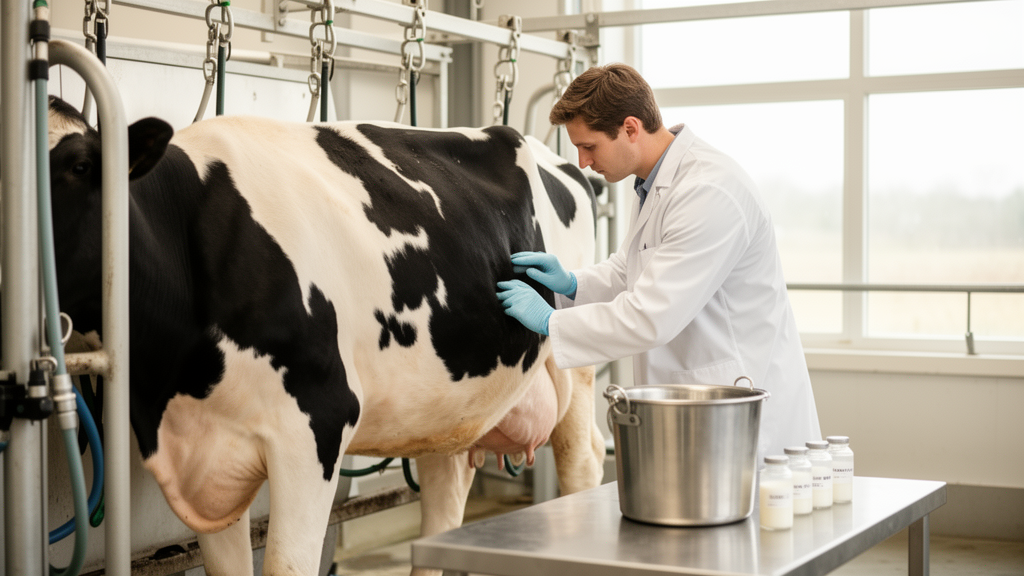
On a commercial dairy farm outside Dhaka, Bangladesh, a silent epidemic is unfolding inside the udders of lactating cows. Subclinical mastitis, an inflammation of the mammary gland that produces no visible symptoms, affects an estimated 60 to 77 percent of dairy cattle in the country, yet most farmers never know their animals are infected. A new study published in MicrobiologyOpen has now peered directly into the microbial ecosystem of milk to reveal what this hidden disease, and the antibiotics used to fight it, actually do to the bacterial communities living there. Using shotgun whole metagenome sequencing, researchers found that both infection and antibiotic exposure dramatically reduce microbial diversity, strip away beneficial commensal bacteria, and enrich genes that confer resistance to some of the most clinically important antimicrobial classes. The findings suggest that milk from affected cows could serve as a reservoir for resistance determinants, with implications that extend far beyond the dairy sector.
The research team, led by M. Nazmul Hoque and M. Shaminur Rahman of Gazipur Agricultural University, collected milk samples from 20 lactating crossbred dairy cows on a commercial farm in the Dhaka district. Ten cows tested positive for subclinical mastitis using the California Mastitis Test, a diagnostic tool that detects elevated somatic cell counts without requiring visible signs of infection. These same 10 animals were then treated with a seven-day course of intramuscular ampicillin, a beta-lactam antibiotic, and azithromycin, a macrolide, the two most frequently administered antibiotics in dairy animals in Bangladesh. Milk samples were collected 24 hours after the final antibiotic injection, while milk from 10 healthy, untreated cows served as controls. The study design allowed the researchers to compare three distinct conditions: subclinical mastitis milk, antibiotic-treated milk, and healthy milk, each represented by 10 samples.
The sequencing effort was substantial. The team generated 327 million raw reads across all 30 samples, averaging 10.9 million reads per sample, using an Illumina NovaSeq 6000 platform. After rigorous quality control, adapter trimming, and removal of host-derived sequences using the Bos taurus reference genome, the researchers retained 94 to 99 percent of reads for microbial analysis. Taxonomic profiling was performed using Kraken2 with a custom database, while functional profiling of resistance determinants and metabolic pathways was conducted using the AMR++ pipeline aligned against the MEGARes v2.0 database and HUMAnN3 for KEGG pathway reconstruction. The bioinformatics workflow included negative extraction controls to monitor for reagent contamination, and any putative microbial or resistance gene signals detected in these controls were rigorously subtracted from the sample data sets.
The results revealed a striking pattern of microbial dysbiosis. Healthy milk samples exhibited the highest microbial richness, with a median of 129.5 observed taxa and a Shannon diversity index of 1.59. In contrast, subclinical mastitis milk showed reduced richness at 68.5 taxa and a Shannon diversity of 1.14, while antibiotic-treated milk had the lowest richness at 51.5 taxa, though its Shannon diversity of 1.41 was slightly higher than that of mastitis milk. Pairwise comparisons confirmed that healthy milk was significantly more diverse than both mastitis milk and antibiotic-treated milk. Interestingly, breed type also influenced diversity, with Local Zebu cows showing the highest richness at 142 taxa, followed by Holstein Friesian Cross at 101 and Sahiwal Cross at 81. Age-related trends showed that middle-aged cows between 5 and 8 years exhibited peak diversity, significantly higher than both younger and older animals.
At the phylum level, the bacteriome was dominated by three major groups: Pseudomonadota, Actinomycetota, and Bacillota, which collectively accounted for 90 to 99 percent of total bacterial abundance. Pseudomonadota was more abundant in antibiotic-treated milk at 51.75 percent and healthy milk at 40.57 percent compared to mastitis milk at 37.80 percent. Actinomycetota was enriched in mastitis milk at 40.67 percent and healthy milk at 32.80 percent, while Bacillota was highest in healthy milk at 16.19 percent. The persistence of Pseudomonadota in antibiotic-treated samples is clinically concerning because this phylum encompasses opportunistic pathogens including Escherichia coli, Klebsiella pneumoniae, and Acinetobacter johnsonii, all recognized mastitis agents. The researchers suggest that conventional antibiotic therapy may not effectively suppress these taxa, potentially due to biofilm formation, acquired resistance mechanisms, or the presence of persister cells that survive antimicrobial exposure.
At the species level, the study identified 665 bacterial species across all samples, with 471 detected in healthy milk, 272 in antibiotic-treated milk, and only 202 in mastitis milk. Just 26 species, or 3.91 percent, were shared across all three groups. Actinoalloteichus sp. and Vibrio furnissii emerged as the two most abundant species in the antibiotic-treated group, together accounting for over 70 percent of the total community. Staphylococcus aureus, a key mastitis-associated pathogen, was markedly enriched in mastitis milk at 1.74 percent relative abundance but nearly absent in healthy and antibiotic-treated samples. Conversely, A. johnsonii peaked in antibiotic-treated milk at 10.52 percent but was almost absent in mastitis milk, suggesting that the active mastitic microenvironment is unfavorable to its survival until antibiotic pressure suppresses competing taxa. Beneficial commensals such as Pseudomonas lundensis and Bacteroides thetaiotaomicron were heavily depleted or entirely absent in both mastitis and antibiotic-treated samples, confirming that disease-associated dysbiosis involves the severe displacement of organisms vital for maintaining udder homeostasis.
The resistome analysis revealed an even more alarming picture. The researchers identified 194 distinct antimicrobial resistance genes across all samples, with the majority detected in mastitis-associated microbiomes at 161 genes, followed by antibiotic-treated milk at 51 genes and healthy milk at just 24 genes. Mastitis milk possessed the largest fraction of unique resistance genes at 68.04 percent, cementing the unmanaged mastitic udder as a massive natural reservoir for diverse resistance determinants. In antibiotic-treated samples, macrolide resistance genes dominated, particularly the 23S rRNA mutation, reflecting strong selection pressure from clinical macrolide use. Aminoglycoside resistance mechanisms, including 16S ribosomal mutations and protective ribosomal proteins, were similarly enriched in antibiotic-treated milk, confirming treatment-associated resistance development. The strong positive correlation between macrolide and aminoglycoside resistance in antibiotic-treated milk indicates co-selection of resistance mechanisms under therapeutic pressure, where exposing the microbiome to one drug simultaneously selects for linked resistance mechanisms.
Correlation analysis identified key bacterial taxa that serve as major reservoirs for specific resistance genes. E. coli emerged as a prominent multi-resistance hub, displaying strong positive associations with tetracycline resistance genes, aminoglycoside resistance determinants, and multidrug efflux pump systems. A. johnsonii was strongly coupled with aminoglycoside resistance and beta-lactamase genes, which explains its competitive dominance in antibiotic-treated milk following therapeutic exposure. K. pneumoniae similarly acted as a resistance hub for efflux systems and tetracycline resistance. The community-dominating taxa Actinoalloteichus sp. and V. furnissii maintained broad baseline positive correlations across nearly all major resistance gene classes, including beta-lactams, macrolides, and tetracyclines, likely underpinning their ability to remain completely unsuppressed during active antibiotic treatment. Even healthy milk samples contained background reservoirs of resistance factors carried by commensals, including tetracycline and elfamycin resistance genes, emphasizing that the baseline milk microbiome naturally harbors low-level resistance determinants even in the absence of disease or therapeutic intervention.
Functional profiling using KEGG pathway reconstruction further clarified the adaptive mechanisms employed by the bacteriome during dysbiosis. Acinetobacter and Pseudomonas species displayed consistent positive correlations with core metabolic pathways, specifically membrane transport, amino acid metabolism, lipid metabolism, and xenobiotic biodegradation. This metabolic versatility is highly indicative of enhanced stress tolerance, as upregulating membrane transport and lipid catabolism allows these Gram-negative taxa to actively detoxify their microenvironment and drive cellular efflux, facilitating survival in antibiotic-exposed settings. In sharp contrast, S. aureus exhibited negative correlations with these core metabolic pathways while correlating positively with host-interactive processes, suggesting that this pathogen relies on specialized virulence factors rather than broad metabolic adaptability. The tightly coupled gut-associated commensal consortium demonstrated uniform positive links with carbohydrate metabolism, replication and repair, and biosynthesis of secondary metabolites, reflecting a stable homeostatic lifestyle focused on energy harvesting rather than stress-induced detoxification.
The study’s findings carry significant implications for antimicrobial stewardship in the dairy sector. The researchers emphasize that routine monitoring of antimicrobial resistance and judicious antibiotic use are urgently needed to curb resistance within dairy systems in Bangladesh and comparable settings. They also note that breed and age serve as additional modulatory factors, with Local Zebu cows and middle-aged animals maintaining the healthiest microbial profiles. However, the authors acknowledge several limitations, including the single-farm design, small group sizes, the combined ampicillin-azithromycin regimen that prevents assessment of each drug’s independent effects, and the collection of antibiotic-treated samples only 24 hours after the final dose, which may reflect acute drug exposure rather than persistent ecological changes. Future longitudinal, multi-farm studies integrating somatic cell counts, culture-based confirmation, metatranscriptomics, and metabolomics will be needed to validate these findings and clarify the mechanisms linking microbiome, resistome, and metabolic dynamics in bovine mastitis.
Subject of Research: Milk microbiome and antibiotic resistance genes in dairy cows with subclinical mastitis
Article Title: Subclinical Mastitis and Antibiotic Exposure Reshape the Milk Bacteriome, Resistome, and Metabolic Functional Profiles in Dairy Cows
Article References: Hoque, M. N., Rahman, M. S., Hossain, M. G., Rahman, M. T., Islam, T., & Hossain, M. A. (2026). Subclinical Mastitis and Antibiotic Exposure Reshape the Milk Bacteriome, Resistome, and Metabolic Functional Profiles in Dairy Cows. MicrobiologyOpen, 15(5), Article e70440. https://doi.org/10.1002/mbo3.70440
Image Credits: AI Generated
DOI: 10.1002/mbo3.70440
Keywords: dairy cows, mastitis, milk microbiome, antimicrobial resistance, metagenomics, antibiotics, Subclinical, Antibiotic, Exposure, Reshape, Milk, Bacteriome
Cite Scienmag News
Morgan Morrow. (October 17, 2026). Silent Udder Infections and Antibiotics Reshape the Milk Microbiome in Dairy Cows. Scienmag. https://scienmag.com/silent-udder-infections-and-antibiotics-reshape-the-milk-microbiome-in-dairy-cows/
Morgan Morrow. "Silent Udder Infections and Antibiotics Reshape the Milk Microbiome in Dairy Cows." Scienmag, 17 October 2026, https://scienmag.com/silent-udder-infections-and-antibiotics-reshape-the-milk-microbiome-in-dairy-cows/. Accessed 17 October 2026.
Morgan Morrow. "Silent Udder Infections and Antibiotics Reshape the Milk Microbiome in Dairy Cows." Scienmag. October 17, 2026. https://scienmag.com/silent-udder-infections-and-antibiotics-reshape-the-milk-microbiome-in-dairy-cows/


