

Monday, October 26, 2026
Science
No Result
View All Result
  • Login
  • HOME
  • SCIENCE NEWS
  • CONTACT US
  • HOME
  • SCIENCE NEWS
  • CONTACT US
No Result
View All Result
Scienmag
No Result
View All Result
Home Science News Biology

Short-tailed Tsushima leopard cat shows no domestic cat introgression, genome study finds

October 26, 2026
in Biology
Juliet Wilcox
By Juliet Wilcox Scienmag Editorial Profile - Human Genetics
Reading Time: 3 mins read
0
Short-tailed Tsushima leopard cat shows no domestic cat introgression, genome study finds

Short-tailed Tsushima leopard cat shows no domestic cat introgression, genome study finds

65
SHARES
587
VIEWS
Share on FacebookShare on Twitter
ADVERTISEMENT

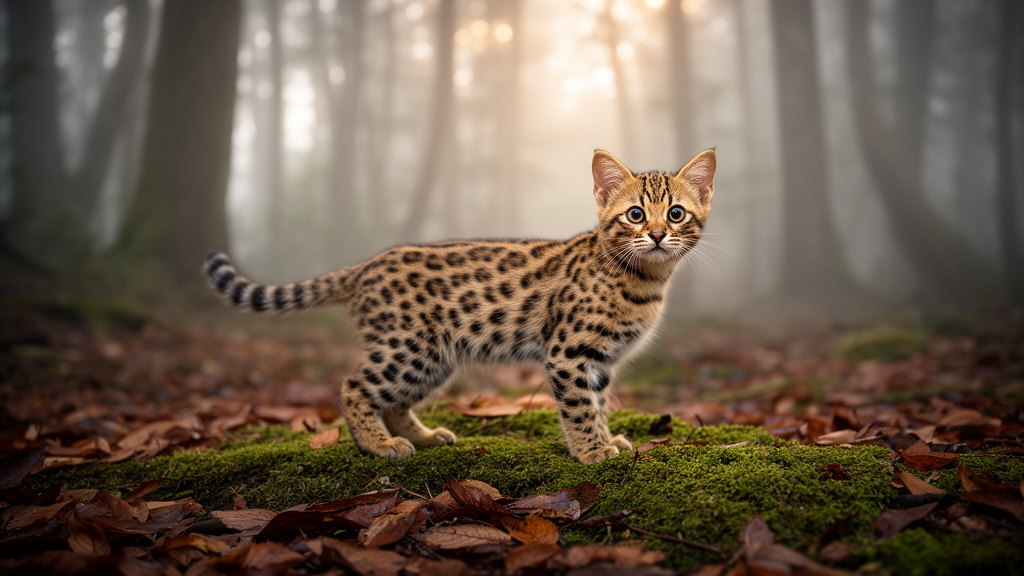
On the Japanese island of Tsushima, field researchers from Kyoto University spotted something they had never seen before: at least three Tsushima leopard cats with noticeably shortened tails. The trait is relatively common in domestic cats, which share the island’s landscape, but had not previously been observed in leopard cats. Because the Tsushima leopard cat is critically endangered, found nowhere else, and numbers only around 150 individuals according to the most recent government survey, any sign of possible hybridization with domestic cats is a serious conservation concern. The team managed to capture one of the short-tailed cats for examination and found that its tail was half the normal length. That observation set off a whole-genome investigation into whether the unusual tail reflected recent domestic cat ancestry or a variation arising within the leopard cat population itself.

The researchers analyzed the entire genome of the short-tailed individual and compared it with genome data from 15 additional Tsushima leopard cats, five domestic cats sampled on the island, and four continental Amur leopard cats, which served as an external wild reference. Their toolkit included principal component analysis, genome-wide inbreeding estimates, mitochondrial DNA phylogeny, ADMIXTURE ancestry clustering, and f-statistics to assess ancestry and introgression. They also screened two genes known to be associated with tail abnormalities in domestic cats. The results revealed no evidence of domestic cat introgression in either the short-tailed cat or the 15 other leopard cats sampled. Every step of the whole-genome analysis placed the short-tailed individual firmly within the Tsushima leopard cat population and detected no abnormalities.

“An unusual phenotype can immediately raise concerns about hybridization, but we wanted to determine objectively what the genome actually tells us before drawing conclusions from appearance alone,” says first author Yuki Matsumoto, who also has affiliations with Anicom Specialty Medical Institute Inc. and Azabu University. The study, published on 5 August 2026 in Global Ecology and Conservation under the title “Genome-wide assessment of suspected domestic cat introgression in the critically endangered Tsushima leopard cat,” is described by the team as the first clinical and genomic characterization of a short-tailed individual in the wild cat genus Prionailurus.

The underlying cause of the tail abnormality remains unresolved. The team’s observations of short-tailed Tsushima leopard cats in different locations suggest that more may be behind this rare phenotype than a single isolated case. Looking ahead, the researchers hope to examine additional short-tailed individuals and are developing non-invasive genetic monitoring that could track the leopard cats without requiring capture. Such methods could prove valuable for a species whose entire population is confined to one island and whose numbers are small enough that every individual matters for conservation planning.

“Appearance alone can be misleading when managing endangered wildlife,” says Matsumoto. “By combining long-term field observations, veterinary examination, and genome-wide data, we can make conservation decisions on the basis of genetic evidence rather than phenotype alone.” For an endangered species living alongside domestic cats, that distinction carries practical weight: introgression is a legitimate concern in such settings, and the study’s genome-wide approach offers a way to evaluate it objectively rather than relying on visible traits that can arise for other reasons.

Subject of Research: Whole-genome assessment of suspected domestic cat introgression in the critically endangered Tsushima leopard cat

Article Title: The first short-tailed Tsushima leopard cat

Article References: The first short-tailed Tsushima leopard cat. Original publication (Bibliographic details unavailable.)

Image Credits: AI Generated

DOI: Not provided

Keywords: Tsushima leopard cat, domestic cat introgression, whole-genome analysis, critically endangered species, tail abnormality, conservation genetics, Prionailurus, Kyoto University, Japan, hybridization, non-invasive genetic monitoring, Global Ecology and Conservation

Cite Scienmag News

Juliet Wilcox. (October 26, 2026). Short-tailed Tsushima leopard cat shows no domestic cat introgression, genome study finds. Scienmag. https://scienmag.com/short-tailed-tsushima-leopard-cat-shows-no-domestic-cat-introgression-genome-study-finds/


Juliet Wilcox. "Short-tailed Tsushima leopard cat shows no domestic cat introgression, genome study finds." Scienmag, 26 October 2026, https://scienmag.com/short-tailed-tsushima-leopard-cat-shows-no-domestic-cat-introgression-genome-study-finds/. Accessed 26 October 2026.

Juliet Wilcox. "Short-tailed Tsushima leopard cat shows no domestic cat introgression, genome study finds." Scienmag. October 26, 2026. https://scienmag.com/short-tailed-tsushima-leopard-cat-shows-no-domestic-cat-introgression-genome-study-finds/

Tags: conservation geneticscritically endangered speciescritically endangered Tsushima leopard catdomestic cat genetic introgressiondomestic cat introgressionfeline hybridization risksgenome analysis of leopard catsgenome sequencing in conservationgenomic tools in conservation biologyGlobal Ecology and Conservationhybridizationhybridization between domestic and wild catsimpacts of domestic cats on wild feline populationsJapanKyoto Universitynon-invasive genetic monitoringpopulation genetics of Tsushima leopard catPrionailurusshort-tailed trait in wild felinestail abnormalityTsushima leopard catTsushima leopard cat conservationwhole genome analysiswildlife genetic diversity
Share26Tweet16
Previous Post

Sure and Unsure at Once: Robotaxi Passengers Defy a Perfect Inverse

Next Post

Scoping review maps multi-level barriers and fixes in healthcare access for autistic children

Related Posts

Long-Term Eye-Movement Training May Sharpen Some Visual Skills in School-Age Children
Biology

Long-Term Eye-Movement Training May Sharpen Some Visual Skills in School-Age Children

October 26, 2026
Asian Elephants Demonstrate Inhibitory Control in Thailand Experiment
Biology

Asian Elephants Demonstrate Inhibitory Control in Thailand Experiment

October 26, 2026
Betel Nut Habit Dates to Ice Age Sulawesi Foragers
Biology

Betel Nut Habit Dates to Ice Age Sulawesi Foragers

October 26, 2026
VCU grant funds study of TROP2-targeted drugs in breast and pancreatic cancers
Biology

VCU grant funds study of TROP2-targeted drugs in breast and pancreatic cancers

October 26, 2026
Charge sorting enriches pancreatic cancer-associated vesicles in human blood samples
Biology

Charge sorting enriches pancreatic cancer-associated vesicles in human blood samples

October 26, 2026
AMH testing rose more than 13-fold in Australia but does not predict natural pregnancy
Biology

AMH testing rose more than 13-fold in Australia but does not predict natural pregnancy

October 26, 2026
Next Post
Scoping review maps multi-level barriers and fixes in healthcare access for autistic children

Scoping review maps multi-level barriers and fixes in healthcare access for autistic children

  • Mothers who receive childcare support from maternal grandparents show more optimized

    Mothers who receive childcare support from maternal grandparents show more parental warmth, finds NTU Singapore study

    27656 shares
    Share 11059 Tweet 6912
  • University of Seville Breaks 120-Year-Old Mystery, Revises a Key Einstein Concept

    1061 shares
    Share 424 Tweet 265
  • Bee body mass, pathogens and local climate influence heat tolerance

    682 shares
    Share 273 Tweet 171
  • Researchers record first-ever images and data of a shark experiencing a boat strike

    546 shares
    Share 218 Tweet 137
  • Groundbreaking Clinical Trial Reveals Lubiprostone Enhances Kidney Function

    531 shares
    Share 212 Tweet 133
Science

Embark on a thrilling journey of discovery with Scienmag.com—your ultimate source for cutting-edge breakthroughs. Immerse yourself in a world where curiosity knows no limits and tomorrow’s possibilities become today’s reality!

RECENT NEWS

  • Tree Reconstruction Errors Can Inflate Reassortment Counts in Avian Influenza
  • Statin-Linked GGPP-Rho-YAP Pathway Identified in Cells Around Liver Tumors
  • 3D Convolutions and Complex Wavelets Strengthen Invisible Video Watermarks
  • Mapping How Landscape Shapes the Hidden Side of Ethnic Heritage in Guizhou

Categories

  • Agriculture
  • Anthropology
  • Archaeology
  • Athmospheric
  • Biology
  • Biotechnology
  • Blog
  • Bussines
  • Cancer
  • Chemistry
  • Climate
  • Earth Science
  • Editorial Policy
  • Marine
  • Mathematics
  • Medicine
  • Pediatry
  • Policy
  • Psychology & Psychiatry
  • Science Education
  • Science News
  • Social Science
  • Space
  • Technology and Engineering

Subscribe to Blog via Email

Enter your email address to subscribe to this blog and receive notifications of new posts by email.

Join 5,151 other subscribers

© 2025 Scienmag - Science Magazine

Welcome Back!

Login to your account below

Forgotten Password?

Retrieve your password

Please enter your username or email address to reset your password.

Log In
No Result
View All Result
  • HOME
  • SCIENCE NEWS
  • CONTACT US

© 2025 Scienmag - Science Magazine

Discover more from Science

Subscribe now to keep reading and get access to the full archive.

Continue reading