


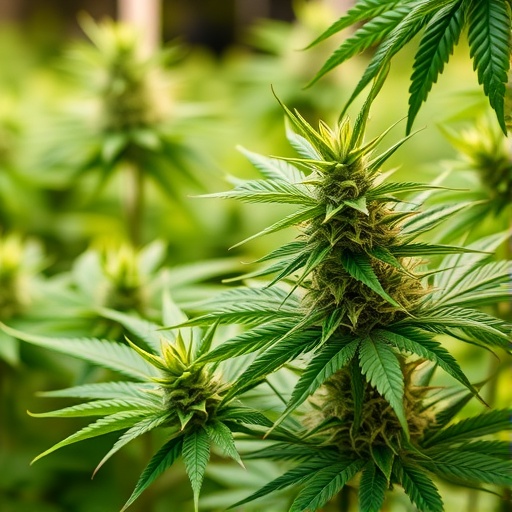
In a groundbreaking study published in BMC Genomics, researchers have unveiled new insights into the complex genetic underpinnings of flowering time variations in Cannabis and hops. This study, conducted by Dowling et al., presents a detailed examination of FT-like genes, which play a pivotal role in the flowering process of these economically and culturally significant plants. Understanding the genetic factors influencing flowering could have profound implications for agriculture, horticulture, and the burgeoning cannabis industry, as flowering time is crucial for crop yield and quality.
The cannabis plant, known for its psychoactive properties and industrial uses, has long intrigued scientists due to its diverse genetic makeup and environmental adaptability. In this research, the authors focus on FT-like genes, a class of genes that are integral to the regulation of flowering. These genes are sensitive to photoperiod, meaning they respond to the length of day and night, a crucial factor determining when a plant transitions from vegetative growth to flowering.
The study highlights the importance of sex-specific expression of these FT-like genes in Cannabis and hops. It is known that cannabis plants can be male or female, and this sexual dimorphism poses significant challenges for growers, particularly when it comes to the timing of flowering. The findings suggest that male and female plants express FT-like genes differently, which may shed light on why flowering occurs at different times across sexes. Male plants may flower earlier or later than females, and this knowledge could allow cultivators to optimize planting schedules and improve harvest outcomes.
Another important aspect of the research is the identification of copy-number variation (CNV) in FT-like genes. CNV refers to differences in the number of copies of a particular gene within the genome of an individual. This genetic variation can significantly impact traits such as flowering time. By analyzing the genomes of various cannabis and hop strains, the researchers found that certain strains exhibited increased copy numbers of FT-like genes, which corresponded with earlier flowering times. Such insights could aid in breeding programs aimed at developing new strains with desirable flowering characteristics.
The implications of these findings extend beyond mere academic interest; they could revolutionize practices in cannabis cultivation. By leveraging the insights gained from FT-like gene expression and copy-number variation, growers may adjust their approaches to maximize yield and quality. For instance, selecting strains with specific FT-like gene profiles could lead to synchronized flowering plants, thereby simplifying the harvesting process and improving efficiency.
Moreover, the insights from the study may have broader applications in the agricultural sector. Understanding the genetic regulation of flowering can potentially enhance crop production across various plant species, making this research relevant not just for cannabis and hops, but also for staple crops that are critical to food security. A nuanced understanding of flowering mechanisms could help scientists develop crops that can thrive in changing environmental conditions, which is increasingly vital in the face of climate change.
The research also underlines the significance of utilizing genomics in understanding plant biology. Advanced genomic tools and sequencing technologies have enabled researchers to decode complex traits like flowering time with unprecedented precision. This evolution in plant science fosters a more profound understanding of the molecular pathways involved in developmental processes, paving the way for innovations in agricultural techniques.
Researchers intent on exploring further the relationship between genetic factors and flowering time variations will find a rich landscape of inquiries stemming from this work. The emerging understanding of how FT-like genes function might lead to the identification of other genetic factors that contribute to flowering regulation, creating an intricate web of molecular interactions that dictate plant development.
As cannabis becomes increasingly accepted and legalized in various regions around the globe, the demand for reliable and high-yielding strains continues to rise. In light of this trend, the timing of flowering, which directly impacts cultivation cycles and economics, is more relevant than ever. The findings from Dowling et al. offer actionable intelligence to cultivators, equipping them with the knowledge to make informed decisions about strain selection and growing practices tailored to their specific environments.
This research underscores the disparities that exist within plant genetics and the necessity of tailored cultivation methods based on genetic profiles. Not all strains behave the same way, and understanding these variations will be key for cultivators seeking to optimize their crops for local conditions. Additionally, this research creates a foundation for future studies that could explore the interaction between environmental factors and genetics in relation to flowering time.
In conclusion, the work conducted by Dowling and colleagues promises to significantly advance our understanding of genetic factors influencing flowering time in Cannabis and hops. The dual focus on sex-specific expression and copy-number variation provides a comprehensive framework for future research, potentially leading to enhanced agricultural practices and improved crop yields. As the scientific community continues to unravel the complexities of plant genetics, the implications of such research will resonate across industries, ensuring that the advancements made today contribute to sustainable practices for tomorrow.
Cite Scienmag News
Juliet Wilcox. (October 17, 2025). Sex-Specific FT Genes Impact Cannabis and Hops Blooming. Scienmag. https://scienmag.com/sex-specific-ft-genes-impact-cannabis-and-hops-blooming/
Juliet Wilcox. "Sex-Specific FT Genes Impact Cannabis and Hops Blooming." Scienmag, 17 October 2025, https://scienmag.com/sex-specific-ft-genes-impact-cannabis-and-hops-blooming/. Accessed 4 September 2026.
Juliet Wilcox. "Sex-Specific FT Genes Impact Cannabis and Hops Blooming." Scienmag. October 17, 2025. https://scienmag.com/sex-specific-ft-genes-impact-cannabis-and-hops-blooming/


