


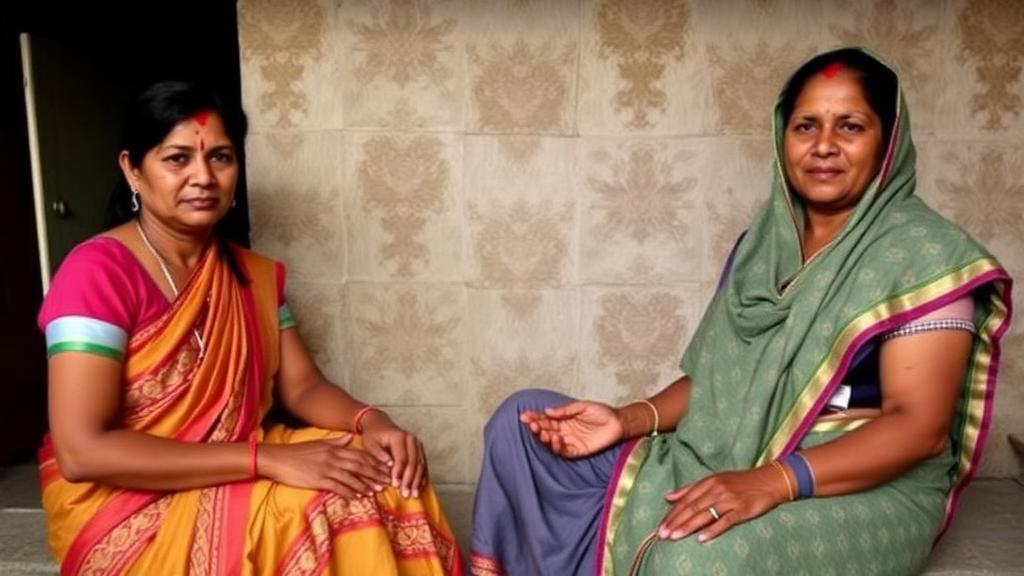
In the rural stretches of Bodoland, an autonomous territorial region in the Indian state of Assam, a quiet financial experiment has been running for decades. Women gather in small groups, pool their savings, and lend to one another before gradually connecting to formal banks. These self-help groups, or SHGs, have long been promoted by policymakers as a remedy for the exclusion of the rural poor from the formal credit system. But a persistent question has shadowed the movement: do these groups genuinely deliver financial inclusion and greater autonomy for women, or are the celebrated outcomes largely myth? A new study by Shrabanti Maity and Madhusmita Sarkar of Vidyasagar University and Dipankar Pradhan of ICFAI University Tripura, published in SN Social Sciences, puts that question to a rigorous empirical test and finds that the answer, at least in Bodoland, leans firmly toward reality.
The economic logic behind the research begins with a well-documented failure of conventional banking. Formal credit institutions have struggled to serve rural populations because small loans and savings accounts carry high transaction costs relative to their value. Lenders also face information asymmetry, meaning they know little about the creditworthiness of remote borrowers, and poor households typically lack the collateral that banks demand. These frictions leave marginalized communities dependent on informal moneylenders who charge punishing interest rates. Microfinance through self-help groups was designed to circumvent precisely these barriers: group membership substitutes social collateral and peer monitoring for physical assets, while pooled savings lower the cost of intermediation. Whether this design actually works on the ground, however, requires evidence rather than assumption.
To generate that evidence, the researchers conducted a primary field survey, interviewing 165 individuals in the Bodoland Territorial Region. The sample size was determined using the standard Krejcie and Morgan formula for survey research, a method that links the required number of respondents to the size of the population being studied. The interviews captured detailed information on household financial behavior, participation in self-help groups, and the dimensions of women’s decision-making power within their households and communities. Because the study was a non-interventional social science survey, formal ethics committee approval was not required, but the authors report that participation was voluntary, informed consent was obtained, and confidentiality and anonymity were maintained throughout.
A central methodological challenge in this kind of research is that concepts like financial inclusion and women’s autonomy are multidimensional and cannot be captured by a single survey question. The authors addressed this by constructing two composite indices using multiple correspondence analysis, a statistical technique related to principal component analysis but designed for categorical data. The technique identifies the underlying structure in a set of categorical responses and assigns weights to each dimension based on how much it contributes to the overall variation. From this procedure the researchers built a Financial Inclusion Index, which aggregates indicators of access to and use of formal financial services, and a Women’s Autonomy Index, which aggregates measures of women’s independent decision-making across domains of household life. Composite indices of this kind allow researchers to place individuals on a continuous scale rather than sorting them into crude yes-or-no categories.
The second methodological challenge is causal. Women who join self-help groups may differ systematically from women who do not: they may be more motivated, better educated, or already embedded in more supportive family structures. A naive comparison of participants and non-participants would then confound the effect of the groups with these pre-existing differences. To isolate the causal impact of SHG membership, the study employed propensity score matching, an econometric approach rooted in the influential framework developed by Rosenbaum and Rubin in 1983. The method estimates, for each SHG participant, the probability of participation given a set of observable characteristics, and then matches each participant with non-participants who have similar probabilities. Under the assumption that all relevant differences are captured by these observables, the matched comparison approximates the counterfactual: what would have happened to the same women had they not joined a group. Matching estimators of this type, refined in work by Heckman and colleagues, have become a standard tool for evaluating development programs where randomized trials are impractical.
The empirical results are unambiguous. Women who participated in self-help group-led microfinance scored significantly higher on both the Financial Inclusion Index and the Women’s Autonomy Index than their matched non-participating counterparts. In other words, after statistically accounting for the observable characteristics that might explain who joins these groups, membership itself was associated with deeper engagement with formal financial services and with greater independent decision-making power. The finding supports the interpretation that the mechanism runs from group participation to outcomes, rather than merely reflecting that empowered women are the ones who join. The authors are careful, however, to frame the results within the limitations of the matching approach, which cannot fully rule out the influence of unobserved factors such as individual ambition or household attitudes that shape both participation and outcomes.
The significance of these findings is amplified by the setting. Bodoland is a region with a complex history of conflict and underdevelopment, where tribal communities have historically had limited access to formal financial infrastructure. Earlier research by Maity and colleagues, including a 2017 study in Development Practice on self-help groups in the same region, examined whether microfinance alleviates poverty and inequality there. The new study extends this line of inquiry from income outcomes to the twin dimensions of financial access and personal autonomy, connecting the microfinance literature to a broader body of work on women’s empowerment. That literature, spanning systematic reviews of economic self-help group programs and studies of female autonomy and education in India, has produced mixed results across contexts, making region-specific causal evidence particularly valuable.
The distinction between financial inclusion and autonomy matters for policy. Financial inclusion refers to the availability and actual use of formal financial services such as savings accounts, credit, and insurance, and it is a headline goal of development institutions worldwide. Women’s autonomy, by contrast, concerns the capacity to make and act on decisions independently, a dimension of empowerment that economists have linked to outcomes ranging from contraceptive use to investment in children’s education. A program could conceivably raise one without the other, for example by channeling credit through women while leaving household decision structures untouched. The finding that SHG participation in Bodoland moves both indicators simultaneously suggests that the group format, which combines financial intermediation with regular collective meetings, may be doing double duty: building financial capability while also creating a social space in which women practice and assert agency.
For policymakers in India, where SHG-bank linkage programs have scaled to reach tens of millions of rural women, the study offers a measure of validation grounded in causal inference rather than anecdote. It also underscores the importance of measurement: without composite indices built from carefully weighted survey dimensions, claims of empowerment can rest on cherry-picked indicators. The authors outline limitations and recommendations for future research, noting that the analysis relies on a combination of unpublished secondary data and primary survey data, with the dataset available only upon request. Future work with larger samples, panel designs that track the same women over time, and methods robust to unobserved confounding would strengthen the causal case further.
What emerges from this research is a portrait of microfinance that is neither miracle nor myth. In one of India’s most historically marginalized regions, the humble self-help group, a institution built on small weekly savings and mutual trust, appears to deliver measurable gains in both access to the formal financial system and the everyday autonomy of the women who participate in it. The evidence does not claim that SHGs solve poverty or dismantle gender hierarchies on their own. But it does suggest that when the formal credit system fails the rural poor, a well-structured collective alternative can partially fill the gap, and in doing so, quietly reshape who holds financial power and who makes decisions in the households of Bodoland.
Subject of Research: The impact of self-help group microfinance on financial inclusion and women's autonomy in Bodoland, Assam
Article Title: SHG-led microfinance results in financial inclusion and women’s autonomy—myths or reality? evidence of Bodoland, Assam
Article References: Maity, S., Sarkar, M., & Pradhan, D. (2026). SHG-led microfinance results in financial inclusion and women’s autonomy—myths or reality? evidence of Bodoland, Assam. SN Social Sciences, 6(10), Article 471. https://doi.org/10.1007/s43545-026-01757-2
Image Credits: AI Generated
DOI: 10.1007/s43545-026-01757-2
Keywords: microfinance, self-help groups, financial inclusion, women's autonomy, Bodoland, Assam, propensity score matching, multiple correspondence analysis, financial inclusion index, women's autonomy index, rural development, India
Cite Scienmag News
Courtney Benton. (October 4, 2026). Self-Help Group Microfinance Delivers Real Gains in Financial Inclusion and Women’s Autonomy in Assam. Scienmag. https://scienmag.com/self-help-group-microfinance-delivers-real-gains-in-financial-inclusion-and-womens-autonomy-in-assam/
Courtney Benton. "Self-Help Group Microfinance Delivers Real Gains in Financial Inclusion and Women’s Autonomy in Assam." Scienmag, 4 October 2026, https://scienmag.com/self-help-group-microfinance-delivers-real-gains-in-financial-inclusion-and-womens-autonomy-in-assam/. Accessed 17 October 2026.
Courtney Benton. "Self-Help Group Microfinance Delivers Real Gains in Financial Inclusion and Women’s Autonomy in Assam." Scienmag. October 4, 2026. https://scienmag.com/self-help-group-microfinance-delivers-real-gains-in-financial-inclusion-and-womens-autonomy-in-assam/


