


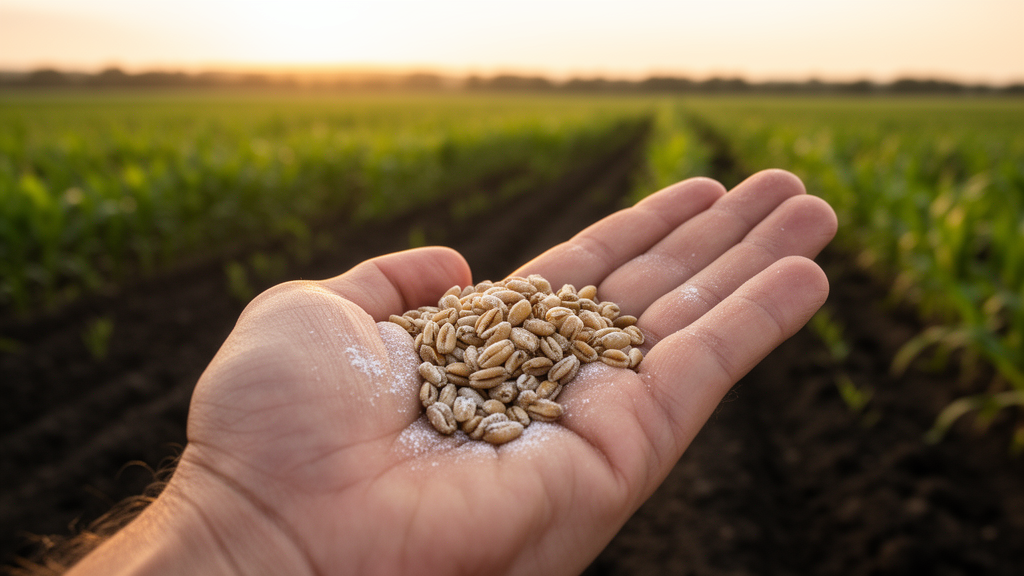
Deep inside every seed lies a hidden world that scientists are only now beginning to understand. Bacteria, fungi, archaea and other microorganisms inhabit both the internal tissues and external surfaces of seeds, forming what researchers call the seed microbiota. Unlike the soil and rhizosphere microbiomes that have dominated plant–microbe research for decades, these seed-associated communities carry a remarkable property: they can be transmitted across generations, providing direct microbial inheritance from parent plants to their offspring. A new review published in the journal Crop Health argues that this underexplored frontier could hold the key to sustainable agriculture, offering crops a pre-assembled microbiome optimized for early growth and adaptation to the parent plant’s environment.
The biological relevance of this microbial legacy extends far beyond land crops. Recent discoveries have identified seed microbiota even in aquatic ecosystems, including seagrass seeds, suggesting that microbial inheritance is a fundamental feature of plant reproduction across the tree of life. Over the past decade, interest in the topic has surged as researchers recognized that the continuity of microbial communities across generations not only ensures a legacy of beneficial interactions but also establishes the foundation upon which subsequent microbiomes, such as those in the rhizosphere and phyllosphere, can develop. Plants are not passive hosts in these interactions; they actively select for and shape microbial communities through biochemical and genetic mechanisms, including the release of specific compounds through root exudates and the modulation of immune responses.
Microbial inheritance in seeds occurs through two primary pathways. Vertical transmission passes microbes from one generation to the next via reproductive tissues such as flowers, ovules and pollen, allowing for stable inheritance of specific microbes that may confer selective advantages, such as resistance to pathogens or enhanced nutrient acquisition, especially in stressful or resource-limited environments. Horizontal transmission, in contrast, enables seeds to acquire microbes from the external environment, particularly from soil, during dispersal, imbibition and germination. This flexibility allows plants to recruit beneficial microbes in response to environmental conditions, facilitating adaptability and resilience in changing ecosystems. Together, these pathways provide seeds with a balance between stability and adaptability, establishing diverse functional microbiomes that support germination, seedling establishment and overall plant fitness.
The composition of the seed microbiota is distinct from other plant-associated communities, often showing a high concentration of beneficial microorganisms compared with roots and soil. Researchers categorize these communities into core and transient components. The core microbiota consists of stable taxa that reliably colonize seeds across different environments and generations, contributing essential functions to seedling health and development. These include bacterial genera such as Pseudomonas, Paenibacillus, Bacillus, Pantoea and Streptomyces, as well as fungi such as Trichoderma and Penicillium, which are known for their plant growth-promoting and disease-suppressing capabilities. Transient microbiota, on the other hand, exhibit greater variability and are often influenced by external factors such as soil type, climate and agricultural practices. These opportunistic microbes may play adaptive roles in specific environments, enabling plants to respond flexibly to changing conditions, although their presence remains poorly linked to specific events or plant requirements.
At the molecular level, the seed microbiota functions as an active regulator of hormone crosstalk, balancing the gibberellin, auxin, abscisic acid and ethylene pathways to shape seed development, dormancy depth and stress resilience. Beneficial Bacillus subtilis strains colonizing melon and wheat seeds produce gibberellins that increase radicle elongation and starch mobilization in the embryo without altering the germination rate. Endophytic Bacillus amyloliquefaciens isolated from rice seeds synthesizes gibberellins in situ, increasing seedling vigor and early growth. Many seed microbiota members express ACC deaminase, an enzyme that cleaves 1-aminocyclopropane-1-carboxylate, thereby lowering stress-induced ethylene and indirectly reinforcing abscisic acid-mediated dormancy control under adverse conditions. Conversely, pathogenic Pseudomonas aeruginosa secretes compounds that trigger DELLA-dependent ABI5 accumulation to arrest germination as a protective response to biotic stress. Volatile organic compounds emitted by diverse seed endophytes modulate auxin and abscisic acid sensitivity, accelerating seedling emergence and enhancing early growth under suboptimal conditions.
The functional implications of these microbial communities extend across plant life stages, from promoting germination and seedling growth to enhancing tolerance to abiotic and biotic stressors. Seed-associated microorganisms facilitate the accessibility of essential elements such as nitrogen, phosphorus and iron to seedlings. Nitrogen cycle-related genera including Sphingomonas, Chryseobacterium, Methylobacterium, Paenibacillus, Pantoea and Pseudomonas have been detected in soybean seeds, directly contributing to plant nitrogen requirements. Seedborne isolates from rice have been shown to solubilize inorganic phosphate and enhance seedling growth by improving phosphorus bioavailability, while also producing siderophores and even fixing nitrogen. In chickpea seeds, Enterobacter, Bacillus, Pseudomonas, Staphylococcus and Pantoea species have been reported as inherited symbionts that play significant roles in early phosphorus and potassium solubilization. Strains of Micrococcus yunnanensis, Micrococcus luteus, Enterobacter soli, Leclercia adecarboxylata, Pantoea dispersa and Staphylococcus epidermidis isolated from rice seeds produce high amounts of indole-3-acetic acid, causing root elongation and lateral root development that improve water and nutrient uptake in seedlings.
Pathogen suppression represents another critical function of the seed microbiota. Beneficial microbes employ resource competition, the production of antimicrobial compounds and the induction of systemic resistance to protect plants. Bacillus velezensis isolated from peanut seeds produces bacillomycin A, surfactin A and fengycin A, antifungal compounds that effectively inhibit Sclerotium rolfsii, a common seedling pathogen. A strain of Paenibacillus isolated from maize demonstrated a wide range of antagonistic effects, controlling pathogens such as Fusarium graminearum, Bipolaris maydis, Cochliobolus heterostrophus, Aspergillus aculeatus and Verticillium dahliae, delineating a great protection barrier for seedlings at their most delicate developmental moment. However, seeds can also harbor and spread pathogenic microbes. Fusarium and Alternaria have been documented in maize and wheat seeds as vertically inherited pathogens capable of reducing germination rates and compromising crop yield. Seeds are effective microbial vectors, and the transmission of seed-borne pathogens into new geographical areas might impose a large risk for agriculture.
Stress tolerance is perhaps the most compelling application area. Strains of Priestia, Burkholderia, Pseudomonas koreensis, Pseudomonas fulva and Stenotrophomonas isolated from maize seeds produce ACC deaminase, auxins and biofilms even under drought conditions, improving water availability and retention in the rhizosphere and reducing water stress in seedlings. Field tests have shown that inoculation with the seed-borne strain Pseudomonas fulva is effective in maize fields under water scarcity conditions, with notable improvements in yield production. In wheat, seed microbiota enriched with Bacillus and Arthrobacter increase heat and drought tolerance in seedlings by modulating root architecture and producing osmoprotectants. Rummeliibacillus stabekisii, Peribacillus frigoritolerans and Pseudomonas protegens isolated from tomato seeds increase osmotic stress resistance through the production of protectants. A Pseudomonas aeruginosa strain isolated from wheat seeds produces heat-shock proteins that stabilize plant enzymes under high-temperature conditions, improving seedling survival in heat-stressed environments.
Advances in sequencing and imaging technologies are transforming the field. High-throughput 16S rRNA gene and ITS sequencing remain fundamental tools for exploring bacterial and fungal diversity within seeds. Metagenomics and metatranscriptomics have revolutionized seed microbiota research by enabling exploration of functional potential and gene expression profiles, revealing the metabolic pathways employed by microbes to interact with host plants. Advanced imaging techniques such as confocal laser scanning microscopy and fluorescence in situ hybridization provide spatial resolution of microbial distribution within seeds, allowing researchers to distinguish between surface-associated microbes and endophytic communities residing in internal seed tissues. Emerging multi-omics approaches that integrate genomics, transcriptomics, proteomics and metabolomics offer unprecedented insights into the functional ecology of the seed microbiota. Culture-independent approaches such as droplet microfluidics and single-cell genomics are emerging as powerful tools for exploring the functional capabilities of unculturable microbes within seeds.
Despite these promising advances, translating seed-applied bioinoculants from controlled trials to broad agricultural use faces significant hurdles. Large-scale production often results in batch-to-batch variability and reduced microbial viability, undermining product consistency in the field. Formulation stability is constrained by limited shelf-life, with solid carriers typically sustaining viability for only 8 to 12 months and liquid formulations rarely exceeding 24 months without stringent temperature control. Regulatory frameworks for biofertilizers and biostimulants are highly fragmented across regions, with divergent national rules in the European Union and clear guidelines for microbial products still lacking in the United States, leading to lengthy and costly registration processes. In the absence of predictable performance, farmer adoption stalls, as field trials often yield inconsistent benefits under diverse soil and climate conditions. Nevertheless, researchers argue that the seed microbiota represents a powerful tool for transforming agricultural practices in an era of growing environmental challenges. By leveraging the functional potential of seed-associated microbes, it may be possible to reduce reliance on chemical inputs, increase crop resilience to abiotic and biotic stresses, and promote the sustainable intensification of agriculture. As the gap between fundamental science and field applications is bridged, the seed microbiota is poised to play a central role in shaping the future of global agriculture.
Subject of Research: The seed microbiota from an application perspective: an underexplored frontier in plant–microbe interactions
Article Title: The seed microbiota from an application perspective: an underexplored frontier in plant–microbe interactions
Article References: Romão, I. R., do Carmo Gomes, J., Silva, D., & Vilchez, J. I. (2025). The seed microbiota from an application perspective: an underexplored frontier in plant–microbe interactions. Crop Health, 3(1), Article 12. https://doi.org/10.1007/s44297-025-00051-6
Image Credits: AI Generated
DOI: 10.1007/s44297-025-00051-6
Keywords: seed, microbiota, application, perspective, underexplored, frontier, plant, microbe, interactions, scientific research
Cite Scienmag News
Alan Morgan. (October 15, 2026). Seed Microbes: The Hidden Inheritance That Could Transform Global Agriculture. Scienmag. https://scienmag.com/seed-microbes-the-hidden-inheritance-that-could-transform-global-agriculture/
Alan Morgan. "Seed Microbes: The Hidden Inheritance That Could Transform Global Agriculture." Scienmag, 15 October 2026, https://scienmag.com/seed-microbes-the-hidden-inheritance-that-could-transform-global-agriculture/. Accessed 15 October 2026.
Alan Morgan. "Seed Microbes: The Hidden Inheritance That Could Transform Global Agriculture." Scienmag. October 15, 2026. https://scienmag.com/seed-microbes-the-hidden-inheritance-that-could-transform-global-agriculture/


