


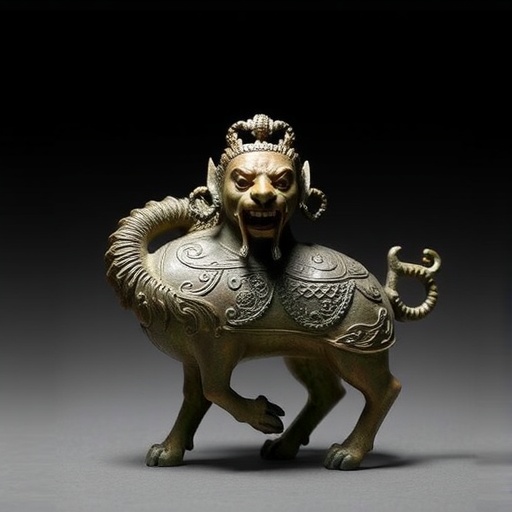
In a groundbreaking study, researchers have delved into the intricate world of ancient Chinese bronze artifacts, specifically focusing on the late Shang dynasty. The research meticulously centers around bronze wares unearthed from the Guanzhong Plain, an area notable for its historical significance. The scientific analysis of these artifacts, particularly from the M90 sector at the Xitou Site located in Xunyi County, Xianyang City, Shaanxi Province, sheds light on the cultural and ethnic identities that underpinned the creation of these ancient relics. This study, spearheaded by a team of experts including Zuo, Chen, and Dou, not only reveals historical insights but signifies a critical contribution to the field of archaeology.
Bronze artifacts from the late Shang dynasty have long been recognized as exquisite examples of metallurgical skill and artistry. The complexity of their production techniques reflects a society with advanced knowledge of materials and innovative methods. The researchers employed various scientific techniques to analyze the chemical composition, isotopic signatures, and metallurgical properties of the bronze artifacts. By integrating such sophisticated methodologies, the team aimed to approximate the origin of these materials and draw connections to specific ethnic groups in the region.
The use of advanced analytical techniques, including X-ray fluorescence (XRF) and inductively coupled plasma mass spectrometry (ICP-MS), allowed the researchers to gather quantitative data on the elemental composition of the bronze. XRF provided a rapid assessment of the surface composition, while ICP-MS offered insights into trace elements that could reveal the geographical sources of the materials used. By understanding the metallurgical composition, researchers can track the historical trade routes and interactions between different groups during the Shang dynasty.
One of the most compelling aspects of this study is the exploration of ethnic identification through material culture. Artifacts serve as tangible connections to the identities of past groups, and the research posits that specific attributes of bronze wares may correlate with distinct ethnic practices and identities. The cultural significance of bronze wares in ritual and ceremonial contexts might hold the key to deciphering the social dynamics of the era. The researchers argue that by correlating artifact characteristics with known cultural markers, it becomes possible to unravel the complexities of late Shang society.
The late Shang dynasty is characterized by its sociopolitical intricacies and the emergence of centralized power, reflected in the production and use of bronze. Additionally, bronze played a pivotal role in ritual practices, often associated with ancestors and deities. Understanding the particular styles and compositions of bronze wares enables scholars to paint a more nuanced picture of the cultural landscape of the time. Insights derived from this research have the potential to revolutionize our comprehension of how gender, class, and ethnicity intertwined in the sociocultural fabric of ancient China.
The findings of the study are prepared for publication in the journal “Archaeological and Anthropological Sciences,” which has gained a reputation for disseminating interdisciplinary approaches to archaeological research. The rigorous peer-review process ensures a high standard of academic integrity, lending credibility to the authors’ interpretations and conclusions. The publication serves not only as an academic necessity but also promotes broader discussions about heritage and identity across generations.
As societies today grapple with issues of identity, migration, and multiculturalism, research like this fosters a deeper appreciation of the historical contexts that have shaped contemporary dynamics. By identifying links between ancient artifacts and modern-day ethnic identities, the researchers provide a metaphorical bridge that connects past and present. Cultural narratives are not static; they evolve, influenced by historical trajectories and social interactions.
Another fascinating dimension of this research is its potential implications for conservation efforts. Recognizing the cultural significance of bronze artifacts can contribute to policy-making and the establishment of preservation guidelines that honor the historical narratives associated with such treasures. In an era where globalization often leads to the homogenization of cultures, safeguarding these links to history becomes increasingly paramount.
The meticulous nature of the analysis involved in this research underscores the importance of interdisciplinary collaboration. Chemists, historians, and archaeologists all brought their unique expertise to examine the artifacts, highlighting how teamwork can lead to richer interpretations of historical data. Their combined efforts epitomize a more holistic approach to understanding ancient societies, fostering greater synergy between various scientific disciplines.
In conclusion, as the study suggests, the ethnic identification of late Shang bronze wares from the Guanzhong Plain opens doors to a multitude of inquiries regarding cultural identity and heritage. By weaving together scientific analysis and cultural anthropology, the researchers successfully elucidate the complexities of the past while emphasizing the importance of preserving historical narratives for future generations. As academic discourse continues to evolve, this research exemplifies the rich potential for uncovering unseen dimensions of history through careful analysis and collaboration.
With the publication of this research, the archaeological community stands poised to further investigate the tapestry of identities that shaped ancient civilizations in China. The quest for knowledge echoes through the corridors of time, urging future scholars to explore, analyze, and connect the dots between the past and the present, illuminating the human story in all its diversity.
Cite Scienmag News
Courtney Benton. (November 15, 2025). Secrets of Shang Bronze Artifacts Revealed. Scienmag. https://scienmag.com/secrets-of-shang-bronze-artifacts-revealed/
Courtney Benton. "Secrets of Shang Bronze Artifacts Revealed." Scienmag, 15 November 2025, https://scienmag.com/secrets-of-shang-bronze-artifacts-revealed/. Accessed 4 September 2026.
Courtney Benton. "Secrets of Shang Bronze Artifacts Revealed." Scienmag. November 15, 2025. https://scienmag.com/secrets-of-shang-bronze-artifacts-revealed/


