


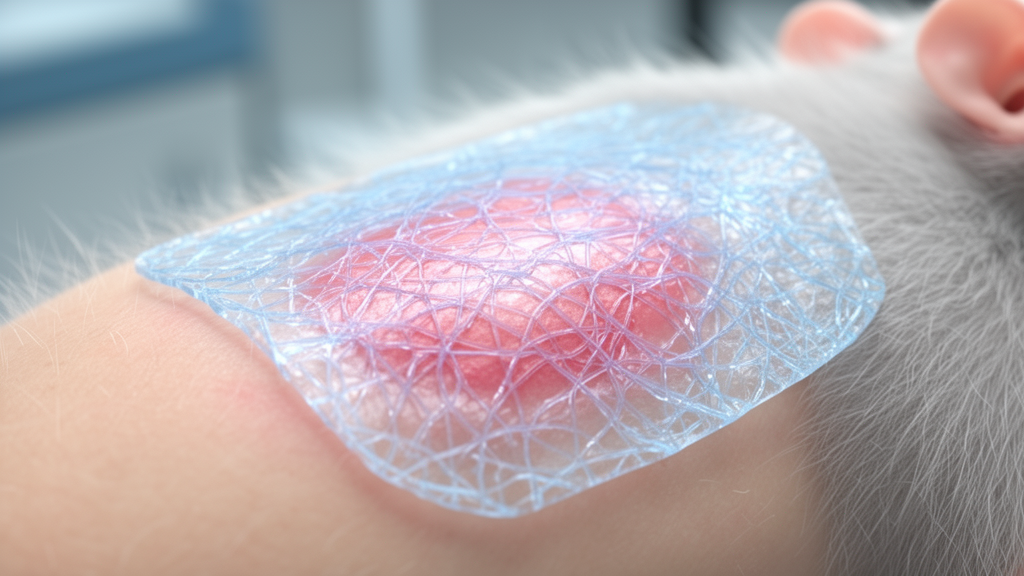
Electrospun nanofiber dressings made of chitosan and polyvinyl alcohol and loaded with extract from the red seaweed Corallina officinalis accelerated the healing of diabetic foot ulcers in a rat model, according to a study published in 3 Biotech. The composite mats, designated CS/PVA/COE, improved wound contraction, resolved inflammation, restored antioxidant defenses, and promoted new blood vessel formation compared with untreated diabetic wounds.
The researchers allocated thirty rats to five groups: normal foot ulcer controls, untreated diabetic foot ulcers, diabetic ulcers treated with the Corallina officinalis extract alone, diabetic ulcers treated with chitosan/polyvinyl alcohol nanofibers alone, and diabetic ulcers treated with the combined CS/PVA/COE nanofibers. This design allowed the team to separate the contributions of the nanofibrous matrix and the marine extract from the effect of the combined dressing.
Untreated diabetic foot ulcers in the model showed markedly delayed closure, persistent inflammation, and oxidative stress. Biochemical analysis revealed elevated levels of the inflammatory markers interleukin-6 (IL-6) and myeloperoxidase (MPO), together with increased malondialdehyde (MDA) and nitric oxide (NO) and depleted antioxidant defenses, including glutathione (GSH), superoxide dismutase (SOD), catalase (CAT), and glutathione S-transferase (GST).
Histopathological and morphometric examination of the untreated diabetic wounds showed impaired collagen deposition and reduced angiogenesis. Immunohistochemical staining demonstrated decreased expression of the angiogenic markers vascular endothelial growth factor (VEGF) and CD31. The untreated wounds also displayed elevated matrix metalloproteinase-2 (MMP-2), a pattern the authors interpret as dysregulated extracellular matrix remodeling.
In contrast, treatment with the CS/PVA/COE nanofiber mats significantly accelerated wound contraction and tissue regeneration. Levels of MDA, NO, MPO, and IL-6 fell, while the antioxidant defenses GSH, SOD, CAT, and GST were restored, indicating that the dressing reduced both the inflammatory and the oxidative burden characteristic of diabetic wounds in this model.
Microscopic analysis of the treated wounds revealed enhanced fibroblast activity, increased collagen deposition, greater granulation tissue formation, and improved re-epithelialization. These structural improvements were accompanied by increased expression of VEGF and CD31, supporting enhanced angiogenesis in the healing tissue.
During the remodeling phase, the CS/PVA/COE treatment reduced MMP-2 expression and promoted organized collagen deposition and maturation, improving tissue architecture. Taken together, the authors conclude that the dressings improved the resolution of inflammation, redox balance, angiogenesis, collagen deposition, and extracellular matrix remodeling, supporting their potential as marine-derived nanofibrous dressings for diabetic wound management.
The findings come from an animal study with thirty rats and a limited number of treatment groups, so the results demonstrate efficacy in this model rather than established clinical benefit. Further work, including human trials, would be needed to determine whether the CS/PVA/COE dressings are safe and effective for managing diabetic foot ulcers in patients.
Subject of Research: Chitosan/polyvinyl alcohol nanofiber dressings enriched with Corallina officinalis extract for diabetic foot ulcer healing in rats
Article Title: Eco-sustainable chitosan/polyvinyl alcohol nanofibrous mats enriched with Corallina officinalis extract enhance diabetic foot ulcer healing via pro-angiogenic and anti-inflammatory mechanisms
Article References: Fahmy, A. M., Soliman, A. M., Fahmy, S. R., Ali, S. B., & Sadek, S. A. (2026). Eco-sustainable chitosan/polyvinyl alcohol nanofibrous mats enriched with Corallina officinalis extract enhance diabetic foot ulcer healing via pro-angiogenic and anti-inflammatory mechanisms. 3 Biotech, 16(11), Article 470. https://doi.org/10.1007/s13205-026-05093-3
Image Credits: AI Generated
DOI: 10.1007/s13205-026-05093-3
Keywords: diabetic foot ulcer, nanofibers, chitosan, polyvinyl alcohol, Corallina officinalis, wound healing, angiogenesis, oxidative stress, VEGF, collagen remodeling, marine extract, rat model
Cite Scienmag News
Gregory Coleman. (October 26, 2026). Seaweed-Loaded Nanofiber Dressings Speed Diabetic Wound Healing in Rats. Scienmag. https://scienmag.com/seaweed-loaded-nanofiber-dressings-speed-diabetic-wound-healing-in-rats/
Gregory Coleman. "Seaweed-Loaded Nanofiber Dressings Speed Diabetic Wound Healing in Rats." Scienmag, 26 October 2026, https://scienmag.com/seaweed-loaded-nanofiber-dressings-speed-diabetic-wound-healing-in-rats/. Accessed 26 October 2026.
Gregory Coleman. "Seaweed-Loaded Nanofiber Dressings Speed Diabetic Wound Healing in Rats." Scienmag. October 26, 2026. https://scienmag.com/seaweed-loaded-nanofiber-dressings-speed-diabetic-wound-healing-in-rats/


