


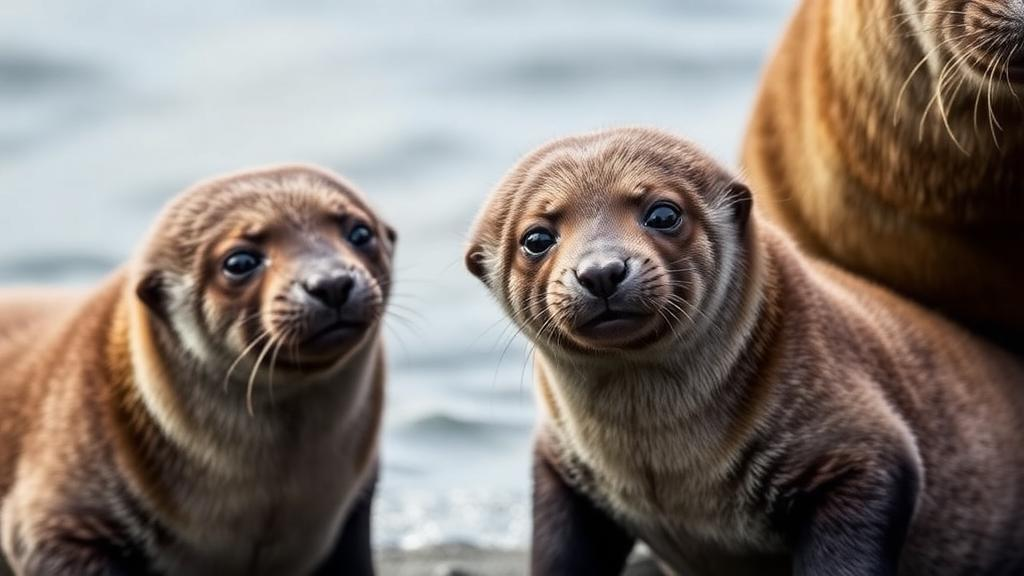
On a windswept island off the Uruguayan coast, scientists have uncovered a troubling record hidden in the fur of newborn seals. A new study of South American sea lions and South American fur seals breeding at Isla de Lobos reveals that pups of the sea lion species carry mercury concentrations among the highest ever documented for any pinniped, and that the metal is present in the very first coat of fur these animals grow before they are even born. The findings, published in the Archives of Environmental Contamination and Toxicology, offer a rare window into how much mercury is transferred from mother to offspring during pregnancy, a process that has remained difficult to measure directly in free-ranging marine mammals.
Mercury is a non-essential, globally distributed toxic metal with no biological function, and its behavior in marine food webs makes it a particular concern for top predators. In aquatic ecosystems, inorganic mercury released from industrial sources, coal combustion, and artisanal gold mining is converted by microbes into methylmercury, an organic form that is readily absorbed by living tissue. Unlike many contaminants that dilute as they move up the food chain, methylmercury bioaccumulates in individual organisms and biomagnifies across trophic levels, meaning that animals at the top of the web, such as marine mammals, can carry body burdens orders of magnitude higher than the water they swim in. Because methylmercury crosses the placenta and the blood-brain barrier, developing fetuses are especially vulnerable to its neurotoxic effects.
The research team, led by Anaclara Roselli-Laclau of the Universidad de la República in Uruguay together with colleagues from Uruguay and Brazil, focused on two sympatric otariid species that breed side by side at Isla de Lobos but occupy different ecological niches: the South American sea lion (Otaria flavescens) and the South American fur seal (Arctocephalus australis). The researchers quantified total mercury, or THg, in two complementary matrices: hair from adult females and lanugo, the fine natal fur that pups grow in utero and shed in the weeks after birth. Sampling covered 11 mother-pup pairs of sea lions and 46 mother-pup pairs of fur seals, providing an unusually direct way to examine maternal transfer because both members of each pair were analyzed.
The results revealed a striking contrast between the two species. Adult female sea lions averaged 30.5 micrograms of mercury per gram of hair on a dry weight basis, with a standard deviation of 9.3, while female fur seals averaged just 5.7 micrograms per gram, with a standard deviation of 3.4. The pattern was mirrored in their offspring: sea lion pups averaged 25.3 micrograms per gram of lanugo, compared with only 4.4 micrograms per gram in fur seal pups. In other words, sea lions at this colony carried roughly five to six times more mercury than their fur seal neighbors, and the concentrations measured in sea lion pups rank among the highest ever recorded for pinnipeds anywhere in the world.
This interspecies gap is best explained by differences in diet and foraging ecology. Sea lions from Uruguayan colonies are known to feed at higher trophic positions and in waters closer to the Río de la Plata estuary, a system influenced by both natural and anthropogenic metal inputs, while fur seals tend to forage further offshore on prey lower in the food web. Because methylmercury biomagnifies with each step in the food chain, a predator eating larger, older, more predatory fish accumulates substantially more of the metal than one feeding on small pelagic species. Previous work by the same group had already linked trophic habits to bioaccumulation in these two otariids, and the new mother-pup data extend that picture to the earliest stage of life.
Perhaps the most consequential finding is that mercury was detectable in lanugo at all. Lanugo is formed entirely before birth, so any mercury it contains must have been transferred across the placenta from the mother during gestation. The presence of THg in this prenatal fur therefore provides direct evidence of prenatal mercury exposure in both species, confirming that placental transfer, and not only lactation, is a significant route by which these animals hand their contaminant burden to the next generation. This aligns with earlier studies on Baltic grey seals and northern elephant seals, which documented transplacental mercury transfer, but the Uruguayan data add a South Atlantic baseline for two species that had been comparatively understudied.
Statistical modeling showed that pup mercury concentrations were positively associated with maternal concentrations in both species, which is exactly what one would expect if the pup’s prenatal fur faithfully reflects the mother’s body burden during pregnancy. However, the strength of that relationship differed dramatically between the species. In sea lions, the final model explained 75 percent of the variance in pup THg, a remarkably tight fit that suggests maternal levels are the dominant driver of pup exposure in this species. In fur seals, by contrast, the model explained only 20 percent of the variance, indicating that other factors, such as individual variation in foraging behavior, gestation timing, or physiological processes governing mercury mobilization, play a much larger role in shaping how much of the metal reaches each fetus.
The models also uncovered a sex effect that was present in one species but absent in the other. Among sea lions, male pups had lower mercury concentrations than female pups for a given maternal mercury level, a pattern that could reflect sex-specific differences in prenatal growth, body composition, or maternal investment, since male otariid pups are typically larger and may dilute their contaminant burden across more tissue mass. No such sex effect was detected in fur seals. The authors note that this kind of species-specific nuance matters for anyone hoping to use pup fur as a shortcut for monitoring adult contamination, because the relationship between mother and pup is not uniform across species or even between the sexes within a species.
That leads to the study’s central practical message: pup lanugo is not a reliable quantitative proxy for the mercury concentration of an individual mother. The variability in the mother-pup relationship, especially in fur seals, is too great to back-calculate a specific female’s burden from her pup’s fur. But the researchers argue that lanugo remains valuable in a different way. Because it can be collected from pups with minimal disturbance, without immobilizing or even closely approaching adult females, it offers a minimally invasive matrix for characterizing prenatal mercury exposure and for tracking broader species-level and population-level patterns over time and across geography. For colonies that are difficult to sample intensively, this could transform monitoring programs that would otherwise require invasive procedures on protected animals.
The broader implications extend beyond the South Atlantic. Marine mammals are widely regarded as sentinel species for ocean and human health, and elevated mercury in newborn sea lions signals that contamination in the southwestern Atlantic food web is reaching the most sensitive life stages of long-lived apex predators. Mercury exposure in young mammals has been linked in laboratory and field studies to impaired immune function, altered lymphocyte proliferation, and neurodevelopmental deficits, and similar concerns have been raised for harbor seal pups and Steller sea lion calves elsewhere. As mercury continues to enter the ocean from atmospheric deposition and from gold mining in the Amazon basin and beyond, studies like this one provide the baseline data needed to detect change, identify the species and populations most at risk, and inform international efforts, such as the Minamata Convention, to curb the flow of this persistent neurotoxin into marine ecosystems.
Subject of Research: Maternal-to-pup transfer of total mercury in South American sea lions and fur seals measured through maternal hair and pup lanugo
Article Title: Maternal–Pup Mercury Relationship in South American Sea Lions and Fur Seals
Article References: Roselli-Laclau, A., García-Alonso, J., Valdés, A., Freitas-Souza, M., Almeida, M. G., de Rezende, C. E., & Franco-Trecu, V. (2026). Maternal–Pup Mercury Relationship in South American Sea Lions and Fur Seals. Archives of Environmental Contamination and Toxicology, 91(3), Article 23. https://doi.org/10.1007/s00244-026-01227-z
Image Credits: AI Generated
DOI: 10.1007/s00244-026-01227-z
Keywords: mercury, South American sea lion, South American fur seal, pinnipeds, lanugo, prenatal exposure, biomagnification, ecotoxicology, marine mammals, Uruguay, maternal transfer, heavy metals
Cite Scienmag News
Sloane Callahan. (October 12, 2026). Sea Lion Pups Carry Some of the Highest Mercury Levels Ever Recorded in Seals. Scienmag. https://scienmag.com/sea-lion-pups-carry-some-of-the-highest-mercury-levels-ever-recorded-in-seals/
Sloane Callahan. "Sea Lion Pups Carry Some of the Highest Mercury Levels Ever Recorded in Seals." Scienmag, 12 October 2026, https://scienmag.com/sea-lion-pups-carry-some-of-the-highest-mercury-levels-ever-recorded-in-seals/. Accessed 12 October 2026.
Sloane Callahan. "Sea Lion Pups Carry Some of the Highest Mercury Levels Ever Recorded in Seals." Scienmag. October 12, 2026. https://scienmag.com/sea-lion-pups-carry-some-of-the-highest-mercury-levels-ever-recorded-in-seals/


