Wednesday, October 28, 2026
Science
No Result
View All Result
  • Login
  • HOME
  • SCIENCE NEWS
  • CONTACT US
  • HOME
  • SCIENCE NEWS
  • CONTACT US
No Result
View All Result
Scienmag
No Result
View All Result
Home Science News Climate

Sea ice decline reverses Antarctic Intermediate Water trends

October 28, 2026
in Climate
Sloane Callahan
By Sloane Callahan Scienmag Editorial Profile - Climate Mitigation
Reading Time: 3 mins read
0
Sea ice decline reverses Antarctic Intermediate Water trends

Sea ice decline reverses Antarctic Intermediate Water trends

65
SHARES
587
VIEWS
Share on FacebookShare on Twitter
ADVERTISEMENT

Antarctic Intermediate Water, a key component of the global overturning circulation, is changing direction in its long-term evolution, and the trigger appears to be the abrupt loss of Antarctic sea ice after 2015. A new study in Nature Climate Change, led by Kaushik Mishra with Bishakhdatta Gayen and Alberto C. Naveira Garabato, shows that decades of steady sea-ice expansion had been freshening this water mass, but repeated record sea-ice losses since 2016 have reversed those trends, salinifying and densifying the water and setting in motion what the authors describe as a hemispheric-scale reconfiguration of the ocean’s pycnocline.

Antarctic Intermediate Water forms in the polar Southern Ocean, where sea-ice processes shape its properties, and it acts as a major regulator of pycnocline structure, the density stratification that separates lighter surface waters from denser deep waters.

The mechanism behind the reversal lies in the balance between sea ice and meltwater. For several decades up to 2015, sea ice around Antarctica expanded, and that sustained expansion enhanced the input of meltwater into the polar ocean during summer. The added freshwater stratified the upper ocean, and the resulting water mass freshened year after year. That long freshening trend, the study finds, was the signature of a strengthening meltwater supply: sea-ice meltwater input had been increasing at a rate of 14 mSv per decade before 2016.

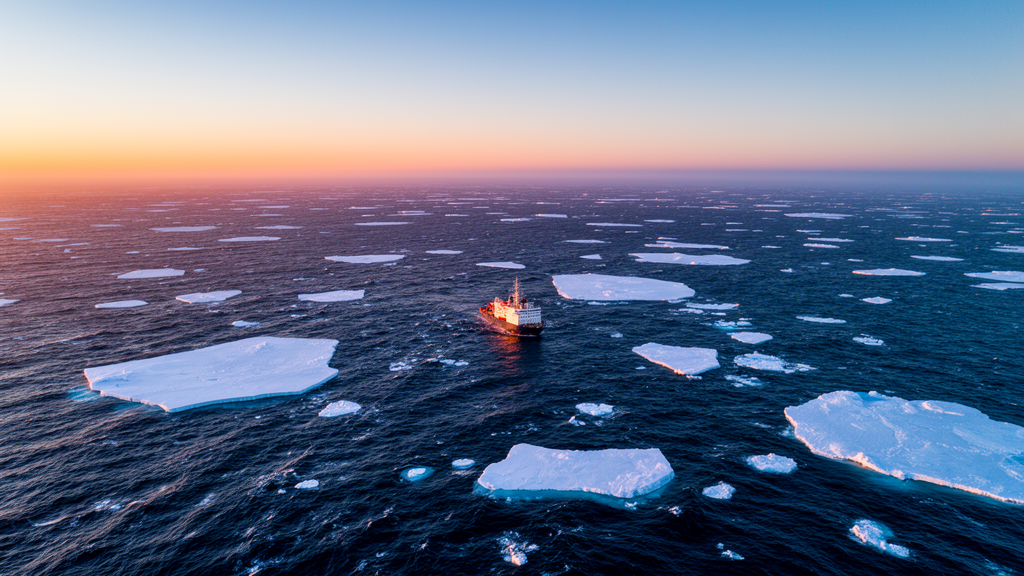
After 2015, the picture flipped. Since 2016, the Southern Ocean has experienced repeated record losses of sea ice, and the meltwater budget has swung the other way. The researchers estimate a net decline in sea-ice meltwater input of nearly 36 mSv per decade, a rate of loss that more than offsets the earlier gains.

The observational fingerprint of this shift comes from Argo-derived ocean observations supplemented by satellite and re-analysis datasets. The team tracked the salinity of the water mass’s core and found that it has been salinifying at a rate of 4.8 × 10⁻³ ± 1.7 × 10⁻³ g kg−1 per decade. The sign of the change is clear: a water mass that had been getting fresher for decades is now getting saltier.

Salinity is only part of the story. The same loss of meltwater input has triggered densification of Antarctic Intermediate Water, meaning the water mass is becoming heavier as well as saltier. This is why the authors describe the changes as a reconfiguration of the pycnocline rather than a simple local salinification: the density architecture of the upper ocean is being rearranged.

The abruptness of the transition is what makes the finding striking. The study characterises the post-2015 shift in sea-ice conditions as unprecedented, and it estimates that this shift is on course to alter water-mass properties across an entire hemisphere.

What the research establishes is a chain grounded in observation: sustained sea-ice expansion up to 2015 enhanced summertime meltwater input, stratified the upper polar ocean and freshened Antarctic Intermediate Water; since 2016, repeated record sea-ice losses have cut the meltwater supply by nearly 36 mSv per decade, reversing the earlier increase of 14 mSv per decade; and the water mass has responded by salinifying at 4.8 × 10⁻³ ± 1.7 × 10⁻³ g kg−1 per decade while densifying. The authors frame these changes as a signal that a hemispheric-scale reconfiguration of the pycnocline is underway, a transformation already recorded by Argo floats drifting through the water mass as it forms and spreads.

Subject of Research: Reversal of Antarctic Intermediate Water freshening trends driven by post-2015 Antarctic sea-ice decline

Article Title: Reversal of Antarctic Intermediate Water trends triggered by sea ice decline

Article References: Mishra, K., Gayen, B., & Naveira Garabato, A. C. (2026). Reversal of Antarctic Intermediate Water trends triggered by sea ice decline. Nature Climate Change. https://doi.org/10.1038/s41558-026-02758-y

Image Credits: AI Generated

DOI: 10.1038/s41558-026-02758-y

Keywords: Antarctic Intermediate Water, Antarctic sea ice, Southern Ocean, pycnocline, meltwater, ocean stratification, salinification, global overturning circulation, Argo observations, water mass transformation, sea-ice decline, ocean density

Cite Scienmag News

Sloane Callahan. (October 28, 2026). Sea ice decline reverses Antarctic Intermediate Water trends. Scienmag. https://scienmag.com/sea-ice-decline-reverses-antarctic-intermediate-water-trends/

Sloane Callahan. "Sea ice decline reverses Antarctic Intermediate Water trends." Scienmag, 28 October 2026, https://scienmag.com/sea-ice-decline-reverses-antarctic-intermediate-water-trends/. Accessed 28 October 2026.

Sloane Callahan. "Sea ice decline reverses Antarctic Intermediate Water trends." Scienmag. October 28, 2026. https://scienmag.com/sea-ice-decline-reverses-antarctic-intermediate-water-trends/

Tags: Antarctic Intermediate WaterAntarctic Intermediate Water circulation changesAntarctic sea iceAntarctic sea ice decline impact on ocean stratificationArgo observationsclimate change effects on Antarctic Intermediate Waterconnection between sea ice trends and ocean density stratificationglobal overturning circulationhemispheric-scale ocean pycnocline reconfigurationimpact of Antarctic sea ice variability on global overturning circulationimplicationsinfluence of Antarctic sea ice fluctuations on Southern Ocean dynamicslong-term sea ice expansion and reversal effectsmeltwaterocean densityocean stratificationpycnoclinerole of meltwater in Antarctic water mass propertiessalinificationsea ice declinesea ice loss and water salinity increaseSouthern Oceanwater mass transformation
Share26Tweet16
Previous Post

Engineered albumin fusion extends erythropoietin half-life and enables nasal delivery in mice

Next Post

First-line therapy choices for advanced EGFR-mutated lung cancer weigh survival gains against toxicity and access

Related Posts

Digital grids need social science as much as engineering, researchers argue
Climate

Digital grids need social science as much as engineering, researchers argue

October 28, 2026
Sustainability performance research maps 302 studies, finds health and sanitation gaps
Earth Science

Sustainability performance research maps 302 studies, finds health and sanitation gaps

October 28, 2026
Slow Earth rebound can shield Antarctic ice sheets, but fast warming may outpace it, model study finds
Climate

Slow Earth rebound can shield Antarctic ice sheets, but fast warming may outpace it, model study finds

October 28, 2026
Copper Nanowires Wrapped in COF Shells Push CO2 Electroreduction Toward Multi-Carbon Products
Climate

Copper Nanowires Wrapped in COF Shells Push CO2 Electroreduction Toward Multi-Carbon Products

October 28, 2026
Carbon sink turning points loom for subtropical needle-leaved forests after 2070
Climate

Carbon sink turning points loom for subtropical needle-leaved forests after 2070

October 28, 2026
New Governance Framework Aims to Move Resource Management Beyond Sustainability Toward Regeneration
Climate

New Governance Framework Aims to Move Resource Management Beyond Sustainability Toward Regeneration

October 28, 2026
Next Post
First-line therapy choices for advanced EGFR-mutated lung cancer weigh survival gains against toxicity and access

First-line therapy choices for advanced EGFR-mutated lung cancer weigh survival gains against toxicity and access

  • Mothers who receive childcare support from maternal grandparents show more optimized

    Mothers who receive childcare support from maternal grandparents show more parental warmth, finds NTU Singapore study

    27656 shares
    Share 11059 Tweet 6912
  • University of Seville Breaks 120-Year-Old Mystery, Revises a Key Einstein Concept

    1061 shares
    Share 424 Tweet 265
  • Bee body mass, pathogens and local climate influence heat tolerance

    682 shares
    Share 273 Tweet 171
  • Researchers record first-ever images and data of a shark experiencing a boat strike

    546 shares
    Share 218 Tweet 137
  • Groundbreaking Clinical Trial Reveals Lubiprostone Enhances Kidney Function

    531 shares
    Share 212 Tweet 133
Science

Embark on a thrilling journey of discovery with Scienmag.com—your ultimate source for cutting-edge breakthroughs. Immerse yourself in a world where curiosity knows no limits and tomorrow’s possibilities become today’s reality!

RECENT NEWS

  • Systematic review maps end-of-life psychosocial and spiritual needs in physical disability
  • Text Message Campaign Reached Only a Third of Patients Overdue for Colorectal Cancer Screening
  • FOXO1 Emerges as Candidate Regulator and Biomarker in Hip Dysplasia
  • Regulators, developers and clinicians in Shenzhen voice concerns over medical AI governance

Categories

  • Agriculture
  • Anthropology
  • Archaeology
  • Athmospheric
  • Biology
  • Biotechnology
  • Blog
  • Bussines
  • Cancer
  • Chemistry
  • Climate
  • Earth Science
  • Editorial Policy
  • Marine
  • Mathematics
  • Medicine
  • Pediatry
  • Policy
  • Psychology & Psychiatry
  • Science Education
  • Science News
  • Social Science
  • Space
  • Technology and Engineering

Subscribe to Blog via Email

Enter your email address to subscribe to this blog and receive notifications of new posts by email.

Join 5,151 other subscribers

© 2025 Scienmag - Science Magazine

Welcome Back!

Login to your account below

Forgotten Password?

Retrieve your password

Please enter your username or email address to reset your password.

Log In
No Result
View All Result
  • HOME
  • SCIENCE NEWS
  • CONTACT US

© 2025 Scienmag - Science Magazine

Discover more from Science

Subscribe now to keep reading and get access to the full archive.

Continue reading