

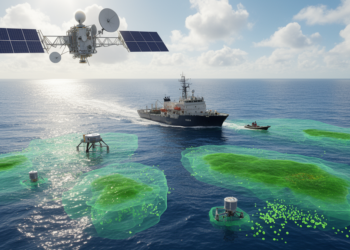
Satellite, field and model study maps asymmetric Indian Ocean phytoplankton response
A satellite, field and model study links asymmetric coastal phytoplankton responses to positive and negative Indian Ocean Dipole events through ...
A satellite, field and model study links asymmetric coastal phytoplankton responses to positive and negative Indian Ocean Dipole events through ...

A 1998–2024 South China Sea study associated summer marine heatwaves with higher surface chlorophyll in the Pearl River Estuary and ...
Fossil fish teeth and marine barite records show that pelagic fish productivity and carbon export rose together during the Paleocene-Eocene ...
A coordinated experiment feeding identical Antarctic meltwater to eleven climate models reveals sea ice responses ranging from nearly nothing to ...
A new Earth system model study finds that continuously adding alkalinity along the European coastline reverses the seasonal carbon cycle, ...
A 53,000-year coccolithophore record from the Bay of Bengal shows the ocean's biological carbon pump was weakest during the last ...
A new study of the Lakshadweep Sea shows that marine heatwaves intensify with depth, peaking in cumulative intensity between 80 ...
A new study combining a century of plankton observations with CMIP6 climate models projects that upper-ocean zooplankton biomass across the ...
A new study maps winter surface temperature inversions across the North Indian Ocean and shows how they deepen or shrink ...

Embark on a thrilling journey of discovery with Scienmag.com—your ultimate source for cutting-edge breakthroughs. Immerse yourself in a world where curiosity knows no limits and tomorrow’s possibilities become today’s reality!