

Tuesday, July 14, 2026
Science
No Result
View All Result
  • Login
  • HOME
  • SCIENCE NEWS
  • CONTACT US
  • HOME
  • SCIENCE NEWS
  • CONTACT US
No Result
View All Result
Scienmag
No Result
View All Result
Home Science News Social Science

Scrolling for studying supports wellbeing, but entertainment scrolling harms nursing students

July 14, 2026
in Social Science
Reading Time: 2 mins read
0
Scrolling for studying supports wellbeing, but entertainment scrolling harms nursing students

Scrolling for studying supports wellbeing, but entertainment scrolling harms nursing students

65
SHARES
587
VIEWS
Share on FacebookShare on Twitter
ADVERTISEMENT

Scrolling for Study Helps, Scrolling for Fun Hurts: A New Study on Nursing Students’ Social Media Use and Wellbeing

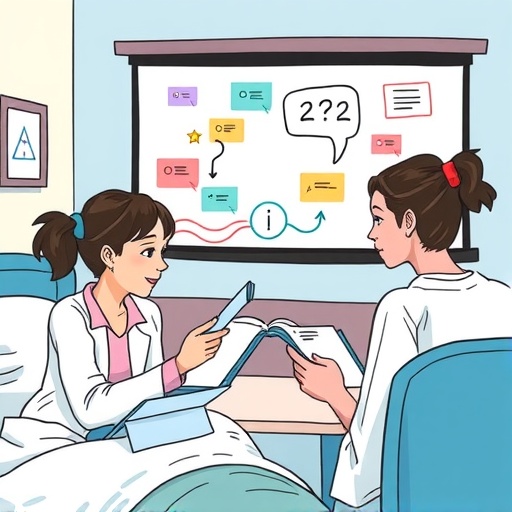
A fresh study is reshaping the way nursing students, educators, and health institutions think about social media. The central claim is not that online platforms are universally beneficial or harmful, but that wellbeing depends on the purpose behind use. The research frames social media as a context-driven tool whose effects vary with academic engagement versus entertainment consumption.

The work was led by Dr. Mohamed Goda Elbqry and colleagues across Qassim University in Saudi Arabia and Suez Canal University in Egypt. Their findings were published in The Open Nursing Journal, using an observational, cross-sectional design to test how different motivations align with life satisfaction.

Using validated questionnaires, the team surveyed 298 undergraduate internship students (128 male, 170 female; mean age just over 21). Measures captured academic, social, and entertainment-oriented use, alongside social media addiction risk and overall life satisfaction. To relate variables statistically, the authors applied structural equation modelling, enabling them to estimate direct and indirect pathways rather than treating correlations as simple cause-and-effect.

Results showed a clear split. Academic use—such as searching for lecture materials, preparing for exams, and coordinating peer learning—was associated with higher life satisfaction and a lower likelihood of addiction-related patterns. This suggests that purposeful platform use can function as an academic support system that mitigates stress and preserves routine.

In contrast, entertainment-driven use emerged as the strongest predictor of addictive behaviour. Notably, the model indicated that the “addiction pathway” connects entertainment use to reduced life satisfaction, with entertainment showing a substantially larger negative indirect effect than social use.

Social use, while not benign, appeared less damaging than entertainment use in the statistical model. Still, addiction symptoms served as a partial mediator: when addiction risk rose, life satisfaction declined, and this mediating mechanism helped explain why multiple categories of use could converge on wellbeing outcomes.

The authors also emphasize practical implications for universities. Because nursing students face heavy academic and clinical demands, interventions that encourage digital boundaries may yield measurable wellbeing benefits. They propose digital wellness programming, policies that limit non-academic access during study periods, and support pathways for students exhibiting addiction risk signals.

Despite the insights, the study has limitations. It relies on self-reported measures and a single-institution sample, and its cross-sectional structure cannot confirm long-term causality. The authors call for longitudinal, multi-site research to verify how these relationships evolve over time.

Subject of Research: Nursing students’ social media use and wellbeing (life satisfaction)
Article Title: Social Media Addiction among Nursing Students as a Partial Mediator between Academic Social Media Use and Life Satisfaction: A Cross-Sectional Study
Web References: http://dx.doi.org/10.2174/0118744346482130260606204339
References: The Open Nursing Journal (Bentham Open), DOI: 10.2174/0118744346482130260606204339
Keywords: nursing education, social media addiction, life satisfaction, structural equation modelling, digital wellbeing, entertainment use, academic use, observational study

Tags: academic engagement and mental healthcross-sectional study on social mediaeffects of social media on student mental healthentertainment scrolling and wellbeinglife satisfaction among nursing studentsnursing students' wellbeingonline platform use for academic purposespurpose-driven social media usesocial media addiction risksocial media for studyingsocial media in nursing educationsocial media use impact
Share26Tweet16
Previous Post

Study Finds Honey Bees’ Smell Senses Shift from Larvae to Adults

Next Post

PLOS Responds to Proposed OMB Rule on Science Funding and Policy

Related Posts

Word Choice Linked to Depression and Anxiety in 911 Dispatchers, Study Finds
Social Science

Word Choice Linked to Depression and Anxiety in 911 Dispatchers, Study Finds

July 14, 2026
China’s Resource Cities Face Divergent Wealth Paths and Policy Challenges
Social Science

China’s Resource Cities Face Divergent Wealth Paths and Policy Challenges

July 14, 2026
Detecting Exclusionary Nationalism in Prewar Japan Through Language Analysis
Social Science

Detecting Exclusionary Nationalism in Prewar Japan Through Language Analysis

July 14, 2026
Improving Climate Change Education in Egyptian Universities: Challenges and Awareness
Social Science

Improving Climate Change Education in Egyptian Universities: Challenges and Awareness

July 14, 2026
Scientists’ credibility varies with audience and perceived intentions
Social Science

Scientists’ credibility varies with audience and perceived intentions

July 13, 2026
Robot umpires reduce bias against star baseball hitters
Social Science

Robot umpires reduce bias against star baseball hitters

July 13, 2026
Next Post
PLOS Responds to Proposed OMB Rule on Science Funding and Policy

PLOS Responds to Proposed OMB Rule on Science Funding and Policy

  • Mothers who receive childcare support from maternal grandparents show more

    Mothers who receive childcare support from maternal grandparents show more parental warmth, finds NTU Singapore study

    27656 shares
    Share 11059 Tweet 6912
  • University of Seville Breaks 120-Year-Old Mystery, Revises a Key Einstein Concept

    1061 shares
    Share 424 Tweet 265
  • Bee body mass, pathogens and local climate influence heat tolerance

    682 shares
    Share 273 Tweet 171
  • Researchers record first-ever images and data of a shark experiencing a boat strike

    546 shares
    Share 218 Tweet 137
  • Groundbreaking Clinical Trial Reveals Lubiprostone Enhances Kidney Function

    531 shares
    Share 212 Tweet 133
Science

Embark on a thrilling journey of discovery with Scienmag.com—your ultimate source for cutting-edge breakthroughs. Immerse yourself in a world where curiosity knows no limits and tomorrow’s possibilities become today’s reality!

RECENT NEWS

  • Special Supplemental Nutrition Program and Cerebral Palsy Risk
  • Reactivated DRP1 Enables Resistance to MEK Inhibitors in Pancreatic Cancer Cells
  • KTU Researchers Develop AI System to Forecast Solar Power From Cloud Data
  • Second Review Aims to Improve Targeting Accuracy

Categories

  • Agriculture
  • Anthropology
  • Archaeology
  • Athmospheric
  • Biology
  • Biotechnology
  • Blog
  • Bussines
  • Cancer
  • Chemistry
  • Climate
  • Earth Science
  • Editorial Policy
  • Marine
  • Mathematics
  • Medicine
  • Pediatry
  • Policy
  • Psychology & Psychiatry
  • Science Education
  • Social Science
  • Space
  • Technology and Engineering

Subscribe to Blog via Email

Enter your email address to subscribe to this blog and receive notifications of new posts by email.

Join 5,146 other subscribers

© 2025 Scienmag - Science Magazine

Welcome Back!

Login to your account below

Forgotten Password?

Retrieve your password

Please enter your username or email address to reset your password.

Log In
No Result
View All Result
  • HOME
  • SCIENCE NEWS
  • CONTACT US

© 2025 Scienmag - Science Magazine

Discover more from Science

Subscribe now to keep reading and get access to the full archive.

Continue reading
