


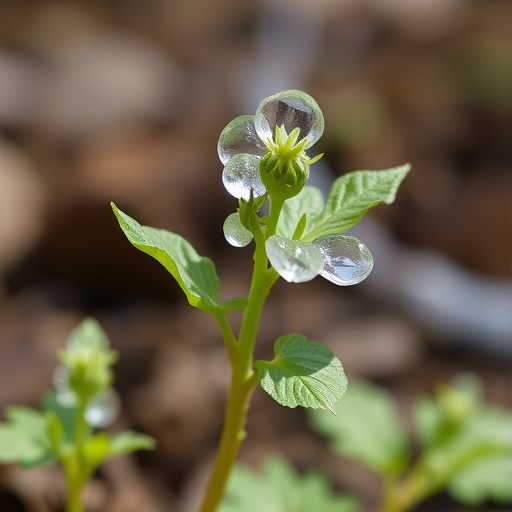
Cadmium contamination and microplastic pollution are colliding in agricultural soils, creating a complex environmental mixture that may affect crops in ways neither pollutant produces alone. A global meta-analysis of 4,243 paired observations from 60 peer-reviewed studies suggests that microplastics can sometimes reduce the amount of cadmium absorbed by plants and lessen several forms of cadmium-related stress. The findings, published in New Contaminants, also show that this apparent protective effect is highly conditional—and may come with new risks for plant nutrition.
Cadmium is a toxic heavy metal released through mining, industrial activity, phosphate fertilizers, sewage sludge, and atmospheric deposition. Once it enters farmland, plants can absorb it through their roots and transport it into stems, leaves, and edible tissues, creating concerns for crop productivity and food safety. Microplastics, meanwhile, are increasingly accumulating in agricultural soils through plastic mulches, compost, irrigation water, wastewater-derived materials, and the breakdown of larger plastic products. Their interaction with cadmium is therefore becoming an urgent question for soil and plant scientists.
The researchers compared plant responses under three conditions: cadmium exposure alone, microplastic exposure alone, and simultaneous exposure to both contaminants. Cadmium by itself reduced plant biomass by approximately 29 percent, impaired photosynthetic performance by 28 percent, and lowered protein content by 49 percent. It also increased oxidative damage—an indicator of cellular stress caused by reactive oxygen species—by 191 percent. In plant tissues, cadmium concentrations rose as much as 12-fold compared with uncontaminated controls.
When cadmium and microplastics were present together, the average effects were generally less severe. Biomass declined by about 21 percent, photosynthetic activity decreased by 24 percent, and oxidative damage increased by 92 percent. Cadmium accumulation reached approximately 3.8 times the concentration measured in uncontaminated plants, substantially lower than the increases observed under cadmium exposure alone. The results suggest that microplastics can modify cadmium’s environmental behavior rather than simply adding a second, independent source of toxicity.
The strongest changes occurred in the movement of cadmium through plants. Cadmium alone increased accumulation in roots by 19-fold and in shoots by 5.6-fold. Under combined exposure, the corresponding increases were approximately 4.5-fold in roots and 1.6-fold in shoots. This distinction is important because restricting cadmium movement from roots to shoots could reduce contamination in leaves, grains, and other edible plant parts, although the study does not establish that microplastics make food crops safe under contaminated conditions.
Several mechanisms may explain the results. Microplastic particles possess surfaces capable of binding cadmium ions through electrostatic attraction, complexation, and ion exchange. By attaching to these surfaces, cadmium may become less mobile in soil water and less available for uptake by roots. Microplastics can also accumulate around root surfaces and create physical barriers that reduce direct contact between roots and contaminated soil particles. Together, these processes may limit cadmium transport from the soil solution into roots and subsequently from roots to aboveground tissues.
The effect was not consistent across all experiments. Particle size, polymer composition, concentration, exposure duration, soil or growth medium, and pH all influenced the outcome. Smaller microplastics generally produced stronger physiological stress than larger particles, potentially because they have greater surface area, are more mobile, and interact more readily with roots and soil minerals. Different polymers also varied in their ability to bind cadmium. More alkaline conditions tended to reduce cadmium uptake, likely because higher pH promotes metal precipitation and strengthens the interaction between cadmium and microplastic surfaces.
The apparent reduction in cadmium toxicity also involved important trade-offs. In some cases, microplastics interfered with the uptake of essential nutrients, including iron, manganese, magnesium, phosphorus, and potassium. These elements are required for chlorophyll production, enzyme activity, energy metabolism, membrane stability, and plant growth. A plant exposed to both pollutants may therefore experience less cadmium accumulation but still suffer from nutrient imbalance. Microplastics can also alter soil structure, water movement, microbial communities, and root development, meaning that their long-term effects cannot be judged solely by measuring cadmium concentrations.
The authors argue that environmental risk assessments should examine contaminant mixtures rather than evaluating cadmium and microplastics separately. A plastic particle that temporarily immobilizes cadmium may later change chemically as it weathers, develops biofilms, or moves through the soil profile. Its binding capacity could also vary with soil chemistry and organic matter. The global analysis provides a broad framework for understanding these interactions, but the researchers emphasize that field studies are still needed to determine how the findings translate to real croplands, edible plant tissues, and long-term food-security risks. Microplastics may sometimes reduce the immediate toxicity of cadmium, but their presence remains an environmental hazard with effects that depend on particle properties and local conditions.
News Publication Date: 9-May-2026
Web References: https://doi.org/10.48130/newcontam-0026-0013; https://www.maxapress.com/newcontam
References: Azeem I, Shi Z, Xiong L, Ullah J, Shah F, et al. 2026. “Microplastic-mediated modulation of Cd toxicity: evidence from a global meta-analysis.” New Contaminants 2: e016. DOI: 10.48130/newcontam-0026-0013
Cite Scienmag News
Alan Morgan. (August 4, 2026). Microplastics May Reduce Cadmium Toxicity in Plants Depending on Environmental Conditions. Scienmag. https://scienmag.com/microplastics-may-reduce-cadmium-toxicity-in-plants-depending-on-environmental-conditions/
Alan Morgan. "Microplastics May Reduce Cadmium Toxicity in Plants Depending on Environmental Conditions." Scienmag, 4 August 2026, https://scienmag.com/microplastics-may-reduce-cadmium-toxicity-in-plants-depending-on-environmental-conditions/. Accessed 3 September 2026.
Alan Morgan. "Microplastics May Reduce Cadmium Toxicity in Plants Depending on Environmental Conditions." Scienmag. August 4, 2026. https://scienmag.com/microplastics-may-reduce-cadmium-toxicity-in-plants-depending-on-environmental-conditions/


