


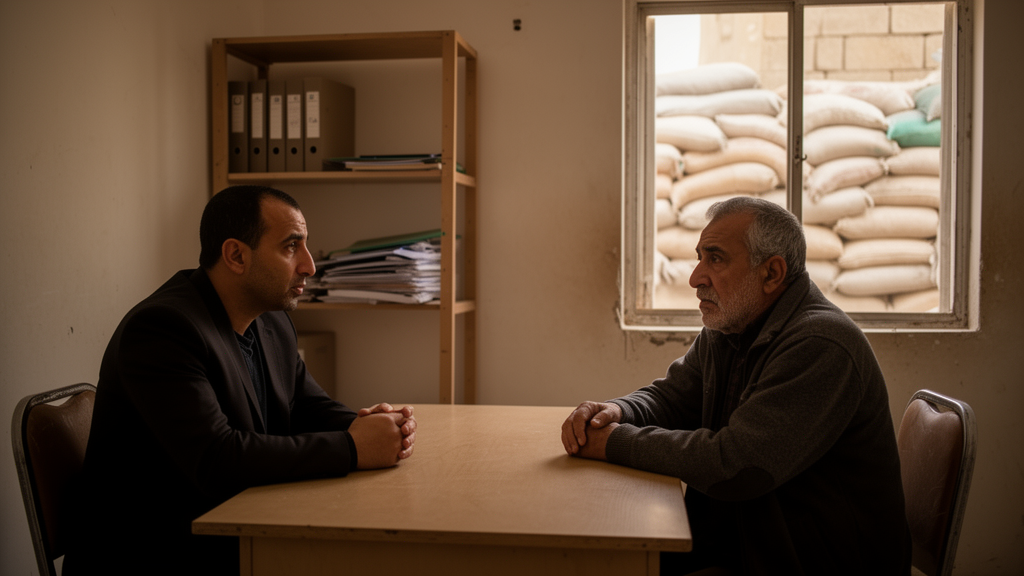
A new scoping review has compiled nearly two years of research on the psychological toll of the war in Gaza, and the picture it paints is stark. Drawing on 29 peer-reviewed articles and three institutional reports published between October 2023 and June 2025, the review found that studies conducted during the genocide reported prevalence rates of depression symptoms ranging from 72.7 to 99.0 percent, anxiety symptoms from 65.0 to 99.4 percent, and PTSD symptoms from 67.0 to 83.5 percent among samples in the Gaza Strip. In the West Bank and East Jerusalem, where violence also intensified after October 7, 2023, reported prevalence rates were somewhat lower but still high, ranging from 52.9 to 60.9 percent for anxiety, 65.9 to 77.7 percent for depression, and 38.7 to 71.3 percent for PTSD symptoms.
The review followed Preferred Reporting Items for Systematic Reviews and Meta-Analyses for Scoping Reviews guidelines. The authors searched five databases—Google Scholar, PubMed, Scopus, SpringerLink and ProQuest—alongside gray literature from humanitarian organizations, using a fixed list of search terms combining mental health, Gaza, PTSD, trauma, Palestine and war, with and without resilience and coping. After removing duplicates and screening titles, abstracts and full texts, 32 publications remained from an initial pool of 322. Studies were included only if they analyzed empirical data, assessed mental health symptoms or experiences, drew samples from the Gaza Strip, West Bank or East Jerusalem, and were published in English. The last search was conducted on June 24, 2025.
Most of the included research was quantitative: 23 of the 32 articles were cross-sectional or longitudinal surveys, while nine were qualitative. Fifteen articles relied on convenience sampling, and only two used random sampling, reflecting the extreme difficulty of conducting research under bombardment, displacement and movement restrictions. The review’s authors screened symptoms with standard instruments such as the DASS-21, the PHQ-9, the GAD-7 and the PTSD Checklist for the DSM-5, but they found striking inconsistency in how these tools were applied. Different studies used different cutoff scores for the same scale—one team treated a PCL-5 score above 23 as indicating PTSD caseness while another, targeting the same population with the same scale, used 33—and several studies did not report cutoffs at all.
To make estimates comparable, the reviewers recalculated prevalence using a conservative threshold of moderate or greater symptom severity wherever raw data allowed. Even so, they caution that the figures should not be read as precise population statistics. Because nearly nine in ten studies that reported their sampling approach used non-random methods, selection bias is a real possibility: people with the most severe symptoms, or with the time and resources to participate, may be overrepresented. The review also notes that the screening tools measure overlapping but distinct symptom sets—the DASS-21 depression subscale, for example, omits somatic symptoms and suicidal ideation that the PHQ-9 captures—so prevalence rates across studies are not directly comparable.
Studies conducted before October 2023 establish that Gaza’s mental health crisis long predates the current war. In a study of 2,341 Gazan children aged 8 to 13 after the 2008–2009 Operation Cast Lead, 41.5 percent met criteria for one or more psychiatric symptoms according to children’s own reports, and nearly 53 percent did so according to their parents’ reports. After the 2014 Operation Protective Edge, a study of 521 preadolescents in UNRWA schools found that 26.3 percent scored in the range of a likely PTSD diagnosis on the Harvard Trauma Questionnaire, with most children reporting having witnessed bombing or the demolition of residential and religious buildings. A rare longitudinal study followed 607 participants from childhood in 2006 into adulthood in 2021 and found that all had been exposed to war trauma; 52.9 percent showed high PTSD symptoms at both time points, and another 33.6 percent developed symptoms only later.
Research during the genocide itself documents conditions that compound psychological harm. By the end of August 2024, roughly 1.9 million people had been forcibly displaced, unemployment exceeded 80 percent, and 95 percent of Gaza’s population faced high levels of food insecurity. Daily water availability was estimated at about five liters per person, a third of the internationally accepted minimum. In one survey of 405 respondents, more than 80 percent reported witnessing people being killed, injured or arrested. Among 968 patients with non-communicable diseases, nearly 20 percent had gone without regular medications for two consecutive months or more, and adherence to follow-up appointments fell from 96.7 percent before the genocide to 40.7 percent during it. Gaza’s only psychiatric hospital was bombed on November 5, 2023, and was fully inoperable by August 2024.
The review frames these findings through the concept of continuous traumatic stress, a framework developed for situations where danger is ongoing and inescapable rather than in the past. Unlike PTSD, which centers reactions to previous traumatic events, continuous traumatic stress emphasizes persistent, anticipated threat and has been associated with comorbid depression, anxiety, hypervigilance and hyperarousal. A study of 438 Palestinian youth in the West Bank found that continuous traumatic stress from occupation and identity-based violence was associated with PTSD, depression and generalized anxiety, operating through annihilation anxiety and identity salience. Qualitative work with youth in East Jerusalem described perpetual threat, emotional suppression, the normalization of abnormality and distrust as defining experiences.
Healthcare workers emerge as a particularly burdened group. Among 378 emergency department nurses in West Bank hospitals surveyed with a three-stage probability sampling method, 81.6 percent reported moderate stress or greater and 55.6 percent showed low resilience on the Connor-Davidson scale; stress, anxiety and depression levels were negatively associated with work engagement. In a sample of 514 mental health professionals, 38.7 percent screened positive for PTSD symptoms and three-quarters reported severe burnout and difficulty interacting with clients. Among university students in the West Bank, prevalence rates reached 71.3 percent for PTSD symptoms on the Impact of Event Scale-Revised, and most students reported that news from Gaza worsened their mental state.
Alongside the symptom data, the review catalogued how Palestinians cope and sustain resilience. Qualitative studies of displaced Gazans described family support as a central protective resource, with mothers shielding children from trauma, encouraging emotional expression, and using storytelling, play and drawing to divert attention from daily violence. Communities shared scarce food, shelter and childcare, and healthcare workers held group debriefings after traumatic events. Religious practice—prayer, reading the Quran, and concepts such as tawakkul ala Allah, sabr and sumud, an enduring commitment to Palestinian identity, community and land—appeared repeatedly as a source of emotional relief and collective strength. Continuing education, even through online means amid destroyed institutions, was described as an act of resilience and resistance.
Not every coping strategy was protective. Quantitative studies using the Brief COPE found that venting, behavioral disengagement, denial and self-blame were associated with worse outcomes, including greater likelihood of PTSD and depression symptoms, while active coping, acceptance, planning, humor and emotional support were associated with lower likelihood. The review’s authors stress that their findings are limited by the dominance of cross-sectional designs, convenience samples, inconsistent cutoffs, English-language restriction and the scarcity of longitudinal data, so observed differences between regions and time points cannot be interpreted as definitive population trends. They call for culturally and linguistically validated assessments, longitudinal research across the life course, and emergency psychosocial interventions that account for family, religious and structural dimensions of mental health in Palestine.
Subject of Research: Mental health consequences of the 2023 genocide in Gaza among Palestinians
Article Title: The mental health consequences of the 2023 genocide in Gaza, Palestine: A scoping review
Article References: Atout, S., & Kim, A. W. (2026). The mental health consequences of the 2023 genocide in Gaza, Palestine: A scoping review. SSM – Mental Health, 10, Article 100711. https://doi.org/10.1016/j.ssmmh.2026.100711
Image Credits: AI Generated
DOI: 10.1016/j.ssmmh.2026.100711
Keywords: Gaza, Palestine, mental health, PTSD, depression, anxiety, scoping review, trauma, resilience, coping, continuous traumatic stress, West Bank
Cite Scienmag News
Glenn Wilkins. (October 27, 2026). Scoping review finds extreme psychiatric symptom levels among Palestinians during Gaza genocide. Scienmag. https://scienmag.com/scoping-review-finds-extreme-psychiatric-symptom-levels-among-palestinians-during-gaza-genocide/
Glenn Wilkins. "Scoping review finds extreme psychiatric symptom levels among Palestinians during Gaza genocide." Scienmag, 27 October 2026, https://scienmag.com/scoping-review-finds-extreme-psychiatric-symptom-levels-among-palestinians-during-gaza-genocide/. Accessed 27 October 2026.
Glenn Wilkins. "Scoping review finds extreme psychiatric symptom levels among Palestinians during Gaza genocide." Scienmag. October 27, 2026. https://scienmag.com/scoping-review-finds-extreme-psychiatric-symptom-levels-among-palestinians-during-gaza-genocide/


