


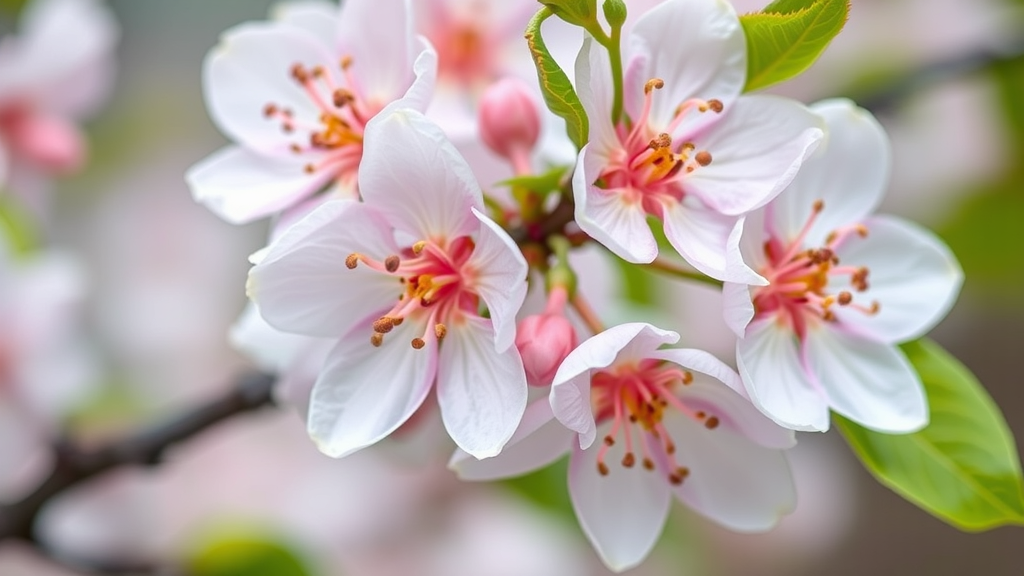
The intoxicating winter fragrance of the Japanese apricot, Prunus mume, has captivated poets and perfumers for centuries, yet the molecular machinery responsible for its signature scent has long remained a mystery. A team of researchers at Northwest A&F University in Yangling, China, has now identified a key enzyme that specifically manufactures cinnamyl acetate, one of the most characteristic volatile compounds released by the plant’s blossoms. The discovery, published in Plant Cell Reports, closes a long-standing gap in the understanding of floral aroma biosynthesis and opens new avenues for breeding fragrant ornamental plants.
Cinnamyl acetate, an ester that carries warm, balsamic, cinnamon-like notes, is a defining contributor to the aroma bouquet of P. mume flowers. While previous work had traced parts of the scent pathway, including the production of cinnamyl alcohol by the enzyme PmCAD1 and the role of benzyl alcohol acetyltransferase genes in other scent compounds, the gene responsible for the final acetylation step that converts cinnamyl alcohol into cinnamyl acetate had never been pinpointed. The new study set out to find it by systematically mining the plant’s genome.
The researchers began with a genome-wide survey of the variety P. mume var. tortuosa, identifying 116 members of the acyltransferase gene family, a large group of enzymes known to attach acyl groups to alcohols and other acceptor molecules. Because floral scent genes typically show activity patterns that mirror the accumulation of their volatile products, the team then cross-referenced transcriptome data from different cultivars with reverse-transcription quantitative PCR measurements taken from petals at four distinct flowering developmental stages. This screening strategy narrowed the field to three candidate cinnamyl alcohol acyltransferase genes, which the researchers named PmCAAT1, PmCAAT2, and PmCAAT3.
Sequence analysis of the three cloned genes revealed that their protein products carry the hallmarks of the BAHD acyltransferase superfamily, a widespread class of plant enzymes named after its first characterized members. In particular, all three proteins contain the conserved HXXXD catalytic motif, which positions a key histidine residue for the transfer reaction, and the DFGWG motif that forms part of the substrate-binding pocket. These motifs are the structural fingerprints that biochemists use to recognize enzymes that shuttle activated acyl groups, typically from acetyl-coenzyme A, onto alcohol substrates to form esters.
Evolutionary comparisons added an important layer of insight. Phylogenetic analysis showed that PmCAAT1 sits closest to the clade of coniferyl alcohol acetyltransferases, enzymes previously implicated in phenylpropanoid volatile production, whereas PmCAAT2 and PmCAAT3 clustered together on a separate evolutionary branch. This split hinted that the three paralogs, despite their shared ancestry, may have diverged in function, a hypothesis the team put to the test using both cellular and biochemical assays.
Subcellular localization experiments showed that all three proteins reside in the nucleus and the cytoplasm. This dual distribution is notable because acyltransferases have increasingly been recognized as enzymes that can moonlight in the nucleus, and the localization pattern suggests the enzymes may encounter their substrates in multiple cellular compartments. To assess their roles in living tissue, the researchers used transient expression in P. mume petals, demonstrating that all three genes could regulate the biosynthesis of cinnamyl acetate when expressed in the flower tissue itself.
The decisive evidence came from the biochemistry. Using prokaryotic expression systems to produce the enzymes and in vitro activity assays to test them, the team confirmed that PmCAAT1 and PmCAAT2 can both catalyze the conversion of cinnamyl alcohol to cinnamyl acetate, while PmCAAT3 did not show this activity. Enzyme kinetics then revealed a crucial difference between the two active enzymes: although both display broad substrate selectivity, PmCAAT1 exhibits a strong preference for cinnamyl alcohol, making it the most likely primary driver of cinnamyl acetate production in the flowers. PmCAAT2, by contrast, accepts a wider range of substrates, including the monoterpene linalool, suggesting it may contribute to multiple scent compounds.
The findings place P. mume within a growing body of work showing how plants fine-tune their volatile profiles through the evolution of specialized acyltransferases. Comparable enzymes have been shown to shape the ester aromas of strawberry, banana, melon, rose, grape, and peach, where differences in enzyme activity and substrate preference translate directly into differences in flavor and fragrance. In peach, for example, variation in the activity of a single alcohol acyltransferase explains why high-aroma varieties produce far more of the lactone volatiles prized by consumers. The P. mume study extends this paradigm to ornamental floral scent and to the phenylpropanoid pathway in particular.
Beyond its fundamental interest, the work carries practical weight for horticulture. Because the fragrance of P. mume is a major part of its ornamental and cultural value, knowing which gene supplies the key ester gives breeders a molecular handle for selecting or engineering plants with enhanced aroma. The authors suggest that the results provide a theoretical foundation for molecular breeding of floral fragrance in the species, potentially allowing marker-assisted selection for high PmCAAT1 activity or the use of genome editing to boost scent output. Understanding the enzyme’s substrate preference may also guide metabolic engineering efforts aimed at producing cinnamyl acetate biotechnologically.
The study, led by corresponding author Tengxun Zhang with co-first authors Jinhong Li and Jialu Guan, was supported by the National Natural Science Foundation of China and benefited from gas chromatography time-of-flight mass spectrometry support for volatile detection. As genome resources for ornamental plants continue to expand, enzyme-by-enzyme dissections of scent pathways like this one are transforming fragrance from a subjective trait into a set of manipulable biochemical reactions, promising gardens and orchards where the aromas of spring can be designed as deliberately as their colors.
Subject of Research: Biosynthesis of the floral volatile cinnamyl acetate by cinnamyl alcohol acyltransferases in Prunus mume
Article Title: Cinnamyl alcohol acyltransferase PmCAAT1 specifically catalyzes the formation of the characteristic volatile cinnamyl acetate of Prunus mume
Article References: Li, J., Guan, J., Zhang, S., Lei, M., Li, J., Zhang, Y., & Zhang, T. (2026). Cinnamyl alcohol acyltransferase PmCAAT1 specifically catalyzes the formation of the characteristic volatile cinnamyl acetate of Prunus mume. Plant Cell Reports, 45(10), Article 306. https://doi.org/10.1007/s00299-026-03992-6
Image Credits: AI Generated
DOI: 10.1007/s00299-026-03992-6
Keywords: Prunus mume, cinnamyl acetate, PmCAAT1, BAHD acyltransferase, floral scent, volatile organic compounds, phenylpropanoid pathway, enzyme kinetics, plant biochemistry, molecular breeding, ornamental horticulture, Plant Cell Reports
Cite Scienmag News
Juliet Wilcox. (September 25, 2026). Scientists Uncover the Enzyme Behind the Sweet Scent of Plum Blossoms. Scienmag. https://scienmag.com/scientists-uncover-the-enzyme-behind-the-sweet-scent-of-plum-blossoms/
Juliet Wilcox. "Scientists Uncover the Enzyme Behind the Sweet Scent of Plum Blossoms." Scienmag, 25 September 2026, https://scienmag.com/scientists-uncover-the-enzyme-behind-the-sweet-scent-of-plum-blossoms/. Accessed 5 October 2026.
Juliet Wilcox. "Scientists Uncover the Enzyme Behind the Sweet Scent of Plum Blossoms." Scienmag. September 25, 2026. https://scienmag.com/scientists-uncover-the-enzyme-behind-the-sweet-scent-of-plum-blossoms/


