


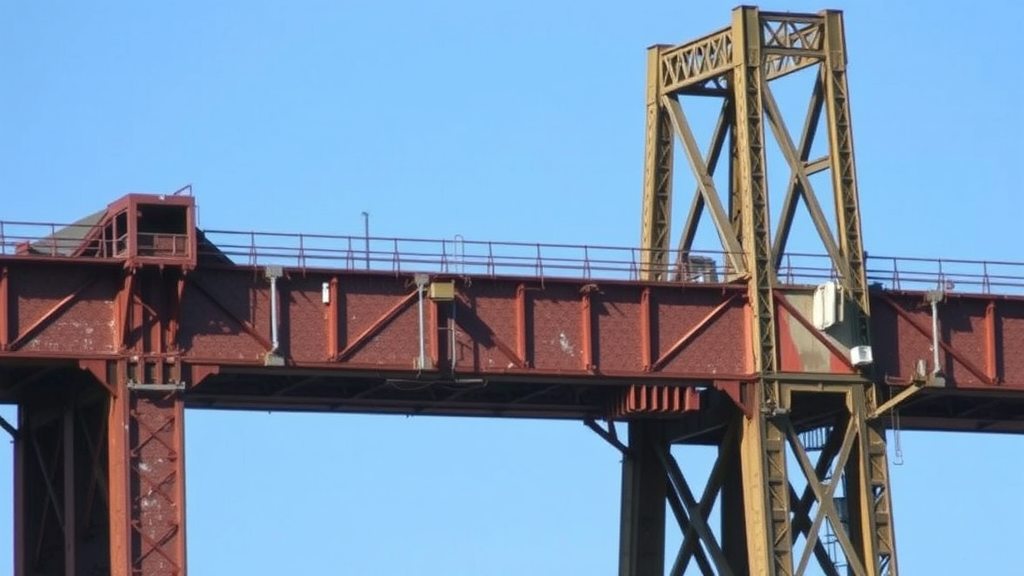
Beneath the rivets that hold together a century-old bridge truss or the hull plating of a preserved steamship, a slow and remarkably destructive chemical drama has been unfolding largely out of sight. Engineers have long known that riveted steel structures, the workhorses of industrial-era construction, suffer from a peculiar form of localized decay known as crevice corrosion, but the precise electrochemical mechanism by which tight gaps between plates and rivet heads accelerate attack has remained surprisingly difficult to pin down. New research published in Communications Engineering now offers a detailed picture of how these confined geometries transform ordinary steel surfaces into aggressive micro-environments capable of eating deep pits in metal that, on the open surface, would resist corrosion for decades.
The core of the problem lies in geometry. Where a rivet passes through two overlapping steel plates, it creates an annular gap only fractions of a millimeter wide. Water and dissolved salts can wick into this gap by capillary action, but once inside, the exchange of material with the outside world becomes severely restricted. Oxygen, which is needed to sustain the cathodic half of the corrosion reaction, is consumed faster than it can diffuse back in. The result is a chemical split between the occluded zone under the rivet and the boldly exposed surface just a few millimeters away, a phenomenon researchers describe as differential aeration.
That split sets up an unintentional battery. The oxygen-starved metal inside the crevice becomes the anode, dissolving as iron ions, while the oxygen-rich exterior acts as the cathode, where oxygen reduction consumes electrons and, crucially, generates hydroxide ions that keep the outside surface alkaline and protected. As ferrous ions accumulate within the crevice, they hydrolyze, reacting with water to form corrosion products and releasing hydrogen ions. The pH inside the crevice can drop to values as low as two or three, while chloride ions, driven by the need to maintain electrical neutrality, migrate inward and concentrate to levels several times higher than in the surrounding seawater or rainwater. The crevice thus becomes a self-stoking autocatalytic cell: acidification attracts more chloride, chloride accelerates metal dissolution, and dissolution releases more acid.
The research team combined electrochemical measurements on laboratory-simulated riveted joints with detailed spectroscopic and microscopic examination of corrosion products extracted from genuinely historic structures. Their experiments tracked pH and chloride concentration profiles inside artificial crevices in real time, using microelectrodes fine enough to probe the millimeter-scale gap without disturbing the chemistry they were meant to measure. What they observed confirmed the classical autocatalytic model but also revealed important nuances tied to the specific materials and fabrication methods of historic engineering, which differ substantially from modern welded construction.
One of the most significant findings concerns the role of the rivet material itself. Historic rivets were frequently made of wrought iron or mildly steel with slag inclusions and carbon segregation that modern steelmaking would eliminate. These microstructural heterogeneities create local galvanic couples even before any crevice forms. When such a rivet is set in a puddled-iron plate, the combination of composition differences and the occluded geometry produces attack that is markedly more severe than the sum of its parts. The inclusions, largely iron silicate strands inherited from the puddling process, do not corrode themselves but undermine the metal around them, allowing flakes of partially corroded material to spall away and deepen the pit under the rivet head.
The mill scale left on plates and rivets from hot working during fabrication also emerges as a critical factor. Magnetite-rich scale is cathodic relative to the underlying steel, so any break or crack in the scale concentrates anodic dissolution on the exposed metal beneath. Inside a crevice, where acidification is already underway, this cathodic scale acts like a permanent electrode driving the anodic attack on the small patches of bare steel it fails to cover. The researchers found that crevices lined with intact scale developed aggressively acidic chemistry faster and sustained deeper metal loss than crevices assembled from scale-free surfaces, a result with direct implications for how conservators should interpret corrosion damage on original fabric.
Corrosion products themselves turn out to be active participants rather than passive debris. Layered rusts of lepidocrocite, goethite and magnetite form alternating conductive and semi-conductive phases that can support redox cycling: magnetite formed in the oxygen-poor crevice interior can be reoxidized at the crevice mouth, shuttling electrons outward and sustaining dissolution deep within the gap even after the initial oxygen supply has been exhausted. This explains a long-observed puzzle, namely that corrosion under rivets does not slow down once the crevice chemistry stabilizes, but can continue at nearly constant rates for many years, producing through-thickness perforation in thin plates and serious section loss in structural members.
The practical consequences for heritage engineering are considerable. Many of the world’s most treasured industrial landmarks, from late nineteenth-century railway bridges to early twentieth-century warships, are riveted structures now reaching ages at which crevice-driven section loss threatens structural adequacy. Conventional inspection, which relies on visual examination of exposed surfaces and ultrasonic thickness gauging of accessible areas, systematically underestimates damage because the metal loss is hidden beneath rivet heads and within faying surfaces of lap joints. The new mechanistic understanding points inspectors toward targeted probing of crevice zones and suggests that simple design changes, such as sealants that exclude water from the gap, can arrest the autocatalytic cycle before significant material is lost.
The study also offers guidance for the debate over whether to clean and recoat historic steelwork. Because mill scale and heterogeneous rust layers actively promote crevice attack, removing loose corrosion products and applying coatings that penetrate and seal crevices may be more protective than simply painting over the visible exterior. At the same time, the researchers caution that aggressive blast cleaning can remove historically significant fabric and expose fresh, highly reactive steel surfaces, so intervention strategies must balance preservation ethics against the electrochemical realities the work has quantified.
Perhaps the most striking message of the research is how a design detail celebrated as a triumph of nineteenth-century engineering, the red-hot rivet driven by hand into a glowing plate to create a permanent, watertight joint, carries within it the seed of its own slow failure. The cooling rivet shrank as it solidified, clamping the plates together with tremendous force and simultaneously creating the perfect narrow gap for crevice chemistry to begin. Understanding that mechanism in full electrochemical detail, from differential aeration through chloride pumping to redox-cycling rust layers, gives engineers and conservators their first genuinely predictive handle on the decay of the riveted infrastructure that still carries trains, pedestrians and ships around the world, and it transforms an invisible problem into one that can be measured, modeled and managed.
Subject of Research: The electrochemical mechanism of crevice corrosion in historic riveted steel structures
Article Title: Mechanism of crevice corrosion in historic riveted steel structures
Article References: Furcas, F. E., Vogel, F., Lothenbach, B., & Angst, U. (2026). Mechanism of crevice corrosion in historic riveted steel structures. Communications Engineering. https://doi.org/10.1038/s44172-026-00780-8
Image Credits: AI Generated
DOI: 10.1038/s44172-026-00780-8
Keywords: crevice corrosion, riveted steel structures, historic infrastructure, electrochemistry, corrosion products, mill scale, differential aeration, chloride concentration, heritage conservation, wrought iron, structural inspection, autocatalytic mechanism
Cite Scienmag News
Denise Maddox. (September 20, 2026). Scientists Reveal How Crevice Corrosion Quietly Eats Historic Riveted Steel Structures. Scienmag. https://scienmag.com/scientists-reveal-how-crevice-corrosion-quietly-eats-historic-riveted-steel-structures/
Denise Maddox. "Scientists Reveal How Crevice Corrosion Quietly Eats Historic Riveted Steel Structures." Scienmag, 20 September 2026, https://scienmag.com/scientists-reveal-how-crevice-corrosion-quietly-eats-historic-riveted-steel-structures/. Accessed 5 October 2026.
Denise Maddox. "Scientists Reveal How Crevice Corrosion Quietly Eats Historic Riveted Steel Structures." Scienmag. September 20, 2026. https://scienmag.com/scientists-reveal-how-crevice-corrosion-quietly-eats-historic-riveted-steel-structures/


