

Monday, August 17, 2026
Science
No Result
View All Result
  • Login
  • HOME
  • SCIENCE NEWS
  • CONTACT US
  • HOME
  • SCIENCE NEWS
  • CONTACT US
No Result
View All Result
Scienmag
No Result
View All Result
Home Science News Chemistry

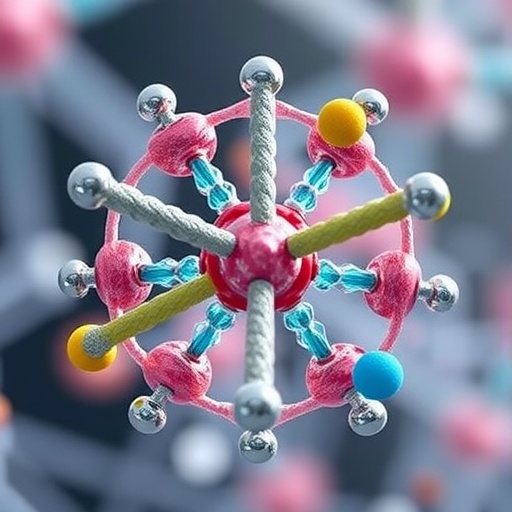
Scientists Reshape Molecules Internally to Build New Chiral Nanocarbons

July 28, 2026
in Chemistry
Reading Time: 2 mins read
0
Scientists Reshape Molecules Internally to Build New Chiral Nanocarbons

Scientists Reshape Molecules Internally to Build New Chiral Nanocarbons

65
SHARES
587
VIEWS
Share on FacebookShare on Twitter
ADVERTISEMENT

Nanocarbons are poised to become the quiet workhorses of next-generation materials, from gas storage to ultra-low-power electronics. Yet for years, chemists faced a stubborn limitation: most nanocarbon molecules have been assembled by fusing small, flat carbon fragments at their edges, leaving the interior largely untouched. Inner bonds are typically locked into rigid, planar frameworks, making radical rewiring feel nearly off-limits.

Now researchers from Nagoya University report a strategy that treats the interior as a design space rather than a constraint. Using a technique called skeletal editing, they cut and reform bonds inside common flat carbon precursors, enabling structures to reorganize into entirely new geometries. The team targeted chiral nanocarbons—molecules that exist in two mirror-image forms, analogous to left and right hands.

The results are striking not only for complexity but for control. The researchers produced chiral nanocarbons with diverse architectures, including rings containing 10 carbon atoms and a double-helix motif. Even more compelling, the emitted light from these molecules forms a spiral pattern as it propagates, revealing a direct link between chirality and optical behavior.

Functionally, several members of the set exhibit robust charge storage, able to hold multiple electrical charges without structural failure. One molecule maintains its handedness up to 280°C, a temperature stability that broadens practical relevance beyond fragile lab conditions. Another assembles into a porous crystal whose chiral pores can trap and release carbon dioxide, pointing toward improved gas sorbent designs.

Why this matters for the chemistry community is that skeletal editing has mostly been used to build pharmaceuticals, not carbon nanostructures. This work extends the method into a new terrain and addresses two long-standing hurdles: incorporating a ten-membered ring into large chiral nanocarbons and producing both left- and right-handed versions at this scale—an outcome achieved only rarely before with comparable nanocarbon sizes.

The double-helix material self-assembles into a chiral porous framework and represents the first of its kind in that category. It is described as a cousin to metal-organic frameworks (MOFs), a class celebrated by the 2025 Nobel Prize in Chemistry, suggesting that carbon-based alternatives may soon compete in gas-capture performance.

Overall, the study frames a broader shift in molecular engineering: if chemists can reliably edit “inside-out,” then the space of reachable nanocarbon shapes—and their associated properties—could expand dramatically. The authors hope this will inspire researchers to search for what else becomes possible when the interior is no longer off-limits.

Keywords

chiral nanocarbon, skeletal editing, carbon dioxide capture, spiral photonics, molecular chirality, double helix, porous crystals, charge storage
Subject of Research: Nanocarbon synthesis; chiral porous materials
Article Title: Skeletal transformation to chiral nanocarbon molecules
News Publication Date: 28-Jul-2026
Web References: https://doi.org/10.1038/s41467-026-75280-6
References: Nature Communications (DOI: 10.1038/s41467-026-75280-6)
Image Credits: Graduate School of Engineering, Nagoya University

Tags: advanced molecular engineering of nanocarbonsapplications of nanocarbons in ultra-low-power electronicschiral nanocarbonschirality control in nanostructurescreation of double-helix nanocarbon motifsdesign of three-dimensional nanocarbon structureshigh-temperature stability of nanocarbon moleculesinternal bond reorganization in nanomaterialsnanocarbon-based gas storage materialsoptical properties of chiral nanocarbonsskeletal editing in nanocarbon synthesis
Share26Tweet16
Previous Post

Largest study finds genetic risk factors linked to fibromyalgia

Next Post

Mechanoresistant cancer cells reveal survival strategies in high-stress environments

Related Posts

Machine learning accelerates climate solutions from ideas to real-world impact
Chemistry

Machine learning accelerates climate solutions from ideas to real-world impact

August 17, 2026
Labrador Sea Helps Supply Oxygen Supporting Life in the Deep North Atlantic
Chemistry

Labrador Sea Helps Supply Oxygen Supporting Life in the Deep North Atlantic

August 17, 2026
From Google to ChatGPT: How Students Now Search for Knowledge
Chemistry

From Google to ChatGPT: How Students Now Search for Knowledge

August 17, 2026
Protein-Foldamer Building Blocks Enable Self-Assembling Hybrid Architectures
Chemistry

Protein-Foldamer Building Blocks Enable Self-Assembling Hybrid Architectures

August 17, 2026
Aggregation-Induced Emission Achieves Ultra-Narrow 13-Nanometer Spectral Bandwidth
Chemistry

Aggregation-Induced Emission Achieves Ultra-Narrow 13-Nanometer Spectral Bandwidth

August 17, 2026
Hanbat University researchers develop physics-informed AI to rapidly optimize thermal energy storage
Chemistry

Hanbat University researchers develop physics-informed AI to rapidly optimize thermal energy storage

August 17, 2026
Next Post
Mechanoresistant cancer cells reveal survival strategies in high-stress environments

Mechanoresistant cancer cells reveal survival strategies in high-stress environments

  • Mothers who receive childcare support from maternal grandparents show more

    Mothers who receive childcare support from maternal grandparents show more parental warmth, finds NTU Singapore study

    27656 shares
    Share 11059 Tweet 6912
  • University of Seville Breaks 120-Year-Old Mystery, Revises a Key Einstein Concept

    1061 shares
    Share 424 Tweet 265
  • Bee body mass, pathogens and local climate influence heat tolerance

    682 shares
    Share 273 Tweet 171
  • Researchers record first-ever images and data of a shark experiencing a boat strike

    546 shares
    Share 218 Tweet 137
  • Groundbreaking Clinical Trial Reveals Lubiprostone Enhances Kidney Function

    531 shares
    Share 212 Tweet 133
Science

Embark on a thrilling journey of discovery with Scienmag.com—your ultimate source for cutting-edge breakthroughs. Immerse yourself in a world where curiosity knows no limits and tomorrow’s possibilities become today’s reality!

RECENT NEWS

  • Cardiac stress marker changes may better predict heart disease in older adults
  • Tomato golden-hour research may help crops withstand heatwaves and drought
  • NC State to lead 10-year, $480 million effort strengthening defense textile manufacturing
  • Montana State Scientists Reconstruct Yellowstone Geyser Basins’ Environmental History

Categories

  • Agriculture
  • Anthropology
  • Archaeology
  • Athmospheric
  • Biology
  • Biotechnology
  • Blog
  • Bussines
  • Cancer
  • Chemistry
  • Climate
  • Earth Science
  • Editorial Policy
  • Marine
  • Mathematics
  • Medicine
  • Pediatry
  • Policy
  • Psychology & Psychiatry
  • Science Education
  • Social Science
  • Space
  • Technology and Engineering

Subscribe to Blog via Email

Enter your email address to subscribe to this blog and receive notifications of new posts by email.

Join 5,150 other subscribers

© 2025 Scienmag - Science Magazine

Welcome Back!

Login to your account below

Forgotten Password?

Retrieve your password

Please enter your username or email address to reset your password.

Log In
No Result
View All Result
  • HOME
  • SCIENCE NEWS
  • CONTACT US

© 2025 Scienmag - Science Magazine

Discover more from Science

Subscribe now to keep reading and get access to the full archive.

Continue reading
