


Prion diseases — fatal, incurable brain disorders driven by the misfolding of a normal cellular protein into an infectious shape — have never been documented in bats. Yet bats are among the most intensively studied mammals in infectious disease research, and whether they might be susceptible or resistant to prion infection has remained an open question. A team of Korean researchers has now taken a first genetic step toward an answer, reporting the very first characterization of polymorphisms in the prion-like protein gene, known as PRND, in bats.
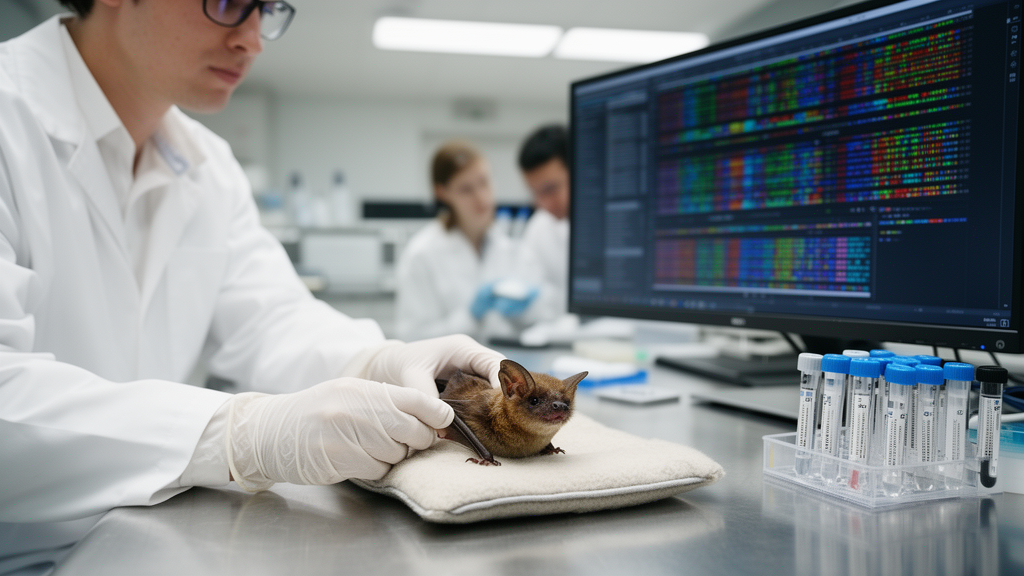
The study, led by Byung-Hoon Jeong of Jeonbuk National University together with colleagues at the university’s Korea Zoonosis Research Institute and College of Veterinary Medicine, examined 98 bat tissue samples representing 11 species commonly found in Korea. The largest group was the greater horseshoe bat (Rhinolophus ferrumequinum), with 58 samples, followed by the common bent-wing bat, the Japanese pipistrelle, and eight other species. Genomic DNA was extracted from stored liver and gut tissue, and the coding region of the bat PRND gene was amplified by polymerase chain reaction and read by amplicon sequencing.
PRND is a key member of the mammalian prion gene family. It sits immediately downstream of the better-known prion protein gene PRNP, and its product — the Doppel protein — shares structural and physiological features with the prion protein itself. Like PrP, Doppel is tethered to the cell surface by a glycosylphosphatidylinositol anchor, and it has been implicated in neurotoxicity and in possible functional interactions with PrP that could matter for prion pathogenesis. Previous work has also shown that polymorphisms within PRND are associated with prion disease susceptibility in several species, and that a variant in the 3′ untranslated region of the human gene differs significantly between sporadic Creutzfeldt-Jakob disease patients and healthy controls.
Sequencing revealed seven novel single nucleotide polymorphisms (SNPs) in the bat PRND gene: c.214G>A, c.216C>T, c.391A>C, c.392G>C, c.456G>A, c.465A>G, and c.478A>G. Four of these — c.216C>T (A72A), c.391A>C (R131R), c.456G>A (R152R), and c.465A>G (G155G) — are synonymous, meaning they change the DNA sequence without altering the encoded amino acid. The remaining three are non-synonymous substitutions that change the Doppel protein sequence: A72T, R131T, and M160V. Allele frequencies were generally low, with minor alleles ranging from about 0.5 to 9 percent, and the most common two-variant haplotype, CG, appeared at a frequency of 83.6 percent.
To probe how these variants relate to one another, the team performed linkage disequilibrium (LD) analysis, which measures whether alleles at different loci are inherited together more often than chance would predict. No pairwise LD value among the analyzed PRND polymorphisms exceeded the conventional threshold for strong LD, and none of the PRND variants showed strong linkage with previously characterized SNPs in the bat PRNP gene. The authors note this is intriguing because prion-susceptible species such as goats show strong LD between the two genes, while prion-resistant species such as dogs show weak LD — though they caution that weak LD reflects limited allelic association in the sampled population and should not be read as evidence of independent gene regulation.
The researchers also compared the physical distance separating PRNP and PRND across species. In prion-resistant animals — dogs, horses, and rabbits — the two genes lie relatively close together, at roughly 17, 16, and 12 kilobases apart respectively, whereas in susceptible species such as humans, cattle, sheep, and goats the gap is longer, around 20 to 25 kilobases. In the greater horseshoe bat, the intergenic distance measured 14 kilobases, placing bats on the short side of this comparison. The authors stress, however, that this genomic arrangement may simply reflect organization of the genome rather than any direct functional link to prion resistance.
Evolutionary analysis added another layer. Aligning Doppel amino acid sequences from nine species using ClustalW and building a phylogenetic tree with MEGA 12.1, the team found that bat Doppel sequences cluster most closely with those of horses, with a branch length of roughly 0.09–0.11. Horses are widely regarded as a prion-resistant species, having never shown natural prion disease, but the authors are careful to point out that this phylogenetic kinship does not itself demonstrate a shared resistance phenotype. The bat Doppel protein also carries six species-specific amino acids, including glutamine at codon 4, arginine at codons 25 and 51, methionine at codon 54, serine at codon 163, and valine at codon 175.
To gauge the functional impact of the three non-synonymous variants, the team deployed a battery of computational prediction tools. SIFT and MutPred2 both flagged c.392G>C (R131T) as potentially damaging or pathogenic, while predicting A72T and M160V to be tolerated or benign. MUpro and SODA analyses suggested that all three substitutions decrease protein stability and solubility respectively, with R131T showing particularly low scores. AlphaFold3-based 3D modeling of wild-type and variant Doppel proteins, however, revealed no marked differences in local hydrogen-bonding patterns: the R131 and T131 residues each form three hydrogen bonds with neighboring residues K127, L128, and R135, and no structural disruption was apparent from the substitutions.
The authors are candid about the limitations of their work. The sample sizes across the 11 bat species were small and unequal, which limits the statistical power of allele frequency estimates and Hardy-Weinberg equilibrium tests — one variant, c.214G>A, deviated markedly from HWE, likely due to population stratification among the mixed species sampled rather than biological selection. The study also focused only on the open reading frame, leaving the 3′ untranslated and promoter regions unexplored, and no in vitro or in vivo functional validation of the identified SNPs was performed. The researchers emphasize that the findings do not constitute evidence that bats pose any risk of prion acquisition, replication, or transmission.
Nevertheless, the study fills a genuine gap. With more than 1,400 bat species known, and with bats already recognized as reservoirs of numerous zoonotic pathogens — and even consumed as food or traditional medicine in some cultures — understanding their prion genetics has clear value. The seven novel SNPs, the weak PRNP–PRND linkage, and the short intergenic distance all provide a preliminary genetic foundation for investigating whether bats might be naturally resistant to prion disease. The authors call for molecular dynamics simulations and in vitro functional assays to determine how these variants affect Doppel protein stability, surface expression, and neurotoxicity — the next steps toward understanding whether the absence of prion disease in bats reflects biology or simply hasn’t been looked for hard enough.
Subject of Research: Genetic polymorphisms of the prion-like protein gene (PRND) in bats and their implications for prion disease susceptibility
Article Title: First report of polymorphisms and genetic characteristics of the prion-like protein gene (PRND) in bats
Article References: Choi, D.-I., Jeong, M.-J., Na, E.-J., Oem, J.-K., & Jeong, B.-H. (2026). First report of polymorphisms and genetic characteristics of the prion-like protein gene (PRND) in bats. Frontiers in Veterinary Science, 13, Article 1967863. https://doi.org/10.3389/fvets.2026.1967863
Image Credits: AI Generated
DOI: 10.3389/fvets.2026.1967863
Keywords: bats, PRND, prion diseases, Doppel protein, polymorphisms, SNPs, PRNP, linkage disequilibrium, genetics, zoonosis, in silico analysis, neurodegeneration
Cite Scienmag News
Juliet Wilcox. (October 19, 2026). Scientists Map Prion-Like Gene Variation in Bats for the First Time. Scienmag. https://scienmag.com/scientists-map-prion-like-gene-variation-in-bats-for-the-first-time/
Juliet Wilcox. "Scientists Map Prion-Like Gene Variation in Bats for the First Time." Scienmag, 19 October 2026, https://scienmag.com/scientists-map-prion-like-gene-variation-in-bats-for-the-first-time/. Accessed 19 October 2026.
Juliet Wilcox. "Scientists Map Prion-Like Gene Variation in Bats for the First Time." Scienmag. October 19, 2026. https://scienmag.com/scientists-map-prion-like-gene-variation-in-bats-for-the-first-time/


