


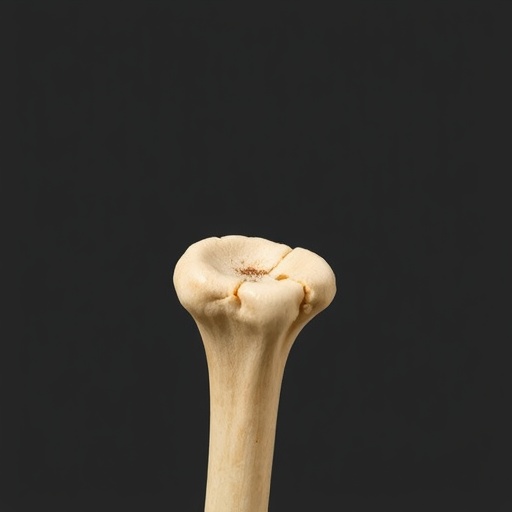
Archaeological human bones act as silent time capsules, preserving stories beyond their initial burial. Yet, the intricate relationship between microbial communities and bone preservation or degradation over centuries has remained an enigma—until now. A groundbreaking study published in the open-access journal PLOS One sheds new light on how distinct microbial populations colonize ancient bones and influence their state of preservation. Conducted by Damla Kaptan and colleagues at the University of Stavanger, Norway, this research bridges detailed histological analyses of bone degradation with advanced metagenomic sequencing, revealing unprecedented insights into the microbiome’s role in archaeological bone decay processes.
Microbial involvement in the decay of archaeological bones has long been recognized, dating back to the nineteenth century. Despite this historical awareness, the precise biological mechanisms and specific microbial actors responsible for long-term bone degradation have eluded scientific characterization—largely due to the complexities of microbial ecosystems and DNA preservation over extended timeframes. The current study confronts these challenges head-on by analyzing bone samples from medieval cemeteries in southwestern Norway, spanning dates from the 11th to the 19th century. These samples originate from diverse depositional contexts, ranging from outdoor burials in soil to indoor interments beneath church naves.
A striking discovery from the investigation is the differentiation in microbial communities associated with bones exhibiting varying degrees of degradation. Well-preserved bones host distinct taxa compared to heavily degraded samples, suggesting that microbial colonization patterns are tightly linked to the state of the bone matrix. Notably, genera such as Lysobacter correlated with moderately degraded bones, whereas Streptomyces—a genus known for enzyme production capable of collagen breakdown—dominated well-preserved specimens. Given that collagen is a primary component of bone organic matrix, the identification of collagenolytic bacteria underscores a critical biological pathway potentially driving bone decay.
Further analysis illuminated an unexpected relationship between microbial diversity and bone preservation. Contrary to intuitive assumptions that microbial colonization would simply accelerate destruction, newer bones, those interred indoors, and better-preserved samples exhibited higher microbial diversity. This phenomenon might be explained by better-preserved bones maintaining more nutrient-rich environments suitable for complex microbial communities. As a result, certain microbial consortia could coexist with the bone matrix without instigating rapid degradation, challenging long-held views that microbial colonization unequivocally signals decay.
While DNA degradation over centuries posed substantial hurdles for species-level identification, metagenomic sequencing enabled researchers to sketch broad microbial profiles. The study acknowledges potential contamination risks stemming from DNA remnants introduced during excavation, handling, and storage, yet the consistent presence of specific genera like Streptomyces across samples bolsters the robustness of findings. By integrating histological data with ancient DNA analysis, this research represents a pivotal advance, assigning taxonomic identities to suspected microbial perpetrators of bone bioerosion—a feat previously unattainable.
The implications of this research are multifaceted. From a paleopathological perspective, understanding microbial dynamics in bone decay assists in interpreting burial conditions, post-mortem processes, and even the preservation of pathological markers within skeletal remains. For archaeologists and conservators, identifying microbial taxa that influence degradation under specific environmental contexts informs strategies to better preserve remains in situ and in collections. Additionally, this work paves the way for future research into microbial biogeography in archaeological contexts, exploring how burial environment, soil chemistry, and temporal variables sculpt microbial assemblages.
Damla Kaptan highlights that ancient bones are far from inert relics; instead, they retain intricate microbial signatures capable of revealing centuries-long post-burial transformations. This paradigm shift emphasizes bones as dynamic microecosystems rather than passive archives, aligning with broader trends recognizing the microbiome’s pervasive influence in diverse biological and geological substrates. Understanding these protracted microbial interactions will deepen insights into the fundamental processes that govern organic matter preservation beyond human lifespans.
Hege Ingjerd Hollund, a co-author with over fifteen years of microscopy-based observations of bioerosion tunnels in archaeological skeletons, stresses the importance of linking microscopic evidence with molecular taxonomy. This integrative approach confers both excitement and validation, particularly as Streptomyces emerges as a recurrent candidate involved in bone bioerosion. Such links support hypotheses of enzymatic degradation mechanisms facilitated by these bacteria and underscore the value of multi-disciplinary methodologies in unraveling complex taphonomic patterns.
From a methodological angle, the combination of histological examination and metagenomic analyses exemplifies a powerful toolkit for archaeological science. Histology allows the visualization of microstructural damage, including bacterial tunneling and collagen disruption, whereas metagenomics deciphers the microbial community composition and functional potential. The marriage of these techniques not only characterizes degradation pathways but also identifies the microbial consortia actively shaping skeletal preservation through time. Such integrated studies are poised to become standard in archaeomicrobiology.
This study also raises provocative questions about the resilience of microbial DNA in archaeological contexts. Despite expected degradation, sufficient genetic material persists to reconstruct community profiles even in samples centuries old. This opens exciting possibilities for future investigations that could link microbial succession patterns with environmental parameters, burial practices, and bone chemistry. It also invites renewed scrutiny of how modern contamination might alter interpretations, underscoring the necessity for meticulous sampling and laboratory protocols.
Ultimately, this research challenges simplistic narratives that portray microbial colonization purely as a destructive force. Instead, microbial interactions with bone appear nuanced, potentially balancing decay and preservation through complex ecological dynamics. This nuanced understanding demands reconsideration of how we interpret microbial signatures in archaeological remains—not just as markers of deterioration but also as indicators of historical environmental and biological processes.
In summary, the work by Kaptan et al. constitutes a landmark contribution to our understanding of microbial bone degradation in archaeological contexts. Utilizing a multidisciplinary framework combining histology and metagenomics, it reveals the heterogeneous microbial landscapes inhabiting buried human bones and their relationship to preservation states. These findings advance fundamental knowledge of post-mortem microbial processes and offer practical insights for archaeology, conservation, and paleomicrobiology. As research continues to unravel the silent stories locked within ancient bones, this study marks a critical step toward decoding the microbial influences shaping our past.
News Publication Date: 27-May-2026
Web References:
DOI: 10.1371/journal.pone.0340244
References:
Kaptan D, Flemming Elvers AC, Kjær Knudsen A, Schroeder H, Hollund HI (2026) Histological and metagenomic analysis of microbial communities in archaeological human bones. PLoS One 21(5): e0340244.
Cite Scienmag News
Morgan Morrow. (May 27, 2026). Scientists Identify Microbiomes Responsible for Archaeological Bone Degradation. Scienmag. https://scienmag.com/scientists-identify-microbiomes-responsible-for-archaeological-bone-degradation/
Morgan Morrow. "Scientists Identify Microbiomes Responsible for Archaeological Bone Degradation." Scienmag, 27 May 2026, https://scienmag.com/scientists-identify-microbiomes-responsible-for-archaeological-bone-degradation/. Accessed 4 September 2026.
Morgan Morrow. "Scientists Identify Microbiomes Responsible for Archaeological Bone Degradation." Scienmag. May 27, 2026. https://scienmag.com/scientists-identify-microbiomes-responsible-for-archaeological-bone-degradation/


