


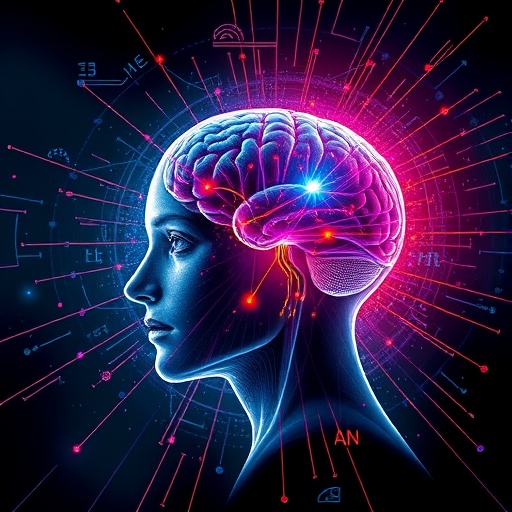
Emotions have long been recognized as powerful sculptors of human memory, capable of reshaping, enhancing, or even distorting how experiences are stored and recalled. Yet, the underlying mechanisms by which emotional states alter the temporal fabric of memory—specifically how the order and precision of recollections shift—remain elusive. Researchers at Newcastle University, UK, are embarking on a groundbreaking interdisciplinary initiative that harnesses the principles of quantum theory to decode this intricate relationship. Supported by a substantial £1.2 million grant from UK Research and Innovation’s Cross-Council funding, this project, aptly named Quantum Emotions, promises to revolutionize our understanding of emotional memory through novel quantum mathematical frameworks.
Memory, at its core, is an ordered sequence of episodic events that compose the narrative continuity of our lives. Temporal order—the correct sequencing of events—is fundamental to preserving coherent and accurate recollections. However, emotional arousal can perturb this chronological order, introducing distortions that conventional cognitive psychology struggles to systematically address or predict. Traditional models treat memory alterations often as noise or error, but they fail to capture the nuanced ways in which emotion reshapes the relational structure of memories. The Quantum Emotions team proposes that ideas borrowed from quantum physics offer a uniquely suited formalism for grappling with such complexities, particularly when the sequence and context critically determine the memory outcome.
Quantum theory, a branch of physics designed initially to describe phenomena at atomic and subatomic scales, has recently found surprising applications beyond its original domain. Quantum formalism is distinguished by its ability to model non-commutative sequential processes, where the order of operations fundamentally affects results—analogous to how emotional memory sequences might be organized. By applying this mathematical apparatus to cognitive phenomena, the researchers aim to build computational models that naturally incorporate the fluid and context-dependent nature of emotional memories, potentially addressing inconsistencies and paradoxes that classical models encounter.
The research team at Newcastle University plans to combine sophisticated quantum probabilistic models with empirical psychological and neuroscientific data. This hybrid approach intends not only to conceptualize emotional memory distortions abstractly but also to ground these models in neural substrates identified through brain imaging and electrophysiological studies. Such integration between theoretical physics-based frameworks and experimental cognitive neuroscience represents a pioneering venture, aiming to elucidate how neural circuits encode the temporal dynamics of emotional memory under various affective states.
Central to the investigation is unraveling why certain moments within emotional events retain a vivid sharpness and precision while others seem to fade or become temporally displaced. These are not random artifacts but consistent patterns influenced by complex cognitive and neural interactions. Early explorations suggest that emotional arousal modifies attentional processes and memory consolidation pathways, which in turn systematically reconfigure the temporal architecture of memory traces. Quantum formalism offers a mathematical lens capable of representing these probabilistic yet structured reshufflings, lending explanatory power beyond linear cause-effect models.
Dr Jonte Hance, leading the Quantum Group at Newcastle, highlights the transformative potential of this approach: “Quantum theory’s mathematical tools provide an unprecedented vocabulary and grammar to model sequential dependencies in systems where classical assumptions fall short. Emotional memory, with its sensitivity to event order, is an ideal candidate for such modeling.” His vision encapsulates the project’s ambition to bridge abstract mathematical physics and the tangible workings of human cognition, fostering a synthesis that could redefine both fields.
Integral to the project is an emphasis on fostering a vibrant research community around Quantum Cognition. The team will coordinate national workshops and symposia designed to disseminate knowledge, stimulate cross-disciplinary collaborations, and equip upcoming researchers with the theoretical and methodological skills essential in this nascent domain. Building a collaborative infrastructure is seen as critical to sustaining and expanding the influence of quantum approaches within cognitive science, with Newcastle positioned as a central hub.
Dr Barbara-Anne Robertson, lecturer in psychology and the principal investigator of Quantum Emotions, emphasizes the unique interdisciplinary nature of the work. Collaborations with leading researchers in Japan and Sweden will augment the project’s expertise and global reach. According to Dr. Robertson, the novel quantum models developed through these partnerships will deepen insight into how cognition’s emotional facets reorganize memory, opening avenues for practical applications in varied settings including mental health diagnostics, forensic investigations, and age-related memory decline.
Beyond advancing theoretical understanding, the project aspires to develop novel computational tools and frameworks. These tools will be designed for practical deployment in experimental psychology labs and clinical environments, enabling nuanced assessment and manipulation of emotional memory precision and order. Such innovations hold promise for devising targeted interventions to mitigate memory distortions implicated in psychiatric disorders like PTSD or in improving eyewitness testimonies by clarifying how emotional contexts influence recall accuracy.
Moreover, this interdisciplinary venture stands to challenge and expand the boundaries of physics itself. Applying quantum formalism to cognitive phenomena constitutes a bold extension of quantum theory into the macroscopic and messy realm of real-world cognition, presenting opportunities to refine or reinterpret foundational quantum principles. This reverse flow of ideas may spark new theoretical developments within physics inspired by cognitive science’s empirical realities, embodying a two-way intellectual cross-pollination.
Fundamentally, Quantum Emotions signifies a paradigm shift in understanding memory as a dynamic quantum-like system where the full story emerges not from isolated snapshots but from intertwined sequences sensitive to emotional modulation. This perspective heralds a new chapter in memory science, uniting analytic rigor, empirical breadth, and theoretical innovation to solve enduring puzzles about the human mind’s most intimate and enigmatic faculty. The outcomes could reshape how we comprehend identity, consciousness, and the emotional coloring of lived experience.
As this ambitious project unfolds, the scientific community and public alike will be watching with anticipation. The possibility that quantum mathematics might decode the secret choreography of our emotional recollections evokes a thrilling frontier, promising to transform cognitive psychology, neuroscience, and even physics in profound ways. If successful, Quantum Emotions will not only illuminate why moments of joy, trauma, or sadness lodge themselves distinctly in the mind but may also provide novel strategies for harnessing memory’s power in health, justice, and human connection.
News Publication Date: Not specified in the original content
Web References: https://mediasvc.eurekalert.org/Api/v1/Multimedia/a0779c9d-f768-4823-90cc-c4666bf99743/Rendition/low-res/Content/Public
Cite Scienmag News
Katie Riggs. (May 20, 2026). Scientists Harness Quantum Mathematics to Unlock the Secrets of the Emotional Mind. Scienmag. https://scienmag.com/scientists-harness-quantum-mathematics-to-unlock-the-secrets-of-the-emotional-mind/
Katie Riggs. "Scientists Harness Quantum Mathematics to Unlock the Secrets of the Emotional Mind." Scienmag, 20 May 2026, https://scienmag.com/scientists-harness-quantum-mathematics-to-unlock-the-secrets-of-the-emotional-mind/. Accessed 3 September 2026.
Katie Riggs. "Scientists Harness Quantum Mathematics to Unlock the Secrets of the Emotional Mind." Scienmag. May 20, 2026. https://scienmag.com/scientists-harness-quantum-mathematics-to-unlock-the-secrets-of-the-emotional-mind/


