


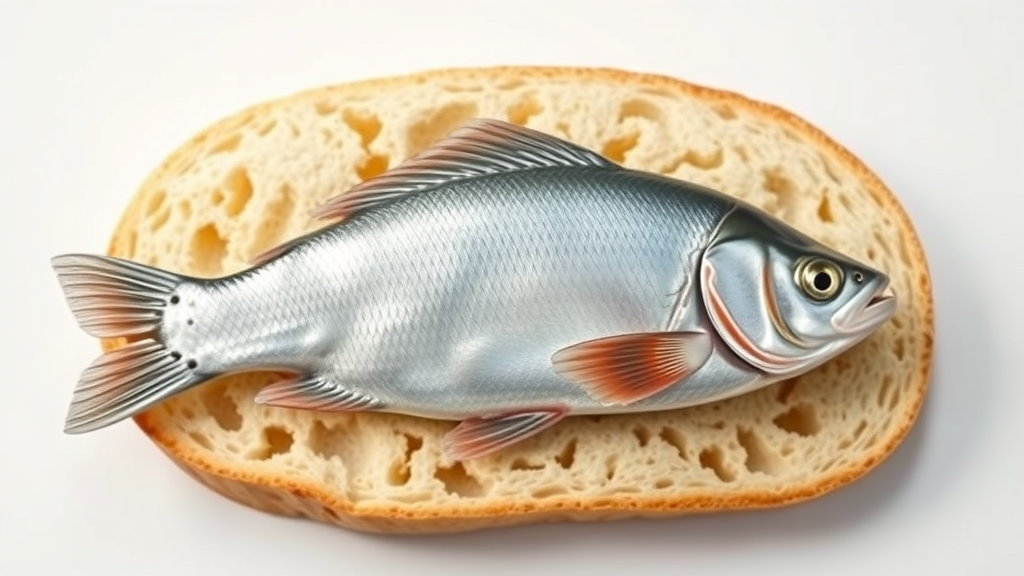
In a bakery in Bangladesh, something unusual is rising in the oven. Researchers reporting in the open-access journal Heliyon have taken one of the world’s most abundant—and often underappreciated—freshwater fish, ground it into a fine powder, and kneaded it directly into wheat bread. The result is a loaf that delivers up to 62 percent more protein than ordinary bread, a dramatically enriched amino acid profile, and higher levels of calcium, iron, zinc, and sodium, all while remaining acceptable to a panel of fifty taste testers. The study, led by Shahria Jahan Maria and colleagues at Jashore University of Science and Technology, is the first to systematically examine silver carp (Hypophthalmichthys molitrix) as a bread-fortification ingredient, and it offers a tantalizing glimpse of how a humble staple food could be transformed into a weapon against protein malnutrition.
The logic behind the experiment is straightforward but compelling. Fish already supplies nearly 20 percent of the animal protein consumed by about 3.1 billion people worldwide, and fish protein is widely considered superior to that of meat or eggs because of its balanced essential amino acid composition, its payload of micronutrients, and its low burden of saturated fat. Yet fish remains underconsumed in many communities because it is perishable, spoils quickly, and its sensory properties put off some eaters, particularly young people. Bread, by contrast, is affordable, ubiquitous, and beloved in developing tropical countries, where cereal crops can contribute roughly 75 percent of total caloric intake. But bread is nutritionally lopsided: rich in carbohydrates and fiber, it falls short on protein and minerals, and its high carbohydrate load has been linked to obesity, type 2 diabetes, cardiovascular disease, and colon cancer. Both the FDA and the WHO recognize bread as an effective vehicle for nutrient enrichment, making it an ideal carrier for a protein boost.
Silver carp, a fast-growing invasive species farmed extensively across Asia, was an obvious candidate. The research team purchased fresh fish averaging 1.92 kilograms from the Boro Bazar market in the Jashore district, filleted the animals, separated the flesh from bones and fins, minced it, dried it for 12 hours at 65 degrees Celsius in a hot air oven, and ground the dried mince into a powder that was stored at minus 20 degrees Celsius until use. They then prepared four bread formulations following a modified Stokić method: a control loaf made purely from refined wheat flour, and three experimental loaves in which 5, 10, or 15 percent of the wheat flour by weight was replaced with silver carp powder. Each 84-gram batch of flour-plus-powder was combined with salt, yeast, sugar, vegetable oil, and water, kneaded for 20 minutes, rested for 30 minutes at room temperature, shaped, and baked for about 20 minutes at 180 degrees Celsius.
The nutritional results were striking and followed a clean dose-response pattern. Protein content climbed from 15.18 percent in the control bread to 18.51 percent at 5 percent substitution, 21.8 percent at 10 percent, and 24.60 percent at the 15 percent level. Lipid content rose in parallel, from 6.44 percent to 9.17 percent, as the fish powder—whose own lipid content has been reported at 13.65 percent—diluted the starch-rich flour. Carbohydrate, predictably, fell from 65.02 percent to 53.27 percent across the same range. Moisture content, hovering between 10.13 and 10.95 percent, did not vary significantly, and the authors note that such low moisture bodes well for shelf life, since food stability generally declines as moisture rises. Ash content, a proxy for total mineral content, stayed essentially flat at around 2.3 to 2.4 percent, an unexpected result that contrasts with some earlier studies using salmon or tilapia powders.
Energy values increased significantly with fortification, peaking at 394.50 kilocalories per 100 grams in the 10 percent loaf versus 378.76 in the control, driven by the denser protein and lipid contributions. But the most dramatic nutritional upgrade appeared in the amino acid analysis, performed with a Hitachi LA 8080 amino acid analyzer after acid hydrolysis of the samples. Total amino acids nearly doubled, from 11,346.41 milligrams per 100 grams in control bread to 20,588.98 milligrams per 100 grams in the 15 percent loaf. Methionine was the most abundant amino acid in every formulation, rising from 3,429.84 to 5,825.01 milligrams per 100 grams, while phenylalanine reached 5,217.79 milligrams and cystine climbed significantly above control levels. Valine was least abundant but still rose steadily with fish content. The authors note that tryptophan could not be measured because it is destroyed during acid hydrolysis, and that without performic acid oxidation the methionine and cystine values may be slightly underestimated—honest caveats that do not blunt the overall picture.
This amino acid enrichment matters because wheat flour is notoriously limited in essential amino acids, and fish protein carries a more optimal essential amino acid profile than plant proteins. Adequate intake of indispensable amino acids such as lysine and methionine is critical for childhood growth, cognitive development, immune function, and the prevention of stunting, while balanced amino acid nutrition in adults helps maintain muscle mass and metabolic health. In regions where protein-energy malnutrition and poor dietary diversity persist, fortifying a staple that people already eat every day with a cheap, locally available fish could be a cost-effective public health strategy. The researchers explicitly frame the fortified bread as a potential tool against malnutrition in developing regions, where silver carp aquaculture is already well established.
Mineral analysis by inductively coupled plasma optical emission spectrometry reinforced the case. Sodium more than doubled, from 5.33 to 11.57 milligrams per 100 grams, and calcium rose from 7.88 to 18.73 milligrams per 100 grams at the highest fortification level. Zinc increased from 1.95 to 2.89 milligrams and iron from 1.63 to 1.95 milligrams per 100 grams. Calcium plays essential roles in bone integrity and blood pressure regulation, and adequate intake has been associated with reduced risks of hypertensive disorders in pregnancy and lower LDL cholesterol. Just as importantly, the heavy metal screen was reassuring: cadmium, arsenic, copper, and lead all remained far below international safety limits, chromium stayed under the FAO/WHO guideline of 0.1 milligrams per 100 grams, and nickel, though elevated to 0.05 milligrams in some loaves, remained well within the tolerable daily intake of 0.3 milligrams per day.
Nutrition, however, is worthless if nobody eats the bread, and this is where the story gets nuanced. A sensory panel of fifty untrained but regular fish consumers, aged 22 to 40, rated the loaves on color, flavor, softness, chewiness, and overall acceptability on a ten-point scale. The control bread scored highest across all attributes, and sensory quality declined progressively as fish powder levels rose. The 5 percent loaf tracked the control closely, particularly in color and flavor, while the 10 percent loaf showed moderate reductions, mainly in chewiness and flavor. The 15 percent loaf fared worst, earning the lowest marks in every category, especially color and overall acceptability. Instrumental color measurement told a parallel story: lightness, redness, and yellowness values all fell with increasing fish content, producing a dark brown crumb at 15 percent substitution. The culprit is the Maillard reaction, in which reducing sugars react with amino acids, particularly lysine, during baking to form brown pigments and flavor compounds; higher protein content means more reactants and darker bread.
The pH of the loaves also shifted subtly toward neutrality with fish content, from 6.24 in the control to 6.37 at 15 percent substitution, a change the authors attribute to the buffering capacity of fish muscle proteins and their abundant alkaline amino acids such as lysine. A pH closer to neutral may even be gentler on the stomach for people with acid sensitivity. Taken together, the data point to a practical sweet spot: breads fortified with 5 to 10 percent silver carp powder scored nearly as well as plain bread in taste, aroma, texture, and overall acceptability while delivering substantially more protein, amino acids, and minerals. The authors suggest that 10 percent is the viable balance between functional benefit and consumer acceptance, and they recommend gradually introducing fish powder at levels that do not alter taste or texture, combined with consumer education and sensory-optimized product development.
The study is not without limitations, which the authors candidly acknowledge. No storage stability trials, microbial analyses, or lipid oxidation assessments were conducted, so the shelf-life behavior of the fortified bread remains unknown. Fish lipids are prone to rancidity, and how the loaf holds up over days of storage could determine whether the concept survives outside the laboratory. Still, the core finding stands: an abundant, low-value fish can be converted into a shelf-stable powder that transforms one of humanity’s most common foods into a significantly better protein source. As aquaculture expands and the search for sustainable, affordable nutrition intensifies, the idea of a fish-fortified loaf—hiding a dose of complete protein inside an everyday slice—may prove one of the more quietly revolutionary developments in food science.
Subject of Research: Nutritional and sensory evaluation of wheat bread fortified with silver carp fish powder
Article Title: Fortification of bread with silver carp ( Hypophthalmichthys molitrix ) fish powder: Effects on nutritional composition and sensory attributes
Article References: Maria, S. J., Antu, M. A. R., Ahmed, M. T., Choudhury, M., Mondal, S., Rahman, M. A., & Haq, M. (2026). Fortification of bread with silver carp (Hypophthalmichthys molitrix) fish powder: Effects on nutritional composition and sensory attributes. Heliyon, 12(15), Article e45460. https://doi.org/10.1016/j.heliyon.2026.e45460
Image Credits: AI Generated
DOI: 10.1016/j.heliyon.2026.e45460
Keywords: silver carp, bread fortification, food science, protein enrichment, amino acids, malnutrition, functional foods, mineral content, sensory evaluation, aquaculture, Heliyon, Bangladesh
Cite Scienmag News
Daisy Hatcher. (September 25, 2026). Scientists Bake Silver Carp Into Bread and Create a Protein-Powered Loaf. Scienmag. https://scienmag.com/scientists-bake-silver-carp-into-bread-and-create-a-protein-powered-loaf/
Daisy Hatcher. "Scientists Bake Silver Carp Into Bread and Create a Protein-Powered Loaf." Scienmag, 25 September 2026, https://scienmag.com/scientists-bake-silver-carp-into-bread-and-create-a-protein-powered-loaf/. Accessed 4 October 2026.
Daisy Hatcher. "Scientists Bake Silver Carp Into Bread and Create a Protein-Powered Loaf." Scienmag. September 25, 2026. https://scienmag.com/scientists-bake-silver-carp-into-bread-and-create-a-protein-powered-loaf/


