


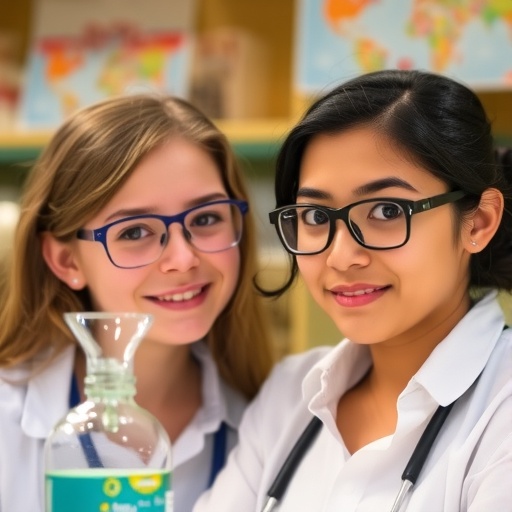
In a groundbreaking study poised to reshape our understanding of science career motivations, researchers have meticulously examined how experiences in science learning, the development of a science identity, and proactive career exploration influence the decision to pursue science-related vocations. This research not only adds nuanced insights into the pathways leading to STEM careers but highlights critical differences rooted in sex, providing a vital lens through which educational strategies can be optimized.
The foundational premise of this study is the recognition that early science learning encounters significantly shape long-term interests and professional choices. Science learning experiences encompass a diverse range of educational engagements—from formal classroom instruction to informal activities like museum visits or science clubs. By dissecting the quality and nature of these experiences, scientists have sought to unravel how they catalyze or hinder the formation of a robust science identity, which is understood as an individual’s self-conception as a science person.
Central to the investigation is the construct of “science identity,” a psychological and sociocultural concept indicating the degree to which individuals perceive themselves as belonging within the science community. This internalization is crucial since those who identify strongly with science tend to display higher motivation and resilience in STEM disciplines. The study employs advanced psychometric tools to evaluate students’ science identities, capturing subtle dimensions such as self-efficacy, recognition by others, and intrinsic interest in scientific inquiry.
Moreover, career exploration emerges as a pivotal factor examined by the research team. Career exploration, defined as the active seeking of information and experiences related to potential professions, can either reinforce or reshape science identity and the inclination toward science careers. The study uniquely integrates variables measuring career exploration activities, such as internships, mentorship programs, and participation in science fairs, to assess their influence on eventual career choices.
A standout feature of this research is its sex-based analytical framework, which investigates how male and female students differ in their interactions with science learning environments, identity formation, and career exploration behaviors. Recognizing the persistent gender disparities in STEM fields, the research delves deep into the sociocultural and psychological barriers and facilitators influencing each sex. Findings point toward distinct motivational profiles and divergent experiences that necessitate tailored interventions for men and women.
Technically, the study utilizes a robust mixed-methods approach, combining longitudinal survey data with qualitative interviews. The longitudinal design allows the researchers to observe changes in identity and career interests over time, delineating trajectories that lead to STEM career choices. This temporal dimension brings forth critical insights into when and how interventions might be most effective.
From a statistical standpoint, structural equation modeling (SEM) is employed to dissect the complex interrelationships among the variables: science learning experiences, science identity, career exploration, and career choice. SEM is particularly suited for this type of analysis because it can unravel both direct and indirect effects, providing a comprehensive map of influences and mediators driving science career decisions.
One of the more fascinating revelations is the differential impact of recognition and encouragement in science learning settings across sexes. Females, for example, report that external validation and mentorship significantly enhance their science identity, often more so than males. This implicates that educational policies fostering inclusive recognition and mentorship can disproportionately uplift female participation in STEM.
The research also critiques conventional science education paradigms that may inadvertently marginalize female students or fail to address their unique motivational needs. The team advocates for curriculum reforms that integrate identity-affirming pedagogies and career exploration opportunities, ensuring that all students receive equitable encouragement to envision themselves in science roles.
Importantly, the study underscores that early and continuous exposure to diverse science experiences is critical for solidifying science identity. Experiences that foster curiosity, hands-on engagement, and problem-solving appear particularly potent in motivating sustained science interest. This necessitates educational ecosystems that transcend rote memorization, favoring dynamic and interactive learning models.
From a policy perspective, leveraging these insights could revolutionize STEM workforce development. Governments and educational institutions might prioritize funding for immersive science programs and targeted mentorship initiatives, especially tailored to bridge the gender gap. Intervening at critical developmental stages identified in the study could yield sustained increases in STEM participation.
The implications extend to career guidance counselors, who are urged to facilitate comprehensive career exploration processes that not only inform but also nurture self-concept as budding scientists. Structured career exploration, embedded with real-world science experiences, can mitigate uncertainties and bolster confidence among aspiring STEM professionals.
Technology also plays a promising role in enhancing science identity and career exploration. Virtual labs, simulation platforms, and AI-driven mentorship are emerging tools that can personalize science learning and provide scaffolding to marginalized groups, aligning well with the study’s emphasis on experiential and identity-affirming engagement.
Furthermore, the interdisciplinary nature of the study bridges psychology, education, and workforce development, underscoring the importance of collaborative approaches in addressing STEM underrepresentation. Future research could expand this model by incorporating intersections with race, socioeconomic status, and cultural background, creating a multidimensional understanding of science career pathways.
This pioneering work sets a new benchmark for studies on STEM career choice motivations, equipping stakeholders with empirical evidence to craft strategies that are not only scientifically grounded but also socially responsive. It underscores the necessity of viewing science identity and career exploration as fluid, socially constructed phenomena influenced by multifaceted interactions rather than static traits.
As STEM fields become increasingly critical to addressing global challenges, understanding and fostering the motivational ecosystems that guide individuals toward science careers is paramount. This research catalyzes a paradigm shift by providing detailed mechanistic insights and highlighting sex-specific nuances, ensuring interventions are both effective and equitable.
Ultimately, this study is more than an academic exercise; it is a call to action for educators, policymakers, industry leaders, and communities to collectively cultivate environments where all individuals, regardless of sex, can fully realize their scientific potential and contribute meaningfully to the STEM revolution.
Cite Scienmag News
Courtney Benton. (January 30, 2026). Science Learning, Identity, and Careers: A Gender Perspective. Scienmag. https://scienmag.com/science-learning-identity-and-careers-a-gender-perspective/
Courtney Benton. "Science Learning, Identity, and Careers: A Gender Perspective." Scienmag, 30 January 2026, https://scienmag.com/science-learning-identity-and-careers-a-gender-perspective/. Accessed 4 September 2026.
Courtney Benton. "Science Learning, Identity, and Careers: A Gender Perspective." Scienmag. January 30, 2026. https://scienmag.com/science-learning-identity-and-careers-a-gender-perspective/


