


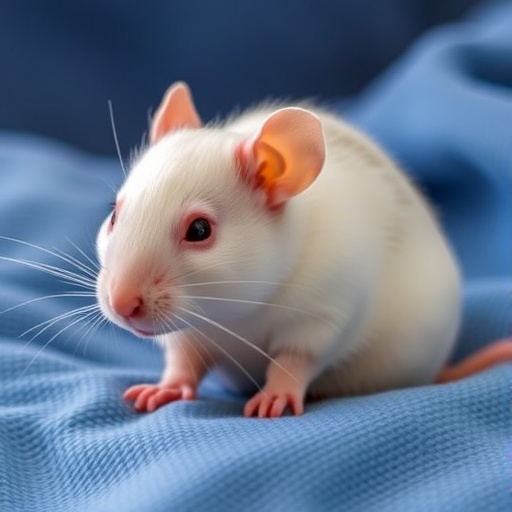
In a groundbreaking study published in Translational Psychiatry, researchers Burke, Randell, Sparkes, and colleagues have unveiled new insights into the complex biological underpinnings of autism spectrum disorder (ASD). Through an innovative rodent model, this research elucidates how perinatal hyperandrogenization coupled with immune activation can mimic subtypes of autism, providing a compelling framework for understanding heterogeneous autism phenotypes and potential therapeutic targets.
Autism spectrum disorder, a multifaceted neurodevelopmental condition characterized by social, communication, and behavioral challenges, has long perplexed scientists due to its diverse presentations and elusive etiology. The current study leverages an integrative approach by combining hormonal modulation and immune system engagement during critical developmental windows, reflecting real-world complexities observed in human ASD cases.
Central to this research is the manipulation of androgen levels during the perinatal period, a phase that encompasses the late gestational stage and the immediate neonatal timeframe. Hyperandrogenization, or unusually high androgen exposure, has been implicated in ASD risk but remained poorly understood regarding its mechanistic influence on neurodevelopment. The researchers modeled this hormonal environment in rodents, thereby recreating biological conditions that mirror elevated prenatal androgenic signaling seen in some ASD subtypes.
Moreover, the study intricately links immune activation with hormonal effects, drawing focus to neuroimmune interactions that may precipitate autism-related neuropathology. Systemic immune activation during early development, often triggered by infections or inflammation in utero, has gained attention for its capacity to alter neurodevelopmental trajectories dramatically. By introducing controlled immune challenges alongside androgen modulation, the team crafted a nuanced rodent model displaying distinct behavioral and molecular autism-like phenotypes.
Throughout rigorous experimental phases, the subjects exhibited alterations in social engagement, repetitive behaviors, and sensory processing—core symptoms reflective of human ASD. These phenotypic manifestations, assessed using validated behavioral assays, indicate that a combination of perinatal hyperandrogenization and immune activation can produce varying autism-relevant outcomes, emphasizing the importance of multifactorial etiologies.
Molecular analyses complemented behavioral data, revealing changes in key neural circuits and signaling pathways associated with both androgen receptors and immune mediators. This dual modulation appears to affect synaptic plasticity and microglial function, which are critical for healthy brain development and have been implicated repeatedly in ASD research. Such findings provide a mechanistic map linking hormonal and immune factors to neurodevelopmental disruptions characteristic of autism.
By addressing distinct autism subtypes through this rodent model, the study challenges the “one-size-fits-all” perspective prevalent in autism research and therapy development. It underlines that autism is not a singular entity but rather a spectrum influenced by various convergent biological insults. Recognizing this heterogeneity is crucial in advancing personalized intervention strategies targeted at specific pathogenic pathways.
The translational implications of this research are profound. If similar mechanisms operate in humans, therapeutic strategies that modulate prenatal androgen levels or mitigate early-life immune activation could alter the developmental course of some ASD subtypes. This opens avenues for preventive treatments or early interventions aiming to recalibrate neuroimmune interactions or hormonal imbalances during sensitive periods.
Furthermore, the study highlights the importance of considering sex differences in autism, given the established male predominance in ASD diagnoses. Hyperandrogenization models may provide insights into why males are more vulnerable, advancing comprehension of sex-specific biological factors and potentially guiding sex-tailored clinical approaches.
Equally important is the contribution to neuroscience by detailing how immune signaling pathways impact neural development in concert with hormonal cues. This nuanced understanding deepens the field’s grasp of neuroendocrine-immune crosstalk and its role in shaping brain function and behavior, moving beyond symptoms to etiological roots.
The authors also emphasize the utility of animal models capturing multiple intersecting risk factors, reflecting the complexity of human conditions more accurately than single-factor models. Such integrative modeling enhances the predictive power for evaluating potential pharmacological agents that may correct or compensate for these intertwined developmental disturbances.
While promising, the researchers caution that extrapolation to humans requires further validation and longitudinal studies to track how early intervention targeting these pathways may influence long-term outcomes. Nevertheless, this study stands as a beacon directing future autism research toward holistic approaches that consider hormonal, immune, and neural factors in tandem.
In sum, Burke et al. provide a sophisticated model elucidating how perinatal hyperandrogenization and immune system activation converge to generate behavioral and neurobiological features akin to autism subtypes. This multifactorial perspective advances scientific understanding and paves the way for novel therapeutic innovations tailored to the biological diversity inherent in ASD.
As the field moves forward, integrating endocrine and immunological factors in neurodevelopmental research will be essential for unraveling the complexities of autism. This study represents a pivotal step in that direction, offering a compelling framework to inspire further investigation and ultimately improve clinical outcomes for individuals on the spectrum.
Cite Scienmag News
Glenn Wilkins. (January 30, 2026). Rodent Models Link Perinatal Hyperandrogenization to Autism. Scienmag. https://scienmag.com/rodent-models-link-perinatal-hyperandrogenization-to-autism/
Glenn Wilkins. "Rodent Models Link Perinatal Hyperandrogenization to Autism." Scienmag, 30 January 2026, https://scienmag.com/rodent-models-link-perinatal-hyperandrogenization-to-autism/. Accessed 4 September 2026.
Glenn Wilkins. "Rodent Models Link Perinatal Hyperandrogenization to Autism." Scienmag. January 30, 2026. https://scienmag.com/rodent-models-link-perinatal-hyperandrogenization-to-autism/


