


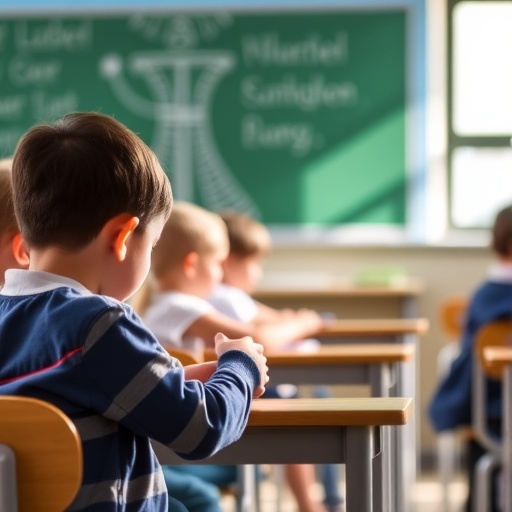
In recent years, the conversation surrounding the impact of school climate on children’s well-being has gained significant traction. Researchers have begun to explore the intricate dynamics between the environment students inhabit during their formative years and their overall life satisfaction. A recent study by Jiang, Wang, and Dong looks into this multifaceted relationship, specifically investigating how exposure to school violence and overall school satisfaction mediate the connection between school climate and a child’s subjective well-being.
The study emphasizes the importance of understanding that school climate is not merely a subjective perception among students but a critical determinant of their psychological health. An inclusive and supportive school environment can lead to an improvement in students’ emotional and mental well-being, enabling them to thrive academically and socially. Conversely, environments characterized by violence and hostility can severely detract from a child’s development, leading to various negative outcomes, including anxiety, depression, and decreased academic performance.
In examining the nuances of school violence, the researchers highlight various types of exposure that children are likely to encounter. This includes both overt physical violence, such as bullying or fights, as well as more subtle forms of violence, such as emotional abuse or social exclusion. The ramifications of such experiences can be profound, often resulting in long-lasting impacts on a child’s mental health. The study underscores the urgent need for effective interventions that not only address school violence but also foster a positive school climate that actively promotes student well-being.
Furthermore, the research indicates that children who report higher levels of satisfaction with their school environment experience a more significant boost in their overall well-being. School satisfaction is characterized by feelings of belonging, support from peers and teachers, and a sense of safety. When children feel valued and heard in their educational institution, they are more likely to develop positive self-esteem, better coping skills, and enhanced resilience against adversity.
The role of educators is also highlighted in this study. Teachers and school administrators play a critical role in shaping school climate through their attitudes, behaviors, and policies. By fostering a culture of inclusiveness, respect, and emotion regulation, educators can mitigate the effects of violence and contribute significantly to their pupils’ well-being. Such proactive measures not only benefit individual students but can have a ripple effect, creating a more supportive and thriving community.
Additional insights from the research stress the interconnectedness of various factors that influence children’s well-being. This interplay of influences calls for a holistic approach to address the mental health needs of schoolchildren. By taking a systems-based perspective, stakeholders, including parents, teachers, and policymakers, can ensure that interventions are comprehensive and effective in promoting healthy school environments.
The authors of the study advocate for further research to continue unraveling the complexities of this topic. They propose that future studies should not only assess the direct impacts of school climate on student well-being but also explore the long-term effects of these dynamics. Understanding how early experiences in school can shape adult life satisfaction can provide invaluable insights for educators and policymakers alike.
It is critical for governments and educational institutions to recognize the findings of this research. Implementing policies aimed at improving school climate and reducing violence can yield significant dividends in student mental health. Whether through enhanced training for teachers, increased mental health resources, or programs designed to foster social-emotional learning, the implications of this research call for action.
Additionally, parent involvement is a crucial component in improving school climate. Active participation in school events and open communication channels between parents and school staff foster a cooperative atmosphere. When parents are engaged, their children are more likely to feel safer and more supported, further enhancing overall school satisfaction.
Ultimately, the dynamic relationship between school climate, exposure to violence, and student well-being is a pressing issue that requires collective action. Addressing it leads not only to healthier children but also to stronger communities and societies at large. By prioritizing a nurturing and supportive educational structure, we set the stage for future generations to flourish both academically and personally.
In summary, Jiang, Wang, and Dong’s study provides critical insights into how school environments significantly influence children’s emotional and psychological health. The findings underscore the urgent need for comprehensive, multi-stakeholder strategies that enhance school climate and mitigate violence. By developing a deeper understanding of these relationships, we can pave the way for more effective educational practices that prioritize the well-being of children.
Education should be more than just rote learning; it must be about building a foundation of well-being and personal growth for every student. As research continues to evolve in this field, it is our collective responsibility to be attentive to the implications for educational policy and practice. With the right framework in place, we can ensure that every child has the opportunity to thrive both inside and outside the classroom.
In closing, the study by Jiang et al. illustrates a crucial intersection of education, psychology, and social dynamics, which should inspire ongoing discussion, research, and action. By understanding and improving the climate of our schools, we create lasting change—one that benefits not just individuals but society as a whole.
Jiang, S., Wang, L. & Dong, Z. School Climate and Children’s Subjective Well-Being: The Multiple Mediation Effect of School Violence Exposure and School Satisfaction.
Applied Research Quality Life 20, 1273–1288 (2025). https://doi.org/10.1007/s11482-025-10471-9
Cite Scienmag News
Glenn Wilkins. (August 23, 2025). School Environment: Impact on Children’s Well-Being. Scienmag. https://scienmag.com/school-environment-impact-on-childrens-well-being/
Glenn Wilkins. "School Environment: Impact on Children’s Well-Being." Scienmag, 23 August 2025, https://scienmag.com/school-environment-impact-on-childrens-well-being/. Accessed 3 September 2026.
Glenn Wilkins. "School Environment: Impact on Children’s Well-Being." Scienmag. August 23, 2025. https://scienmag.com/school-environment-impact-on-childrens-well-being/


